Bridging the 2026 Digital Divide: Education Access Solutions
Advertisements
Addressing the 2026 digital divide requires proactive, practical steps to ensure all students have equitable access to educational technology and resources, preventing further learning disparities.
The landscape of education is continuously evolving, and by 2026, the imperative to address the 2026 digital divide will be more critical than ever. This isn’t merely about access to devices, but about ensuring every student, regardless of their socioeconomic background or geographic location, has the necessary tools, connectivity, and digital literacy to thrive in an increasingly digital world. Understanding and implementing practical solutions is paramount to fostering an equitable learning environment for all.
Advertisements
Understanding the Evolving Digital Divide in 2026
The digital divide, once primarily defined by access to an internet connection and a computer, has grown more complex. By 2026, it encompasses not just basic connectivity but also the quality of that connection, the availability of up-to-date and functional devices, and crucially, the digital literacy skills needed to effectively utilize these tools for learning. This evolving definition demands a multi-faceted approach to bridge the gaps that continue to marginalize a significant portion of student populations across the United States.
The shifts in educational delivery, accelerated by recent global events, have cemented digital tools as fundamental to learning. Homework assignments, research projects, collaborative tasks, and even direct instruction often rely on digital platforms. Without reliable access and the skills to navigate these platforms, students are not just falling behind; they are being excluded from the core educational experience. This exclusion has long-term implications for academic achievement, career prospects, and overall societal participation.
Beyond Basic Access: Quality and Equity
It’s no longer enough to provide a basic internet connection. The quality of internet access directly impacts a student’s ability to participate in online learning. Slow, unreliable connections can make video conferencing impossible, hinder access to rich media content, and frustrate learning. Furthermore, sharing a single device among multiple family members, or relying on outdated hardware, creates significant barriers to consistent and effective engagement. The goal for 2026 must be to ensure not just access, but equitable, high-quality access.
- High-Speed Broadband: Ensuring affordable, high-speed internet is available in every household.
- Device Equity: Providing students with personal, functional devices suitable for their learning needs.
- Technical Support: Offering accessible technical assistance for students and families facing hardware or connectivity issues.
In conclusion, the 2026 digital divide is a dynamic challenge that extends beyond mere hardware and internet provision. It requires a holistic understanding of quality, equity, and the support systems necessary to empower all students in a digitally-driven educational landscape. Recognizing these nuances is the first critical step toward developing effective interventions.
The Role of Government Initiatives and Public-Private Partnerships
Addressing the 2026 digital divide effectively necessitates robust government initiatives coupled with innovative public-private partnerships. No single entity can tackle this complex issue alone. Government bodies, from federal to local levels, play a crucial role in establishing policies, allocating funding, and creating infrastructure that supports widespread digital access. These efforts must be sustained and adaptable, recognizing the rapid pace of technological change and the evolving needs of communities.
Federal programs, such as those aimed at expanding broadband infrastructure in rural and underserved urban areas, are foundational. However, these programs often require supplementary efforts from state and local governments to ensure last-mile connectivity and affordability. States can implement initiatives that subsidize internet costs for low-income families or provide grants for schools to purchase devices. Local governments are best positioned to understand the specific needs of their communities and can tailor programs accordingly.
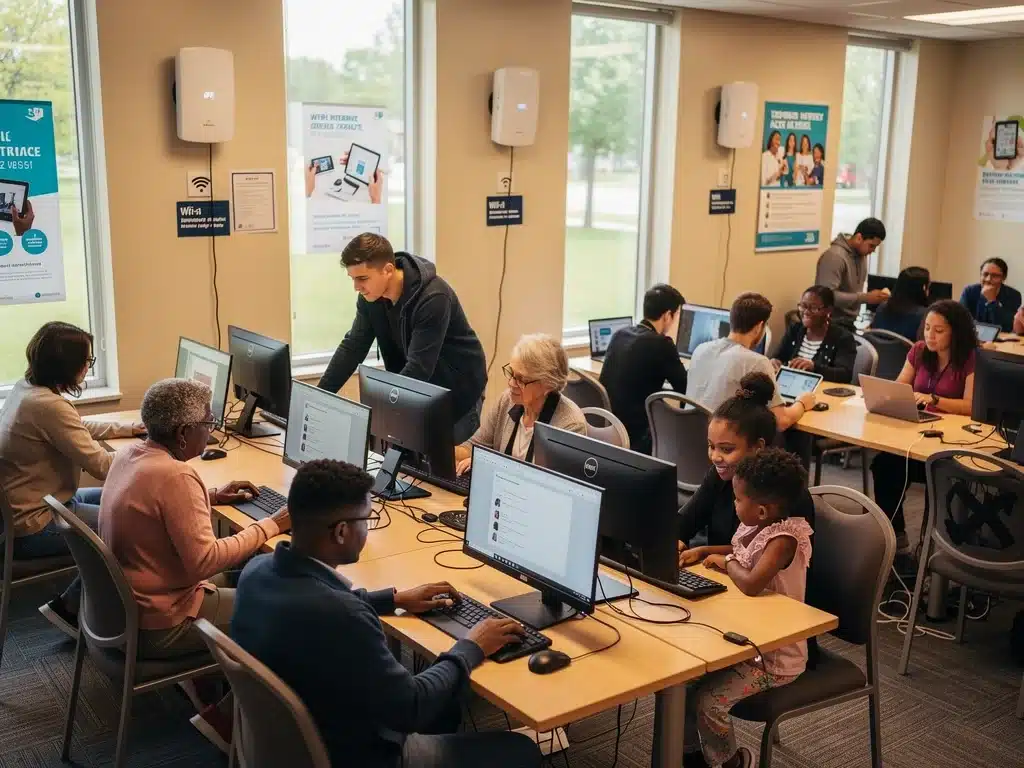
Beyond government action, public-private partnerships offer a powerful mechanism for bridging the gap. Technology companies, internet service providers, and philanthropic organizations can bring significant resources, expertise, and innovation to the table. These collaborations can lead to creative solutions, such as discounted internet plans for students, donation programs for devices, or the development of accessible educational software.
Leveraging Corporate Social Responsibility
Many corporations recognize the importance of digital inclusion and are willing to invest in initiatives that align with their corporate social responsibility goals. Partnerships with these companies can accelerate progress by providing funding for hardware, sponsoring digital literacy programs, or offering volunteer technical support. It’s essential for educational institutions and community leaders to actively seek out and cultivate these relationships, articulating the clear benefits for both students and corporate partners.
- ISP Subsidies: Collaborating with internet service providers to offer low-cost or free internet access to eligible families.
- Tech Donations: Partnering with tech companies for device donations and refurbishment programs.
- Skill-Based Volunteering: Engaging corporate employees to mentor students in digital skills or provide IT support.
In essence, a concerted effort involving all levels of government and a strategic engagement with the private sector is indispensable. These partnerships can create a resilient framework for digital inclusion, ensuring that the necessary resources and support are consistently available to students who need them most, thereby making significant strides in closing the 2026 digital divide.
Enhancing Digital Literacy and Skills Training
Providing access to technology and connectivity is only half the battle; the other crucial component in bridging the 2026 digital divide is ensuring students and educators possess the necessary digital literacy and skills. Digital literacy extends beyond simply knowing how to operate a device; it encompasses critical thinking about online information, safe and responsible digital citizenship, and the ability to use various software and platforms for learning and creation. Without these skills, even the best technology remains underutilized.
Schools must integrate comprehensive digital literacy curricula into their educational programs from an early age. This means teaching students not just how to type or use a search engine, but also how to evaluate sources, understand data privacy, recognize misinformation, and create digital content responsibly. These skills are not only vital for academic success but also for navigating the complexities of modern life and future careers.
Furthermore, educators themselves require ongoing professional development to effectively integrate technology into their teaching practices. Many teachers, while proficient in their subject matter, may lack confidence or expertise in leveraging digital tools for instruction, assessment, and student engagement. Investment in robust training programs for teachers is therefore paramount, ensuring they can model effective digital citizenship and guide students in their digital learning journeys.
Targeted Training Programs
Targeted training programs can address specific skill gaps within different student demographics. For example, programs focused on coding and computational thinking can empower students with skills highly valued in the 21st-century workforce. For younger students, engaging activities that build foundational digital skills through play can be particularly effective. For older students, vocational training that incorporates digital tools relevant to specific industries can bridge the gap between education and employment.
- Curriculum Integration: Weaving digital literacy into all subjects, not just dedicated tech classes.
- Teacher Professional Development: Providing continuous training on educational technology and digital pedagogy.
- Community Workshops: Offering workshops for parents and guardians to support digital learning at home.
Ultimately, enhancing digital literacy and skills training is about empowering individuals to be active, informed, and responsible participants in the digital world. By focusing on both access and capability, we can ensure that students are not merely consumers of technology, but creators, critical thinkers, and innovators, significantly diminishing the impact of the 2026 digital divide.
Innovative Solutions for Rural and Remote Areas
Rural and remote areas often face unique challenges in bridging the digital divide due to geographical isolation, sparse populations, and the high cost of infrastructure development. Traditional broadband expansion models may not always be economically viable, necessitating innovative and creative solutions to ensure students in these regions have equitable access to digital learning opportunities. The promise of the 2026 digital divide being fully addressed relies heavily on these tailored approaches.
One promising avenue involves leveraging satellite internet technology. While historically expensive and sometimes less reliable, advancements in satellite broadband are making it a more viable option for areas where fiber optic or cellular networks are impractical. Government subsidies and partnerships with satellite internet providers can help reduce costs for schools and families in these underserved locations, offering a lifeline to digital resources.
Another innovative approach is the deployment of community Wi-Fi networks and mobile hotspots. Schools or community centers can serve as hubs for Wi-Fi access, extending connectivity to surrounding homes. Mobile hotspots, distributed to students, can provide internet access on the go, making it easier for them to complete assignments and access online learning materials from anywhere. These solutions, while not always as robust as fixed broadband, offer immediate and practical connectivity.
Creative Infrastructure Deployment
Exploring alternative infrastructure deployment methods, such as fixed wireless internet (FWI), can also be highly effective. FWI uses radio signals to deliver broadband to homes and businesses without the need for extensive trenching or cabling. This can be a much quicker and more cost-effective solution for connecting remote communities. Additionally, forming regional consortia can allow smaller communities to pool resources and attract larger infrastructure investments.
- Satellite Internet Subsidies: Making advanced satellite broadband accessible and affordable for rural residents.
- Community Mesh Networks: Establishing decentralized wireless networks managed by local communities.
- Mobile Learning Labs: Equipping buses or vans with computers and internet to bring digital resources directly to remote areas.
By focusing on these innovative and context-specific solutions, we can overcome the geographical barriers that have historically exacerbated the digital divide. Ensuring that every student, regardless of their zip code, has access to the digital tools and resources essential for a 2026 education is a matter of equity and a critical investment in the nation’s future.
The Importance of Inclusive Curriculum and Accessible Technology
Beyond hardware and connectivity, the content and platforms students engage with must be inclusive and accessible to truly bridge the 2026 digital divide. An inclusive curriculum ensures that digital learning materials are culturally relevant and representative of diverse student populations, fostering engagement and a sense of belonging. Accessible technology, on the other hand, means that digital tools and platforms are designed to be usable by students with disabilities, ensuring no one is left behind in the digital learning journey.
Developing an inclusive digital curriculum requires thoughtful consideration of perspectives, examples, and narratives that resonate with a wide range of students. This can involve incorporating diverse voices in online readings, utilizing multimedia content that reflects different cultures, and designing collaborative projects that encourage cross-cultural understanding. An inclusive curriculum not only enhances engagement but also prepares students for an increasingly globalized and interconnected world.
Accessibility in technology is equally vital. This means ensuring that learning management systems, educational apps, and digital content comply with accessibility standards such as WCAG (Web Content Accessibility Guidelines). Features like screen readers, closed captions for videos, keyboard navigation, and adjustable font sizes are not just conveniences; they are necessities for students with visual, auditory, or motor impairments. Schools must prioritize the procurement and development of accessible digital resources.

Designing for All Learners
The principle of universal design for learning (UDL) should be at the forefront of digital education development. UDL advocates for creating learning environments and materials that are flexible and adaptable to meet the diverse needs of all learners from the outset. This proactive approach minimizes the need for retrofitting accessibility features and ensures that digital learning is inherently equitable.
- Culturally Responsive Content: Integrating diverse perspectives and experiences into digital learning materials.
- Accessibility Audits: Regularly evaluating digital platforms and content for compliance with accessibility standards.
- Personalized Learning Paths: Utilizing adaptive technologies to tailor educational content to individual student needs and learning styles.
By focusing on both inclusive curriculum and accessible technology, educational institutions can create digital learning environments that truly serve all students. This holistic approach ensures that the digital tools intended to enhance learning do not inadvertently create new barriers for marginalized groups, thereby making substantial progress in addressing the 2026 digital divide.
Measuring Impact and Ensuring Sustainability
Implementing strategies to bridge the 2026 digital divide is only effective if their impact is continuously measured and the solutions are sustainable in the long term. Without robust evaluation mechanisms, it’s difficult to ascertain whether interventions are truly closing the access and achievement gaps. Furthermore, the dynamic nature of technology requires that solutions are not one-off projects but rather ongoing endeavors that adapt to new challenges and opportunities.
Measuring impact involves tracking key metrics such as internet access rates among student households, device ownership, student engagement with digital learning platforms, and academic outcomes related to technology use. Surveys, focus groups, and data analytics can provide valuable insights into the effectiveness of programs and highlight areas needing improvement. This data-driven approach ensures that resources are allocated efficiently and interventions are responsive to real-world needs.
Sustainability, on the other hand, refers to the ability of these initiatives to continue operating and evolving over time. This requires securing diverse funding streams, building strong community partnerships, and establishing clear leadership and governance structures. Relying solely on short-term grants or temporary funding can lead to a cycle of progress and regression, ultimately hindering efforts to permanently bridge the digital divide.
Long-Term Funding and Community Engagement
Developing long-term funding strategies that combine government allocations, private sector investments, and philanthropic contributions is crucial. Advocacy for sustained policy support at federal and state levels is also essential. Moreover, fostering strong community engagement ensures that initiatives are supported by local stakeholders, including parents, educators, and community leaders, which contributes to their longevity and relevance.
- Data-Driven Evaluation: Regularly collecting and analyzing data to assess program effectiveness and student outcomes.
- Diversified Funding Models: Securing funding from multiple sources to ensure financial stability.
- Policy Advocacy: Engaging with policymakers to ensure sustained governmental support for digital inclusion initiatives.
In conclusion, simply deploying technology is insufficient. A commitment to rigorous impact measurement and a focus on long-term sustainability are essential components of any successful strategy to bridge the 2026 digital divide. These elements ensure that efforts are not only effective in the short term but also resilient and adaptable enough to meet the ongoing challenges of an evolving digital educational landscape.
Empowering Communities and Local Leadership
Effective solutions for bridging the 2026 digital divide are often rooted in empowering local communities and fostering strong local leadership. While national and state-level policies provide a framework, it is at the community level where the specific needs and challenges are best understood and where tailored solutions can be most effectively implemented. Local leaders, including school administrators, community organizers, and parents, are vital in identifying gaps, mobilizing resources, and advocating for their constituents.
Community-led initiatives can take many forms, from establishing neighborhood technology hubs where students can access computers and Wi-Fi, to organizing volunteer-led digital literacy workshops. These grassroots efforts often possess a deep understanding of local cultural contexts and can build trust within the community, encouraging greater participation and adoption of digital resources. Empowering these local champions is key to ensuring solutions are relevant and sustainable.
Furthermore, local leadership plays a critical role in fostering collaboration between various stakeholders within the community. This includes connecting schools with local businesses for device donations, partnering with libraries to offer internet access, and working with non-profit organizations to provide digital skills training. These localized ecosystems of support are incredibly effective in creating a comprehensive safety net for students who might otherwise fall through the cracks of the 2026 digital divide.
Building Local Capacity
Investing in building local capacity means providing training and resources to community leaders themselves, enabling them to effectively manage and sustain digital inclusion programs. This could involve training in grant writing, project management, or digital advocacy. When communities are empowered to lead their own digital transformation, the solutions are more likely to be deeply embedded and resilient.
- Community Technology Hubs: Creating accessible spaces with devices and internet for public use.
- Local Advocacy Groups: Supporting community-led groups to champion digital equity.
- Resource Mapping: Identifying and leveraging existing local resources and partnerships to maximize impact.
By empowering communities and nurturing local leadership, we can ensure that efforts to bridge the digital divide are not top-down mandates but rather organic, responsive, and deeply integrated into the fabric of the communities they serve. This localized approach is crucial for achieving lasting change and truly ensuring equitable access to education for all by 2026 and beyond.
| Key Point | Brief Description |
|---|---|
| Evolving Divide | The 2026 digital divide includes quality of access, updated devices, and digital literacy skills. |
| Partnerships | Government and private sector collaborations are essential for funding and innovative solutions. |
| Digital Literacy | Comprehensive training for students and educators is crucial for effective technology use. |
| Local Empowerment | Community-led initiatives and local leadership drive tailored, sustainable solutions. |
Frequently Asked Questions About the 2026 Digital Divide
The 2026 digital divide refers to the disparities in access to high-quality internet, up-to-date digital devices, and essential digital literacy skills among students, particularly those from underserved communities, which hinders equitable educational opportunities in an increasingly digital learning environment.
Bridging the digital divide is crucial because digital tools are now fundamental to modern education. Lack of access or skills can lead to significant academic disadvantages, limit opportunities for skill development, and exacerbate existing inequalities, impacting students’ future success and societal participation.
Schools can implement device loan programs, establish Wi-Fi hotspots, integrate digital literacy into curriculum, provide professional development for teachers, and partner with local organizations and businesses to secure resources and support for students and families.
Government initiatives can contribute by expanding affordable broadband infrastructure, offering subsidies for internet services and devices for low-income families, and funding digital literacy programs. Policy support and sustained investment are key to long-term success and equitable access.
Communities play a vital role by establishing local tech hubs, organizing digital skills workshops, and fostering partnerships between schools, businesses, and non-profits. Local leaders understand specific needs and can tailor solutions, ensuring initiatives are culturally relevant and effectively reach all residents.
Conclusion
The journey to effectively bridge the 2026 digital divide in education is multifaceted, demanding a concerted and collaborative effort from all sectors of society. It’s not merely about providing gadgets or internet connections; it’s about fostering an ecosystem where every student has equitable access to quality technology, the skills to use it proficiently, and learning environments that are inclusive and accessible. By understanding the evolving nature of this divide, investing in robust government and private partnerships, prioritizing digital literacy, deploying innovative solutions for remote areas, and empowering local communities, we can move closer to a future where educational opportunities are truly universal. The commitment to measuring impact and ensuring sustainability will be the ultimate determinant of our success in building a more equitable and digitally empowered generation.