
Wobbel Board vs Standard Balance Boards: Buyer Guide
Advertisement
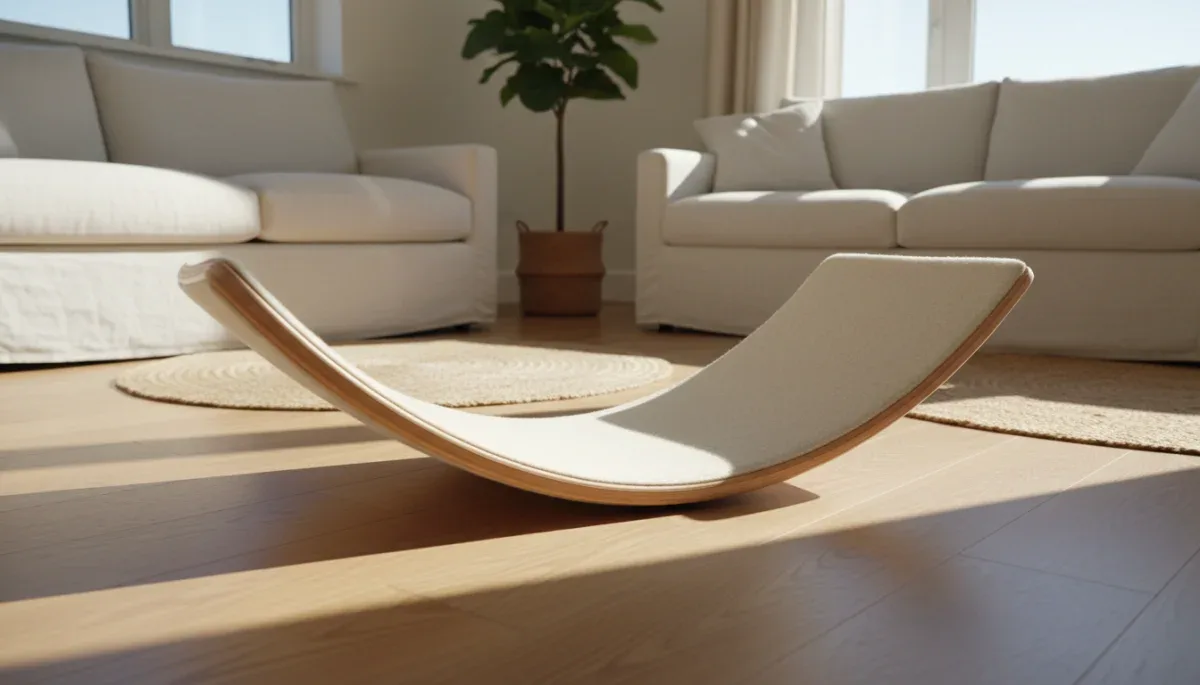
Choosing between an authentic Wobbel board and standard balance boards comes down to how your household plans to use the item, the materials used in manufacturing, and verified safety certifications. A curved board functions as active play equipment, an open-ended toy, and functional seating for children and adults alike, but variations in timber strength and base materials impact long-term durability and price.
Families investing in open-ended movement toys often weigh brand-name prestige against functional budget alternatives. The primary trade-off involves paying a premium for verified European manufacturing standards and natural finishes versus selecting generic boards that may use synthetic glues or carry lower weight capacities.
Core design and manufacturing standards
A Wobbel board comparison begins with the physical construction of curved balance boards. The original Wobbel brand, manufactured in the Netherlands, uses pressed layers of European beech wood harvested from sustainably managed forests certified by the Forest Stewardship Council. The multi-ply bentwood process requires hydraulic pressure to press dozens of micro-thin veneers into a gentle, continuous arch without developing structural weak points.
Advertisement
Standard balance boards found across general retail markets vary widely in origin and materials. Many alternatives use birch plywood, basswood, or mixed composite cores. While birch offers substantial strength, less expensive composites may crack under uneven dynamic pressure. Authentic Wobbel units undergo rigorous safety testing under European Toy Safety Directive EN 71 standards and carry CE marks, verifying chemical safety in their water-based lacquers and structural resistance under load.
When evaluating alternatives, review whether the manufacturer publishes verifiable safety documentation. Legitimate manufacturers specify compliance with ASTM International standards in the United States, specifically ASTM F963 for toy safety. If an unbranded manufacturer cannot provide third-party lab documentation verifying non-toxic finishes and splinter-free edge finishing, the lower price point carries hidden risks.
Weight capacity and multi-age versatility
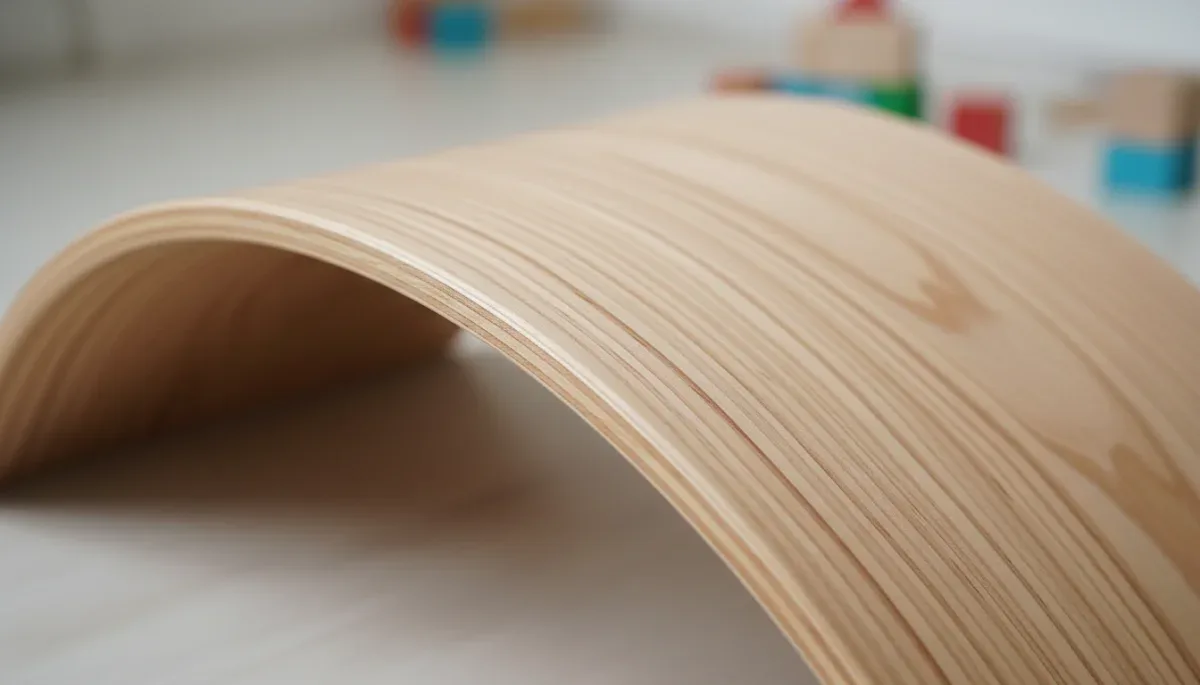
Dynamic movement demands realistic load ratings that exceed the body weight of a standing child. The standard Wobbel Original model specifies a maximum user weight of 200 kilograms (approximately 440 pounds) under static testing, allowing teenagers and adults to stand, rock, and stretch on the inverted arch. This allows the object to remain useful in a household for decades rather than serving as a short-lived nursery novelty.
Generic alternatives frequently present conflicting capacity ratings. Some budget listings claim ratings of 300 to 480 pounds, yet they lack reinforcement along the perimeter curves, leading to noticeable flex or creaking under adult weight. Other models explicitly restrict usage to children under 100 pounds, limiting functionality purely to young kids.
Key capacity checkpoints to examine
- Static load rating versus dynamic movement rating published in official technical sheets.
- Veneer thickness along the outer curve, where tension forces concentrate during inverted use.
- Manufacturer recommendations regarding single-user versus multi-child active rocking.
- Intended user demographics ranging from toddlers to active adults.
Checking the dynamic rating ensures the curve will not flatten permanently if an older sibling jumps onto the board from a low couch or if an adult uses it for balance training.
Base backing options and floor preservation
Hardwood, laminate, and tile floors can suffer scratching from the continuous friction of bare wood curves under load. Wobbel addresses surface protection by offering factory-applied natural wool felt or pressed recycled synthetic felt (known as Wobbel Up or EKO felt) along the convex underside. Natural wool felt provides dampening against acoustic vibration, muffles hard rocking sounds, and shields delicate wood planks from grit.
Standard balance boards frequently sell as bare wood to reduce initial production expenses. Adding an aftermarket felt backing can be challenging, as self-adhesive felt strips often peel away under shear force during vigorous rocking. Furthermore, low-grade adhesive can leave gummy residues that pick up carpet lint, dirt, and pet hair, creating an unhygienic surface over time.
If your home features wall-to-wall carpeting, a bare wood balance board is generally sufficient and glides without scuffing the floor. For homes with hard surfaces, an integrated felt base is a practical necessity unless you dedicate a permanent thick foam play mat underneath the rocking zone.
Open-ended play value versus fitness-focused boards
Curved rocker boards differ fundamentally from roller-and-deck balance boards or circular wobble discs used in physical therapy clinics. A Wobbel board and its direct curved peers rely on a fixed, shallow arc that rocking bodies control without sharp pivot points. This gentle curve permits open-ended imaginative play: children turn the arch into a bridge, a tunnel, a race-car ramp, a reading lounger, or a stepping stool.
Standard fitness balance boards usually feature a circular disc mounted atop a centralized plastic hemisphere, or a flat wooden deck balancing precariously on an unattached cylindrical roller. These fitness tools present elevated fall hazards for toddlers and young children, making them unsuitable for unsupervised nursery environments.
When selecting a gift, consider whether the primary goal is childhood imaginative exploration or dedicated athletic balance conditioning. Curved wooden arches support both gross motor development and open-ended play, whereas roller-based platforms remain strictly single-purpose training gear for older youth and adults.
Safety certifications and chemical emissions
Young children spend significant time in direct physical contact with balance boards, often lying on them with bare skin or holding the edges close to their faces. The glues used between the pressed veneer sheets must not off-gas volatile organic compounds, formaldehyde, or heavy metals. Authentic Wobbel boards utilize water-based, solvent-free translucent lacquers and food-grade stains that comply with strict consumer safety directives.
Imported generic boards bought through third-party e-commerce marketplaces do not always undergo independent chemical testing for indoor air quality. In the United States, children's products must comply with Consumer Product Safety Commission (CPSC) requirements regarding lead limits and phthalates. Without a Children's Product Certificate (CPC) issued by the seller or manufacturer, the buyer cannot independently verify the chemical safety of the internal binders.
Inspect the manufacturer's formal documentation for compliance labels prior to completing a purchase. Reputable brands maintain downloadable declaration-of-conformity certificates on their corporate websites, listing the precise testing laboratory and standard version numbers used to clear the goods for sale.
Pricing transparency and long-term investment
Pricing reflects raw materials, fair-wage assembly, and logistics overhead. An original Wobbel board generally retails between $140 and $220 in the United States, depending on the specific model, size (Starter, Original, or XL), and whether natural wool felt is installed. Replacement felt kits and specialist profiles can increase overall investment.
Generic curved boards sell across major online marketplaces for prices ranging between $50 and $90. While the upfront savings are significant, buyers should weigh longevity against initial cost. Premium bentwood arches made from dense European beech retain their arch shape and structural stiffness through years of multi-generational use, giving them strong secondary market resale value in local parenting groups.
Budget alternatives made from softer wood species may develop edge splintering, veneer delamination, or flattening along the curve after prolonged use under heavy loads. If purchasing a secondary brand, inspect user feedback specifically for reports of veneer splitting along the narrow side rails.
At a glance
| Factor | What to know |
|---|---|
| Wood sourcing | Wobbel uses certified European beech; standard boards frequently use birch or mixed composites. |
| Floor protection | Integrated wool or recycled felt prevents hardwood floor damage and dampens operational noise. |
| Weight limits | High-end models hold up to 440 pounds; budget models may flex or crack under adult use. |
| Safety verification | Check for verified ASTM F963 or European EN 71 documentation to ensure non-toxic finishes. |
Frequently asked questions
Can adults safely exercise on curved balance boards?
Yes, provided the manufacturer specifies a dynamic weight rating of at least 300 to 400 pounds. Authentic Wobbel boards support adult weights up to 440 pounds, making them suitable for low-impact yoga, stretching, and stability exercises when placed on a flat, non-slip surface.
Is felt backing necessary on a balance board?
Felt backing is essential if you intend to use the board on hardwood, laminate, or tile flooring. The felt prevents surface scratches, stops the board from sliding during weight transitions, and muffles noise. Homes with thick wall-to-wall carpeting can safely use unbacked wooden boards.
What size balance board is appropriate for toddlers?
Toddlers and young preschoolers benefit from compact models, such as the Wobbel Starter, which feature a shallower curve and lighter weight. Smaller dimensions allow younger children to turn, lift, and maneuver the toy independently without assistance, reducing the risk of pinched fingers during play.
How do you clean and maintain a wooden balance board?
Wipe the wooden surfaces with a slightly damp cloth and mild dish soap, drying the surface immediately with a clean towel. Avoid aggressive household cleaners, abrasive sponges, or saturating the wood. If your board has wool felt, clean it gently with a dry wool brush or vacuum attachment.
The bottom line
A Wobbel board offers verified European safety compliance, sustainably harvested timber, and superior structural rigidity that supports both energetic toddler play and adult fitness routines. While standard budget alternatives provide a more affordable entry point for families testing out active gross motor play, they require closer scrutiny regarding chemical finishes and dynamic weight limits. Before purchasing, confirm that the seller provides a verifiable Children's Product Certificate and a clear weight rating suited to everyone in your home.
Written by
Maria Eduarda
Maria Eduarda writes about tech & life, gift guides and seasonal toys for portalreborn.com. Each article explains how things work, compares published details such as prices, policies and program rules, and points readers to the official source before they decide.