
Magna-Tiles vs Playmags: Safety and Magnet Strength
Advertisement
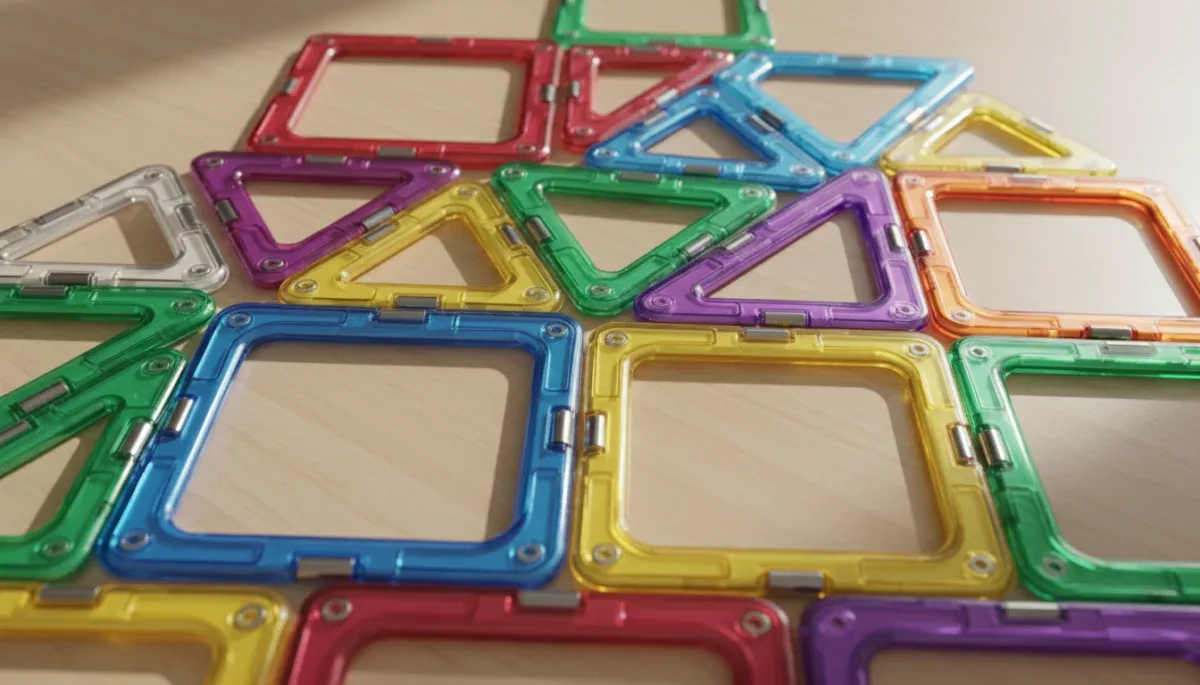
Magna-Tiles and Playmags both provide translucent magnetic construction pieces designed for open-ended geometric play, but Magna-Tiles focuses heavily on reinforced ultrasonic welding with corner rivets while Playmags emphasizes high magnetic pull strength and specialty accessories at an accessible price point.
This comparison helps parents, caregivers, and educators determine which building system aligns with their structural standards and household safety preferences, though both brands comply with baseline United States federal toy regulations.
Safety standards and structural engineering
In the United States, all magnetic toys intended for children must adhere to rigorous federal requirements overseen by the Consumer Product Safety Commission. The foundational benchmark is ASTM F963, standard consumer safety specification for toy safety, which contains strict rules governing magnet retention and ingestion hazards. Rare-earth magnets pose severe internal injury risks if swallowed in multiples, meaning the enclosing plastic shell must resist crushing, impact, and tensile forces without cracking open.
Advertisement
Magna-Tiles uses food-grade, non-toxic methylene-acrylonitrile-butadiene-styrene plastic that is free of BPA, phthalates, and latex. The structural design features an internal lattice framework, ultrasonically welded seams, and metallic corner rivets that mechanically clamp the two plastic halves together. This redundant sealing system ensures that even if an edge weld experiences stress during a drop, the metal rivets prevent the housing from splitting and releasing the enclosed cylinder magnets.
Playmags constructs its tiles from high-impact ABS plastic that is also free of BPA and phthalates. Instead of corner rivets, Playmags relies on a double-layer ultrasonic welding process and an internal perimeter wall around each magnet pocket. While this welded housing meets mandatory impact and torque testing thresholds, it lacks the visible exterior mechanical fasteners found on Magna-Tiles. Both manufacturers clearly designate their standard magnetic sets for children aged three years and older.
Key safety indicators to check
- Compliance with current ASTM F963 and CPSIA testing protocols.
- Ultrasonic weld integrity along all outer seams and corner joints.
- Absence of surface cracks or chips after hard impact on tile edges.
- Secure encapsulation of internal cylindrical rare-earth magnets.
Understanding magnetic strength and stability
The core building experience of any magnetic tile set depends on the grade, size, and orientation of its enclosed magnets. Magnetic strength determines how tall a vertical tower can stand before collapsing under its own weight, as well as how securely horizontal cantilever structures hold their form during construction. Both brands use neodymium rare-earth magnets sealed inside free-spinning interior chambers along the tile perimeters.

Playmags markets its tiles as possessing stronger magnetic attraction, utilizing slightly larger magnetic cores positioned near the outer edge. This engineering choice produces a firm snap when pieces align, which assists younger builders in creating towering structures or spanning wider gaps without immediate sagging. The increased attraction also helps keep multi-tier roofs and elaborate ramps intact when light vibration occurs on the play surface.
Magna-Tiles balances its magnetic strength to allow easy separation by smaller hands while maintaining structural integrity for complex builds. The magnets inside Magna-Tiles rotate freely within their designated slots, ensuring that positive and negative poles automatically orient themselves when two pieces meet. While tall structures built with Magna-Tiles may require a broader architectural base than those built with Playmags, the controlled pull reduces pinched fingers among toddlers transitioning into preschool building sets.
Factors influencing magnetic performance
- Magnet volume and grade relative to overall tile weight.
- Free-rotation chamber design that prevents pole rejection.
- Edge thickness and plastic barrier distance between adjacent magnets.
Plastic durability and wear over time
Magnetic construction tiles endure substantial friction, direct impact from drops on hard floors, and repeated stacking during storage. The surface finish and structural reinforcing ribs inside the plastic determine whether tiles remain clear and scratch-resistant or develop cloudiness and stress fractures over months of active play.
Magna-Tiles incorporates a signature criss-cross reinforcing lattice inside the hollow body of each piece. This internal bracing serves two functions: it distributes crushing forces evenly across the tile face and prevents the outer clear walls from bowing inward under pressure. Furthermore, the slightly raised outer lip protects the central clear face from surface scratching when tiles slide across tables or abrasive flooring.
Playmags features solid-plane transparent plastic panels without internal cross-ribs, giving them a sleek, window-like aesthetic. While the ABS plastic provides commendable resistance to shattering, the smooth, flat surfaces are more susceptible to visible micro-scratches over extended use. However, Playmags tiles retain strong torsional rigidity, resisting twisting forces when children assemble large composite cubes or heavy three-dimensional spheres.
Cross-compatibility and accessory ecosystems
A primary practical consideration for expanding a toy collection is dimensional compatibility across different manufacturers. Fortunately, the magnetic tile industry largely adheres to a standard sizing format, allowing pieces from different brands to interlock mechanically and magnetically without specialized adapters.
Standard square tiles from both Magna-Tiles and Playmags measure approximately three inches by three inches (7.6 centimeters by 7.6 centimeters). Because the magnets are housed at equivalent center-to-edge intervals along the perimeter, pieces from Magna-Tiles and Playmags attract seamlessly to one another. Families can mix and match squares, equilateral triangles, right triangles, and isosceles triangles across both product lines.
Where the two brands diverge significantly is in their specialty add-on offerings. Magna-Tiles provides architecturally oriented sets such as microMAGS, dynamic crane pieces, animal figures with magnetic feet, and specialized road or builder themes. Playmags distinguishes itself with unique click-in accessories, including plastic alphabet and number tiles that snap directly into hollow window frames, dome pieces, and wheeled vehicle chassis that attach securely to standard tiles.
Notable accessory offerings
- Magna-Tiles interactive builder cranes and articulated animal figures.
- Playmags click-in educational letters, numbers, and window inserts.
- Standardized wheeled chassis bases available across both catalogs.
- Specialized geometric shapes including large pentagons and trapezoids.
Age ratings, price points, and value
When assessing long-term value, buyers must weigh safety engineering, piece variety, and cost per component. Both Magna-Tiles and Playmags position their foundational starter sets and mega-packs for children aged three and up, reflecting standard industry precautions regarding small parts and magnetic components.
Magna-Tiles generally commands a higher price per tile at retail, reflecting its proprietary manufacturing methods, metal rivet construction, and brand provenance as the original pioneer of translucent magnetic tiles in North America. This higher cost is often accompanied by responsive customer service and a well-established track record in commercial daycare and educational environments where commercial-grade durability is paramount.
Playmags typically retails at a lower cost per tile, making larger sets with higher piece counts more accessible to families on a budget. Because Playmags includes accessory elements such as click-in cards and magnetic figures within their standard boxed sets, the immediate variety per dollar spent is substantial. For home use under regular parental supervision, Playmags offers strong building utility without requiring the premium investment associated with riveted alternatives.
At a glance
| Feature | What to know |
|---|---|
| Safety construction | Magna-Tiles uses rivets and welds; Playmags uses perimeter welds. |
| Magnetic pull | Playmags provides slightly stronger pull; Magna-Tiles focuses on easy manipulation. |
| Cross compatibility | Both brands share the standard three-inch square dimension. |
| Cost per piece | Playmags generally costs less per tile than Magna-Tiles. |
Frequently asked questions
Can Magna-Tiles and Playmags be used together?
Yes, Magna-Tiles and Playmags are fully compatible because their standard pieces share identical three-inch base dimensions and matching magnet alignment along the edges. Children can combine squares, triangles, and vehicle bases from both brands without experiencing magnetic repulsion.
Are magnetic tiles safe for toddlers under three years?
No, standard magnetic tiles from both brands are rated for children aged three and older due to potential magnet ingestion risks if a piece breaks. Toddlers should only play with specialized, oversized toddler-safe magnetic systems under direct adult supervision.
Do Playmags break more easily than Magna-Tiles?
Both brands pass mandatory impact tests, but Magna-Tiles provides extra structural redundancy through metal corner rivets and internal lattice bracing. Playmags relies entirely on ultrasonic perimeter welds, which withstand typical household play but lack secondary mechanical fasteners.
Why does magnetic strength differ between brands?
Magnetic strength varies based on the size of the neodymium core and the thickness of the plastic housing enclosing it. Playmags uses slightly larger magnets for a firmer hold, whereas Magna-Tiles optimizes magnet size for balanced assembly and separation.
The bottom line
Magna-Tiles remains the gold standard for structural peace of mind due to its patented corner rivets and reinforced lattice plastic, making it exceptionally well-suited for classrooms and high-traffic playrooms. Playmags offers strong magnetic attraction and engaging click-in educational accessories at a more budget-friendly price point for home use. Before purchasing, verify that the set carries current ASTM F963 certification markings and fits the developmental age of the child.
Escrito por
Lucas Bastos
Lucas Bastos writes about societal shifts for portalreborn.com. Each article explains how things work, compares published details such as prices, policies and program rules, and points readers to the official source before they decide.