
Target versus Amazon toy return policies for holiday gifts

Advertisement
Target and Amazon handle holiday toy returns through distinctly different frameworks, giving gift buyers different deadlines, drop-off expectations, and refund methods depending on where an item was purchased. Understanding these differences helps families avoid stuck inventory, rejected packages, or expired return windows when gifts need to be swapped after the holiday rush.
This comparison helps parents, relatives, and gift recipients manage duplicate toys, mismatched age ranges, or defective items without unnecessary friction. The critical catch is that while both retailers offer seasonal extensions for certain categories, third-party marketplace sellers, missing gift receipts, and unsealed boxes can dramatically reduce your refund amount or invalidate your return entirely.
Standard return windows and seasonal holiday extensions
Retail return policies operate on specific published schedules that shift as the winter shopping season begins. At the time of writing, Target maintains a standard policy that permits most unopened items in new condition to be returned within ninety days of purchase. Because a ninety-day timeline is already generous, many toys bought at Target in October or November fall naturally within the standard window for post-holiday returns in late December or January. However, Target also enforces specific seasonal exceptions for electronics and entertainment items, which frequently include interactive robotic toys, video games, and electronic learning devices. For these electronic categories purchased between October and December, the refund clock typically does not begin ticking until December 26, creating an extended period that stretches well into January.
Advertisement
Amazon operates under a standard thirty-day return window during most of the year, which presents a challenge for early shoppers who purchase gifts during October promotional events. To accommodate holiday shoppers, Amazon publishes a seasonal return policy modification each autumn. Under this extended holiday schedule, items purchased between early November and December 31 can generally be returned through January 31 of the following calendar year. This seasonal shift equalizes the timeline for November purchases, but it leaves early October buyers with less flexibility than Target's standard calendar offers.
Key calendar considerations for toy buyers
- Target provides a baseline ninety-day window on standard toys regardless of purchase date.
- Amazon standard purchases outside the designated seasonal window allow only thirty days from receipt.
- Target electronic toys subject to limited windows receive an extension starting December 26.
- Amazon holiday extensions terminate uniformly on January 31, regardless of whether the purchase occurred on November 1 or December 24.
Shoppers who complete their purchasing early in the autumn should note these calendar differences carefully. A toy purchased at Target on October 10 carries a standard return deadline into early January. That same toy ordered through Amazon on October 10 falls outside the winter extension window, meaning the return window closes in early November, long before the recipient ever unboxes the gift.
Rules for opened packages and assembled toys
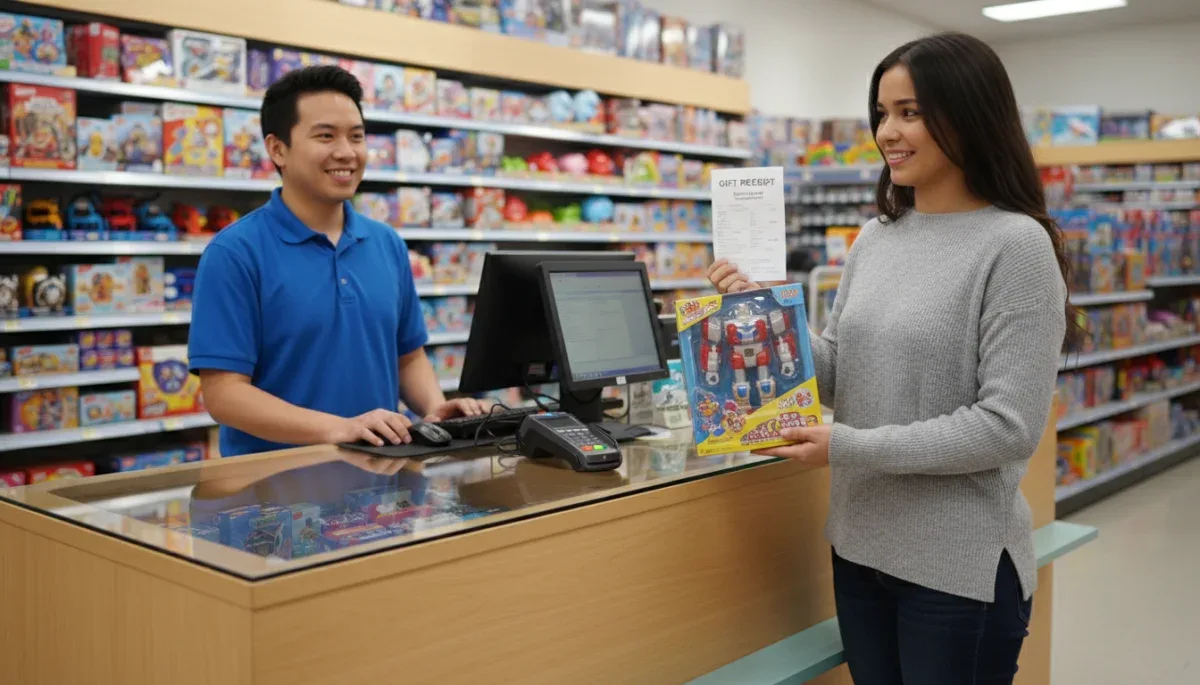
The condition of a toy plays a decisive role in whether either retailer will accept a return and grant a full refund. Target states in its published terms that items must be returned in new, unopened condition with original packaging, manuals, and accessories to guarantee a direct refund. Store team members possess customer-service discretion at the physical counter to evaluate opened merchandise. If a toy has been taken out of the package but remains intact and clean, a store may accept the return, but it may issue merchandise store credit rather than cash, or assess a restocking deduction if critical packaging components are damaged or missing.
Amazon enforces condition requirements through its automated returns center and processing warehouses. If an item is returned as opened, missing parts, or showing signs of customer handling that prevents resale as new, Amazon may apply a restocking fee or issue a partial refund under its customer agreement terms. When returning an opened toy to Amazon, the buyer must accurately select the return reason in the online portal. Categorizing an opened toy that was simply unwanted as a defective item can lead to account flags or rejected parcels if the fulfillment center inspects the item and finds no manufacturing flaw.
Handling unboxed or defective items
- Retain all inner plastic ties, instruction booklets, and packaging cardboard until the child tests the toy.
- Defective or broken toys qualify for return or replacement at both retailers even after opening.
- Target customer service desks inspect opened items on the spot, offering immediate resolution.
- Amazon requires shipping or dropping off the opened package before warehouse staff evaluates refund eligibility.
For toys that require assembly, such as play kitchens, bicycles, or dollhouses, both retailers expect the product to be disassembled and placed back into the original box if returned for non-defective reasons. When a toy arrives with missing hardware or damaged panels straight from the factory, both companies encourage customers to contact the manufacturer directly for replacement parts, though both will accept returns of incomplete sets if processed within the allowable timeframe.
Gift receipts and recipient refund options
Gift recipients rarely have access to the original purchaser's payment card, making gift receipt functionality essential for clean holiday toy exchanges. Target provides physical gift receipts at checkout or digital gift receipts through its mobile application. When a recipient presents a Target gift receipt at a customer service desk, the system issues the refund in the form of a Target GiftCard or an exchange for identical or equivalent merchandise. The original buyer is never notified that the item was returned, preserving social courtesy. If a recipient attempts a return at Target without any receipt, the retailer uses an internal tracking system linked to government-issued identification, limiting no-receipt returns to an annual dollar threshold and issuing store credit at the lowest recent promotional sale price.
Amazon offers a dedicated gift return portal where recipients can process returns using a seventeen-digit order number found on the packing slip or digital gift receipt. The recipient does not need to alert the giver. Once Amazon receives and scans the returned toy, the refund is deposited directly into the recipient's Amazon account as a digital gift card balance. If the toy arrived without a packing slip or order number, the recipient must contact Amazon customer service with the tracking number, delivery address, and sender details to trace the original transaction, which can complicate the process if the gift giver did not explicitly mark the purchase as a gift during checkout.
Managing gift returns effectively
- Target gift receipts produce physical or digital Target GiftCards usable immediately in stores or online.
- Amazon gift returns credit the recipient's account balance without notifying the person who ordered the gift.
- Target limits receipt-free returns through identification scanning and applies the lowest historical price.
- Amazon cannot process a gift return without an order number or verifiable package tracking identifier.
Recipients should check the bottom of delivery boxes for packing slips before discarding materials. Amazon frequently prints the required order identifier directly onto the peel-and-stick gift slip or receipt insert. Losing this slip makes processing a recipient return through the automated system impossible, requiring manual support intervention.
Third-party marketplace sellers and brand exclusions
A significant point of divergence between Target and Amazon involves third-party marketplace sellers. Amazon hosts millions of independent merchants through its third-party marketplace. While Amazon requires third-party sellers to offer return policies that match or exceed Amazon's baseline policies, merchants who pack and ship their own inventory (known as merchant-fulfilled sellers) maintain distinct procedures. These independent sellers can review return requests manually, require the buyer to pay return postage, or assess restocking fees for opened items if the return is due to buyer remorse rather than seller error.
Target also operates an online marketplace called Target Plus, featuring vetted partner brands. Unlike Amazon's expansive marketplace, Target integrates Target Plus returns directly into its physical store infrastructure. If an online shopper buys a toy sold and shipped by a Target Plus partner, the recipient can walk into any brick-and-mortar Target location and return the toy at the guest services desk. The store processes the refund directly to the original payment method or a gift card according to standard Target timelines, eliminating the need to coordinate directly with an outside merchant.
Navigating seller terms and private labels
- Amazon listings labeled as "Fulfilled by Amazon" follow standard Amazon return logistics and customer support.
- Amazon merchant-fulfilled toy orders may require buyers to coordinate return shipping labels directly with the seller.
- Target Plus partner orders can be returned across the counter at any local Target storefront.
- Target owned-and-exclusive toy brands carry a published one-year satisfaction guarantee with proof of purchase.
Target's proprietary toy and apparel lines provide a distinct advantage over standard marketplace listings. Items from Target-owned private labels come with an extended one-year return window when accompanied by a receipt or digital purchase history. While Amazon offers private-label goods across various household categories, its toy selections are overwhelmingly dominated by national toy brands and third-party manufacturers that remain strictly confined to standard thirty-day or seasonal holiday return frameworks.
Drop-off logistics and return shipping fees
The physical logistics of returning a bulky or awkward toy can introduce unexpected costs and inconvenience. Target leverages its massive retail footprint across the United States to make returns straightforward. Shoppers or gift recipients can return toys to any Target guest services desk or use drive-up return services available through the Target mobile application at participating stores. In-store returns incur zero shipping fees and produce an immediate receipt or gift card. For items ordered on Target.com, the company also provides prepaid return mailing labels, though store drop-offs remain the fastest method for resolving an unwanted item.
Amazon manages return logistics through an extensive network of physical drop-off partnerships. Rather than requiring customers to package toys in cardboard boxes and print shipping labels, Amazon coordinates drop-offs at locations such as Whole Foods Market, Kohl's department stores, The UPS Store, and Amazon physical pickup points. In most cases, the customer presents a QR code on a smartphone, and the partner counter scans the code, takes the unboxed toy, and packages it for transit. This service is generally free of charge, provided the customer uses the designated drop-off location specified during the return setup process.
Comparing physical drop-off steps
- Target accepts returns at all guest service counters and through mobile drive-up lanes at eligible stores.
- Amazon drop-offs at Kohl's or The UPS Store typically eliminate the need for an external shipping box or label.
- Selecting an alternate Amazon return method, such as a carrier pickup, may trigger a fee deduction from the refund.
- Target mail returns require packaging the item securely and dropping it off with the designated postal or freight carrier.
Consumers should pay close attention to carrier options inside the Amazon return portal. While Kohl's and UPS drop-offs are usually free, choosing a home pickup or an unapproved carrier can result in a deduction of several dollars from the final refund balance. Similarly, Target online returns shipped by mail are deducted from the refund if the return is discretionary and falls outside standard promotional return terms, making an in-person store visit the more reliable way to preserve the full purchase amount.
Store brand guarantees and membership perks
Membership programs and store credit accounts can further expand return privileges at both retailers. Target Circle Card holders (formerly known as RedCard) receive an automatic thirty-day extension on standard return timelines for purchases made with their store payment card. When applied to standard toys, this policy extends the return window from ninety days to a total of one hundred and twenty days from the purchase date. This benefit applies to both online and in-store purchases, providing an exceptionally long runway for families organizing post-holiday exchanges deep into the spring months.
Amazon Prime membership provides extensive benefits for delivery speeds, streaming entertainment, and exclusive sale access, but it does not officially lengthen the underlying thirty-day standard return window or the seasonal January 31 holiday deadline. Prime members enjoy streamlined customer service routing and wide access to free label-free drop-off locations, but the published policy deadlines apply equally to Prime subscribers and non-Prime shoppers. For consumers who prioritize maximum time flexibility over logistics drop-offs, Target's credit card extension offers a concrete structural advantage.
Program privileges compared
- Target Circle Card adds thirty consecutive days to standard return periods, totaling one hundred and twenty days.
- Amazon Prime offers convenient logistics and rapid support but no official calendar extensions beyond published dates.
- Target Circle account members enjoy automatic digital receipt tracking on mobile phones and in-store keypads.
- Amazon digital accounts store comprehensive order histories permanently, preventing misplaced receipts for direct buyers.
Digital receipt archiving is a major practical benefit for members of both retailers. Target Circle members who scan their barcode or enter their phone number at physical checkouts automatically store purchase proof in their profile, allowing them to process returns without keeping paper slips. Amazon inherently tracks every direct order within the buyer's account order history, enabling the buyer to generate return labels or gift receipts months after the original transaction took place.
At a glance
| Factor | What to know |
|---|---|
| Baseline window | Target grants ninety days for standard toys; Amazon allows thirty days from receipt outside holiday periods. |
| Holiday extension | Target extends electronic toys through late January; Amazon extends November and December orders through January 31. |
| Gift refunds | Target issues store merchandise gift cards; Amazon deposits credit directly into the recipient's digital account balance. |
| Drop-off method | Target handles returns at retail guest service counters; Amazon utilizes partner networks like Kohl's and The UPS Store. |
Frequently asked questions
Can I return an opened toy to Target if my child does not like it?
Target accepts opened items at the discretion of guest service team members. If the toy is undamaged and includes all parts, manuals, and packaging materials, stores frequently issue an exchange or store credit. Defective toys can always be exchanged or refunded within the standard return window.
How does an Amazon gift recipient get a refund without the sender knowing?
The recipient enters the seventeen-digit order number from the gift receipt into Amazon's online gift return portal. Once the carrier scans the returned toy, Amazon issues the refund as an Amazon Gift Card directly to the recipient's account, leaving the original buyer's account untouched and unnotified.
Do third-party sellers on Amazon have to follow the holiday extension?
Yes, Amazon requires third-party sellers to match its baseline return windows, including the extended holiday deadline of January 31. However, merchant-fulfilled sellers may charge return shipping or restocking fees on opened, non-defective items, whereas items fulfilled directly by Amazon usually offer free drop-offs.
What happens if I lose my Target receipt for a holiday toy?
If you made the purchase using a Target Circle account or a payment card, customer service can locate the transaction digitally. Without any proof of purchase or card lookup, Target requires a government-issued identification and limits receipt-free returns, issuing store credit at the item's lowest recent price.
The bottom line
Target provides longer baseline deadlines and direct in-person resolutions, while Amazon offers a convenient carrier drop-off network and seamless digital gift credit for recipients. Buyers should remember that holiday extensions depend strictly on the purchase date and whether an item is sold directly by the retailer or through an independent third-party merchant. Before checking out or discarding gift packaging, verify whether the toy is classified as standard merchandise or subject to electronic exclusions, and always confirm current return guidelines on the retailer's official website.
Written by
Maria Eduarda
Maria Eduarda writes about tech & life, gift guides and seasonal toys for portalreborn.com. Each article explains how things work, compares published details such as prices, policies and program rules, and points readers to the official source before they decide.