
Melissa and Doug vs KidKraft Play Kitchens Compared
Advertisement
Choosing between Melissa & Doug wooden sets and KidKraft play kitchens comes down to whether your household prioritizes compact, accessory-heavy role play or expansive, furniture-style realism. Melissa & Doug focuses primarily on dense solid wood accents, simple silhouettes, and tactile food accessories, whereas KidKraft specializes in large architectural kitchens made from engineered wood with working hardware and modern home aesthetics.
This comparison helps parents and gift givers determine which brand fits their dedicated square footage, budget, and tolerance for assembly. Both manufacturers adhere to mandatory federal toy safety standards, but their design philosophies create distinctly different daily experiences for young children and their caregivers.
Core materials and structural durability
The fundamental distinction between these two brands begins with their raw materials. Melissa & Doug builds its kitchens and accessory collections using a combination of solid natural wood, plywood, and medium-density fiberboard (MDF). Their play kitchens lean toward thicker structural posts and rounded wooden handles, which withstand frequent physical impacts and edge wear from boisterous toddlers.
Advertisement
KidKraft primarily utilizes engineered wood panels, specifically composite wood and MDF, wrapped in smooth decorative veneers. This manufacturing approach allows KidKraft to mimic real contemporary home designs, including subway tile backsplashes, faux marble countertops, and sleek cabinet facings. While these surfaces wipe clean easily, engineered edges can be vulnerable to moisture damage or chipping if dropped during assembly.
Both brands comply with the safety regulations set by the U.S. Consumer Product Safety Commission (CPSC), including tests for non-toxic finishes, lead content, and heavy metals under ASTM F963. However, solid wood components from Melissa & Doug often survive multiple household transitions better than the larger, thin-paneled walls typical of multi-unit KidKraft designs.
Scale, footprint, and playroom space requirements
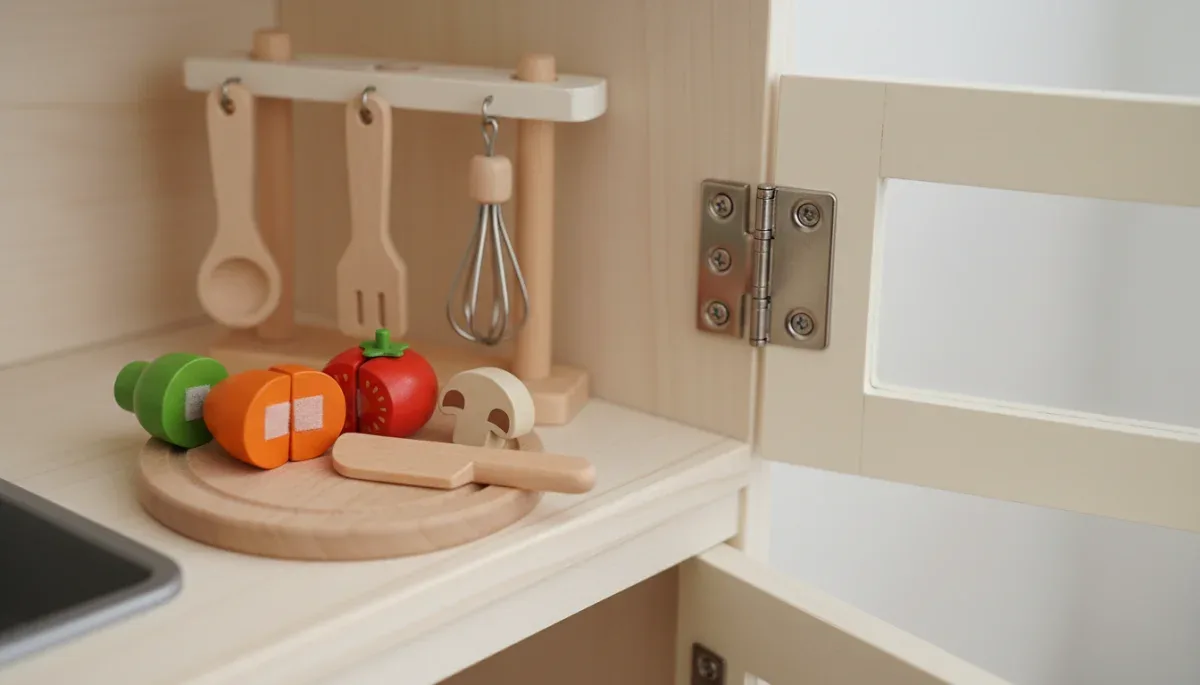
Playroom dimensions usually dictate which manufacturer makes practical sense for a family. Melissa & Doug generally designs compact play centers, such as their popular Chef’s Kitchen model, which measures approximately thirty-nine inches wide and twenty-eight inches high. These dimensions make their units manageable for small apartments, shared bedrooms, or corner setups in living rooms.
KidKraft designs run significantly wider and taller, often measuring between forty and forty-five inches high and up to forty-four inches wide in corner configurations. Models such as the Ultimate Corner Play Kitchen mimic full culinary islands, complete with separate washing, baking, and refrigeration stations. While these generous footprints permit multiple children to play simultaneously without jostling, they require dedicated, permanent floor real estate.
Ceiling height and child reach also matter. KidKraft units cater well to older preschoolers and kindergarteners who prefer counter heights closer to adult scale. Melissa & Doug kitchens sit slightly lower to the ground, allowing toddlers as young as three to access top shelving and overhead microwaves without straining or tipping the structure.
Interactive features and everyday functionality
The daily engagement each product provides depends heavily on how mechanical each setup is. KidKraft incorporates interactive hardware that appeals to children seeking sensory feedback, such as clicking knobs, turning sink handles, working ice dispensers that drop plastic cubes, and even battery-operated lights and sounds in select premium models.
Melissa & Doug emphasizes open-ended, analog play over electronics. Their kitchens feature moving dials, sliding doors, and turning faucets, but they avoid lights or sound effects. The brand puts its developmental focus on physical dexterity, pairing their kitchen frames with functional manual elements such as magnetic doors, grocery checklists, and wooden spice shakers.
Notable operational features across both lines
- KidKraft kitchens regularly feature clear plastic oven doors, working fabric curtains, and built-in chalkboards for daily menu writing.
- Melissa & Doug units offer modular shelving, hooks for hanging wooden ladles, and durable sheet metal sinks that lift out for cleaning.
- KidKraft corner units include dual-sided appliances, requiring accessible perimeter space around the kitchen body.
- Melissa & Doug focuses on front-facing play so the furniture can rest completely flush against a baseboard.
Assembly demands and installation complexity
Putting together a wooden play kitchen is often the most challenging part of ownership. KidKraft structures are known for having dozens of separate panels and hundreds of hardware fasteners. The manufacturer offers access to the BILT app, a three-dimensional interactive digital assembly tool that provides step-by-step guidance, which significantly reduces errors during the build process.
Even with digital support, assembling an extensive KidKraft unit routinely requires two to four hours of focused labor. The precision required for fitting dowels, plastic brackets, and laminate boards means an electric screwdriver set to low torque is often necessary to avoid stripping the pre-drilled holes in the composite panels.
Melissa & Doug kitchens generally have fewer individual pieces and simpler, boxier joints. A typical assembly takes between ninety minutes and two hours using basic hand tools. Their hardware packs are clearly labeled, and because the structures rely less on decorative trim and plastic snap-in inserts, there are fewer small pieces that risk misalignment during the build.
Accessories, expansion, and add-on ecosystems
A kitchen frame only provides the foundation for imaginative play; accessories bring the setup to life. Melissa & Doug holds a clear competitive advantage in this category, offering one of the largest catalog collections of wooden food groups, sliceable produce with hook-and-loop fasteners, baking kits, and durable stainless steel pots and pans. These add-ons are sold separately or bundled, giving families an intuitive gift pathway for birthdays and holidays.
KidKraft includes basic accessory starter sets with some of their kitchens, typically composed of molded plastic spatulas, cups, and telephone handsets. While functional, these accessories lack the tactile weight and heirloom appeal of solid wood. Families who purchase a KidKraft kitchen frequently choose to furnish its cabinets with Melissa & Doug play food, combining KidKraft's superior furniture architecture with Melissa & Doug's high-quality accessory sets.
When planning your budget, factor in the cost of these additional items. A simpler kitchen frame will quickly double in cost if you immediately purchase wooden grocery carts, pizza counter sets, and pantry groceries. Check what items are packed directly in the shipping box before buying accessory bundles.
At a glance
| Evaluation factor | What to know |
|---|---|
| Primary material | Melissa & Doug uses solid wood and MDF; KidKraft uses laminated composite MDF. |
| Playroom footprint | KidKraft requires large dedicated spaces; Melissa & Doug fits smaller, flush layouts. |
| Assembly demand | KidKraft takes longer with more parts; Melissa & Doug has a simpler construction. |
| Accessory quality | Melissa & Doug sets the industry standard for solid wood food accessories. |
Frequently asked questions
Are both brands tested for chemical and paint safety?
Yes, both brands must comply with CPSC standards and ASTM F963 requirements for children's toys sold in the United States. This includes strict federal limits on heavy metals, lead in paint, and phthalates in plastics. Review individual retail listings for specific Greenguard or safety certifications.
Which brand works better for multiple children playing together?
KidKraft is generally better suited for siblings or playdates because of its larger width, L-shaped corner designs, and multiple distinct appliance zones. Melissa & Doug kitchens are more compact, which can sometimes lead to crowding if two or more children try to access the sink simultaneously.
Can you use Melissa and Doug food sets in KidKraft kitchens?
Yes, wooden play food from Melissa & Doug fits inside KidKraft refrigerators, ovens, and cabinets. The two brands share standard toy food scaling, allowing parents to pair a KidKraft furniture piece with Melissa & Doug accessories seamlessly without size compatibility issues.
Do these wooden play kitchens require wall anchoring?
Both manufacturers include wall-anchoring hardware packs with their larger kitchen sets, and caregivers should always install them. While these wooden units are heavier and more stable than hollow plastic kitchens, children can pull open cabinet doors or climb shelves, creating an unexpected tipping hazard.
The bottom line
If you have ample floor space and want an attractive, modern play center with working hardware and realistic cabinet styling, KidKraft delivers the best architectural value. If your home has limited space and you value simpler assembly, sturdier natural wood components, and classic pretend food integration, Melissa & Doug remains the more sensible choice. Before you buy, measure your room baseboards carefully and verify whether accessory sets are included in the box at the time of purchase.
Written by
Lucas Bastos
Lucas Bastos writes about societal shifts for portalreborn.com. Each article explains how things work, compares published details such as prices, policies and program rules, and points readers to the official source before they decide.