Workforce Adaptation: Automation’s Impact on U.S. Job Skills by 2026

Advertisements
The U.S. workforce is undergoing a profound transformation driven by a projected 10% increase in automation by 2026, necessitating a critical re-evaluation and development of new job skills across all sectors.
The landscape of the American job market is in constant flux, but few forces exert as profound an influence as the relentless march of automation. By 2026, a projected 10% increase in automation is set to dramatically reshape the U.S. job skills landscape, demanding a proactive and strategic approach to
Advertisements
Understanding the Automation Surge and its Implications
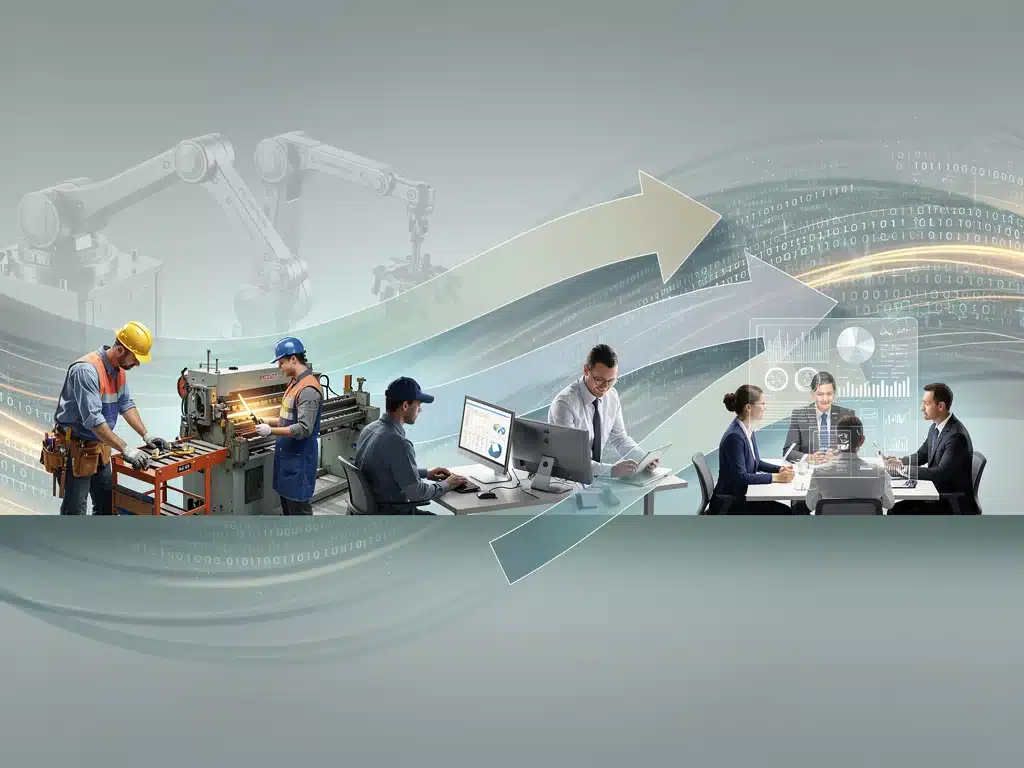
The anticipated 10% surge in automation by 2026 isn’t a sudden phenomenon but a continuation of trends already underway, accelerated by advancements in artificial intelligence, robotics, and data analytics. This growth signifies a deepening integration of automated systems into operational processes across nearly every industry, from manufacturing and logistics to healthcare and customer service. The implications for the U.S. workforce are multifaceted, presenting both significant challenges and unparalleled opportunities for those willing to adapt.
This increased automation will primarily target repetitive, routine tasks, freeing up human workers to focus on more complex, creative, and strategic endeavors. However, this shift requires a foundational change in the skill sets deemed valuable. Companies are increasingly looking for employees who can not only operate and maintain these new technologies but also innovate with them, solve problems that machines cannot, and engage in uniquely human interactions.
Key Drivers of Automation Growth
Several factors are propelling this automation boom. Economic pressures often drive businesses to seek greater efficiency and cost reduction, areas where automation excels. Furthermore, the availability of more sophisticated and affordable automation technologies makes implementation increasingly feasible for a wider range of businesses. The COVID-19 pandemic also highlighted the resilience and continuity benefits of automated processes, spurring further investment.
- Technological Advancements: AI, machine learning, and advanced robotics are becoming more capable and accessible.
- Economic Efficiency: Automation offers significant cost savings and increased productivity for businesses.
- Labor Shortages: In some sectors, automation helps address gaps in the human labor supply.
- Global Competition: Companies must innovate to stay competitive in a rapidly evolving global market.
In conclusion, the 10% increase in automation by 2026 is not just a statistical projection; it’s a clear signal of an impending transformation. Understanding its drivers and immediate implications is the first step in preparing the workforce for a future where human and machine collaboration becomes the norm, rather than the exception. This fundamental shift demands a proactive stance from individuals, educators, and policymakers alike.
The Shifting Landscape of Required Skills
As automation takes over more routine tasks, the demand for specific human skills is rapidly evolving. The focus is shifting from manual or repetitive capabilities to cognitive, interpersonal, and adaptive competencies that machines cannot easily replicate. This necessitates a significant pivot in education and training programs to equip the current and future workforce with the tools they need to thrive.
Employers are now prioritizing skills that complement automated systems, rather than compete with them. This includes a strong emphasis on digital literacy, critical thinking, and complex problem-solving. Furthermore, the ability to collaborate effectively with both human colleagues and automated tools is becoming increasingly vital. The workforce of 2026 will be a hybrid one, where seamless interaction between humans and AI is essential for productivity and innovation.
Emerging In-Demand Skill Categories
The skills most sought after in an automated future can be broadly categorized into a few key areas. Technical skills related to AI, data science, and cybersecurity are critical, but equally important are the ‘soft skills’ that underpin human interaction and creativity. These human-centric skills are often what differentiate human workers in an automated environment.
- Advanced Digital Literacy: Proficiency with new software, data analytics tools, and AI interfaces.
- Critical Thinking and Problem-Solving: Analyzing complex situations and developing innovative solutions.
- Creativity and Innovation: Generating new ideas and approaches that automation can then augment.
- Emotional Intelligence: Understanding and managing emotions in oneself and others, crucial for leadership and teamwork.
- Adaptability and Lifelong Learning: The capacity to continuously acquire new skills and adjust to changing environments.
The transition underscores the need for individuals to become lifelong learners, constantly updating their skill portfolios. Educational institutions and corporate training programs must align their curricula with these emerging demands to ensure graduates and employees are well-prepared. This proactive approach to skill development is paramount for navigating the evolving job market successfully.
Upskilling and Reskilling as Strategic Imperatives
In response to the rapid skill shifts, upskilling and reskilling have moved from optional initiatives to strategic imperatives for both individuals and organizations. Upskilling involves enhancing existing skills to stay current with technological advancements, while reskilling focuses on acquiring entirely new skill sets for different roles or industries. These processes are crucial for maintaining a competitive workforce and ensuring economic resilience.
For businesses, investing in upskilling and reskilling their current employees often proves more cost-effective and efficient than constantly recruiting new talent. It also fosters employee loyalty and morale by demonstrating a commitment to their professional development. For individuals, embracing continuous learning is no longer a choice but a necessity for career longevity and growth in an increasingly automated world. The ability to pivot and learn new competencies will define career success.
Effective Strategies for Skill Development
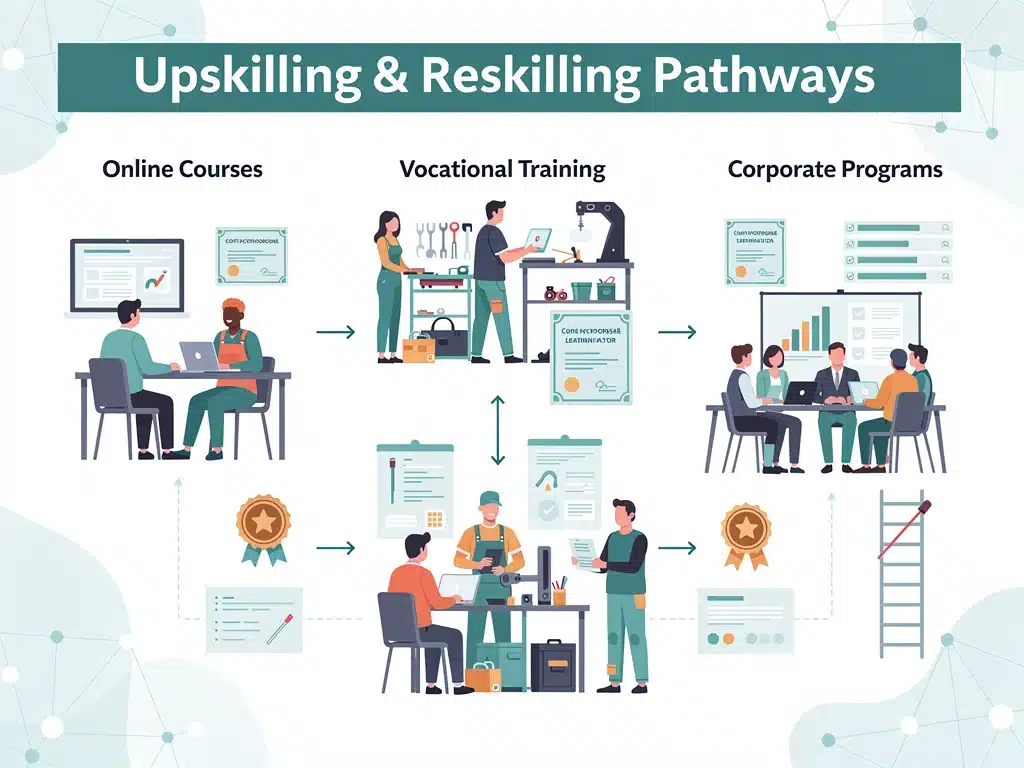
Various approaches can facilitate effective upskilling and reskilling. Online learning platforms offer flexible and accessible options, while vocational training programs provide specialized, hands-on experience. Corporate academies and internal training initiatives are also vital for tailoring skill development to specific organizational needs. The key is to create a culture of continuous learning and provide resources that support diverse learning styles.
- Online Learning Platforms: Coursera, edX, LinkedIn Learning offer flexible courses.
- Vocational and Technical Schools: Provide specialized training for hands-on, technical roles.
- Corporate Training Programs: Tailored programs developed by companies to meet internal needs.
- Government Initiatives: Publicly funded programs aimed at addressing skill gaps in the national workforce.
- Mentorship and Apprenticeships: On-the-job learning guided by experienced professionals.
Ultimately, the success of workforce adaptation hinges on the widespread adoption of upskilling and reskilling initiatives. This requires a collaborative effort from governments, educational institutions, businesses, and individuals to build a robust ecosystem for lifelong learning. Proactive investment in human capital will be the cornerstone of navigating the automated future.
Impact on Specific U.S. Industries
While automation’s influence is widespread, its impact will vary significantly across different U.S. industries. Some sectors, traditionally characterized by repetitive tasks, will experience more profound transformations, while others will see automation augment human capabilities in new and exciting ways. Understanding these industry-specific shifts is crucial for targeted policy-making and individual career planning.
Manufacturing, for instance, has long been a frontrunner in automation, and this trend will only intensify, leading to smarter factories and a demand for workers skilled in robotics, industrial IoT, and data analysis. Similarly, logistics and transportation will see increased adoption of autonomous vehicles and automated warehousing systems, requiring new skills in fleet management, data optimization, and system maintenance. Even traditionally human-centric fields like healthcare will integrate automation for diagnostics, surgical assistance, and administrative tasks, necessitating a blend of clinical and technological expertise.
Industry-Specific Adaptations
Each industry will navigate its own unique path through the automation landscape. The key is to identify which tasks are most susceptible to automation and which human skills will become more valuable as a result. This foresight allows for strategic planning and investment in the right areas of skill development.
- Manufacturing: Shift from manual assembly to oversight of automated production lines, robotics maintenance, and data interpretation.
- Logistics and Transportation: Demand for autonomous vehicle operators, supply chain optimizers, and predictive analytics specialists.
- Healthcare: Growth in roles involving AI-assisted diagnostics, telehealth systems management, and empathic patient care.
- Retail: Focus on e-commerce management, customer experience design, and inventory automation oversight.
- Finance: Expansion of roles in algorithmic trading oversight, cybersecurity, and financial data analysis.
In conclusion, the disparate impacts of automation across U.S. industries highlight the need for tailored strategies. A one-size-fits-all approach will not suffice; instead, a nuanced understanding of industry-specific challenges and opportunities will guide effective workforce adaptation and skill development initiatives.
The Role of Education and Policy in Workforce Readiness
Preparing the U.S. workforce for a 10% increase in automation by 2026 requires a concerted effort from educational institutions and policymakers. The traditional education model may not adequately prepare individuals for the rapidly changing demands of the automated economy. Therefore, a re-imagining of curricula, pedagogical approaches, and funding mechanisms is essential.
Educational institutions, from K-12 to higher education, must integrate digital literacy, computational thinking, and problem-solving skills throughout their programs. Vocational and technical schools will play an increasingly vital role in providing hands-on training for the technical roles that automation creates. Policymakers, on the other hand, need to create frameworks that support lifelong learning, provide incentives for businesses to invest in employee training, and establish safety nets for workers displaced by automation.
Key Educational and Policy Recommendations
To foster a resilient and adaptable workforce, specific actions are needed across the educational and policy spectrums. These recommendations aim to bridge the gap between current skill sets and future demands, ensuring that the U.S. workforce remains globally competitive and productive.
- Curriculum Reform: Emphasize STEM, digital skills, and soft skills from an early age.
- Flexible Learning Pathways: Promote micro-credentials, bootcamps, and online courses as alternatives to traditional degrees.
- Public-Private Partnerships: Encourage collaboration between educational institutions and industries to align training with market needs.
- Government Funding for Training: Allocate resources for workforce development programs and unemployment support linked to reskilling.
- Policy Incentives: Offer tax breaks or subsidies for companies investing in employee training and automation adoption.
In summary, education and policy are foundational pillars for successful workforce adaptation. By fostering innovative learning environments and supportive policy landscapes, the U.S. can proactively address the challenges of automation, transforming potential disruptions into opportunities for growth and prosperity for its citizens.
Navigating the Ethical and Societal Dimensions of Automation
Beyond the technical and economic shifts, the projected 10% increase in automation by 2026 also brings significant ethical and societal considerations. As machines become more integrated into daily work and life, questions arise about job displacement, data privacy, algorithmic bias, and the very nature of human work. Addressing these dimensions proactively is essential for ensuring an equitable and just transition.
Job displacement is a primary concern, necessitating robust social safety nets, retraining programs, and potentially new models of employment. The ethical implications of AI, such as fairness, transparency, and accountability in decision-making algorithms, also require careful consideration and regulation. Furthermore, the psychological impact of working alongside increasingly intelligent machines, and the potential for a widening digital divide, must be thoughtfully managed to ensure societal cohesion.
Addressing Key Ethical Challenges
A multi-stakeholder approach involving technologists, ethicists, policymakers, and the public is vital to navigate these complex issues. Establishing clear ethical guidelines and regulatory frameworks can help mitigate negative outcomes and harness automation for the greater good.
- Job Displacement Management: Implement universal basic income discussions, robust unemployment benefits, and extensive retraining.
- Algorithmic Bias: Develop and enforce standards for fair and transparent AI algorithms to prevent discrimination.
- Data Privacy and Security: Strengthen regulations and technologies to protect personal and corporate data in automated systems.
- Digital Divide: Ensure equitable access to technology and digital education across all demographics.
- Human-Machine Teaming Ethics: Define roles and responsibilities in collaborative human-AI environments.
In conclusion, the societal and ethical dimensions of automation are as critical as the economic ones. A balanced approach that prioritizes human well-being, fairness, and equity will be crucial for building a future where automation serves humanity, rather than the other way around. Open dialogue and proactive policy development are key to successfully navigating this complex landscape.
Future Outlook: Continuous Adaptation and Innovation
Looking beyond 2026, the trajectory of automation suggests not a static endpoint but a continuous process of evolution and adaptation. The 10% increase in automation is merely a significant milestone in an ongoing journey that will redefine work for generations to come. The future workforce will be characterized by its fluidity, a constant need for skill renewal, and an embrace of innovation as a core competency.
The U.S. economy, to remain vibrant and competitive, must foster an environment where continuous learning and technological integration are not just encouraged but ingrained in its very fabric. This means investing in research and development for next-generation automation, supporting entrepreneurship in AI-driven fields, and cultivating a culture that views change as an opportunity rather than a threat. The emphasis will shift from specific job titles to transferable skills and the capacity for rapid learning.
Preparing for the Next Wave of Automation
The lessons learned from the current wave of automation will be invaluable for preparing for future technological advancements. Anticipating emerging technologies and their potential impacts will allow for more proactive strategies for workforce development and economic planning.
- Anticipatory Skill Planning: Regularly forecast future skill demands based on technological trends.
- Flexible Educational Models: Develop agile learning systems that can quickly adapt to new knowledge.
- Innovation Ecosystems: Foster collaboration between academia, industry, and government to drive technological breakthroughs.
- Global Collaboration: Learn from international best practices in managing automation’s impact.
- Human-Centric Design: Prioritize human values and needs in the development and deployment of automation.
Ultimately, the future outlook for the U.S. workforce in an increasingly automated world is one of dynamic change. Success will not be measured by resistance to automation, but by the ability to strategically adapt, innovate, and continuously evolve human capabilities to complement and leverage the power of advanced technologies. This ongoing journey demands foresight, resilience, and a commitment to lifelong growth.
| Key Point | Brief Description |
|---|---|
| 10% Automation Increase | Projected growth by 2026 significantly reshapes U.S. job market, impacting all sectors. |
| Skill Evolution | Demand shifts to digital literacy, critical thinking, creativity, and emotional intelligence. |
| Upskilling & Reskilling | Essential for individuals and businesses to remain competitive and adaptable. |
| Policy & Ethics | Government and education must foster readiness; ethical considerations are paramount. |
Frequently Asked Questions About Workforce Automation
It signifies a substantial shift where automated systems will handle more routine tasks, leading to changes in job roles. While some positions may be displaced, new ones requiring advanced digital, critical thinking, and human-centric skills will emerge, necessitating widespread workforce adaptation.
High-demand skills will include advanced digital literacy, AI and data analytics proficiency, complex problem-solving, creativity, and strong emotional intelligence. The ability to collaborate effectively with automated systems and adapt to continuous change will also be crucial for success.
Individuals should prioritize continuous learning through upskilling and reskilling initiatives. This involves leveraging online courses, vocational training, and corporate programs to acquire new technical and soft skills. Embracing adaptability and a proactive approach to professional development is key.
Businesses have a critical role in investing in employee training, fostering a culture of lifelong learning, and redesigning job roles to leverage automation effectively. Proactive talent development strategies can ensure their workforce remains competitive and innovative in an automated landscape.
Yes, ethical concerns include potential job displacement, algorithmic bias, data privacy, and the widening of the digital divide. Addressing these requires thoughtful policy, transparent AI development, and robust social support systems to ensure an equitable transition for all.
Conclusion
The projected 10% increase in automation by 2026 marks a pivotal moment for the U.S. workforce, demanding a proactive and integrated approach to adaptation. This transformation is not merely a technological shift but a profound societal evolution that redefines the value of human skills. Success in this new era hinges on a collective commitment to continuous learning, strategic upskilling and reskilling initiatives, and thoughtful policy development. By embracing innovation, fostering robust educational pathways, and addressing ethical considerations head-on, the U.S. can ensure its workforce remains resilient, competitive, and capable of thriving alongside advanced automation, paving the way for a future where human ingenuity and technological progress mutually reinforce each other for sustained economic growth and societal well-being.