
How suburban microtransit services work for families
Advertisement
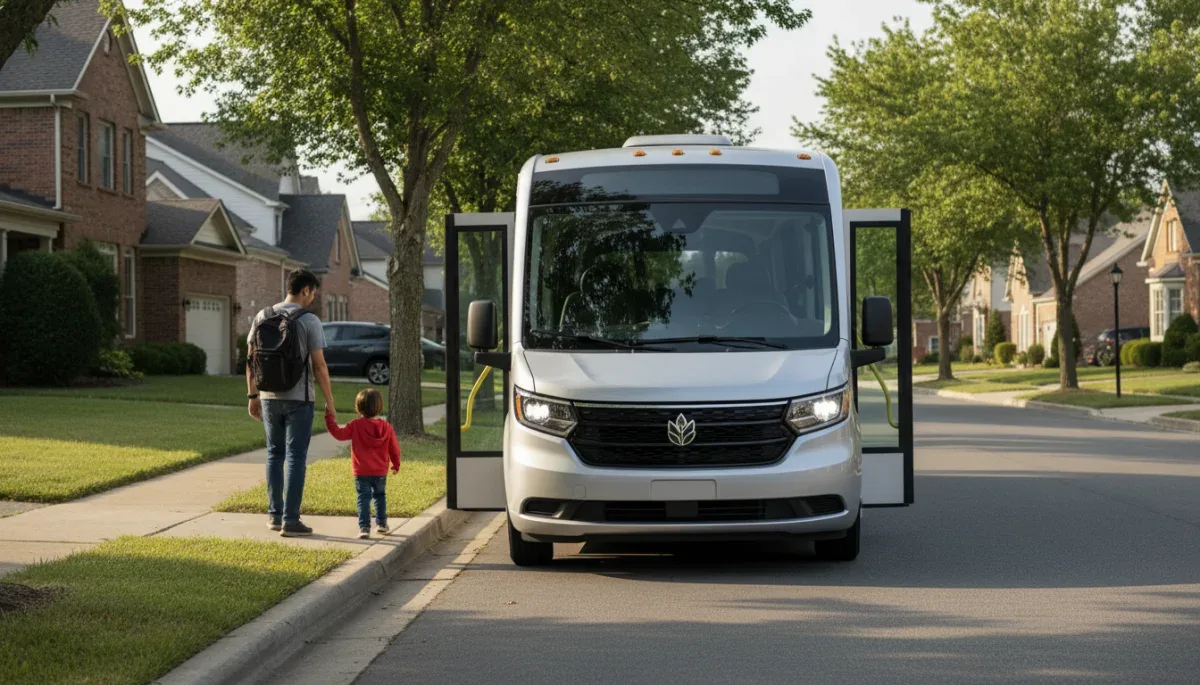
Suburban microtransit services provide on-demand, dynamically routed public transportation within designated geographic zones using vans or small shuttles. These systems allow riders to request trips through a smartphone application or phone dispatch, grouping multiple passengers heading in similar directions into a single vehicle.
These services help suburban families navigate areas where traditional large-bus routes are infrequent or physically impractical, though strict service boundaries and peak-hour wait times require careful planning. Understanding how municipal agencies operate these programs helps households determine whether on-demand vans can replace secondary personal vehicles or private ride-hailing trips.
How on-demand community transit systems operate
Microtransit operates as a hybrid between private ride-hailing services and traditional municipal bus routes. Instead of following fixed schedules and predetermined lines, microtransit fleets adjust their routing in real time based on passenger demand. When a rider requests a pickup, an automated dispatch algorithm matches the trip with other active requests, assigning the nearest compatible vehicle and calculating an efficient route that balances travel time for everyone on board.
Advertisement
Most suburban transit agencies deploy specialized passenger vans holding between six and twelve passengers. In suburban neighborhoods, services typically operate on either a curb-to-curb or a corner-to-corner model. Curb-to-curb models collect passengers directly outside their homes, which is common in low-density zones or for specialized accessibility programs. Corner-to-corner models ask riders to walk a short distance, usually one to three blocks, to a designated corner or virtual stop to keep vehicles moving quickly.
Key technological components
- Rider mobile application: A digital interface where families book trips, select passenger counts, track arriving vehicles, and process fares.
- Algorithmic routing engine: Backend software that dynamically pools passengers, adjusts drop-off orders, and prevents excessive vehicle detours.
- Telephone dispatch backup: A dedicated phone reservation line for riders without smartphones, credit cards, or reliable internet access.
Cost structures and fare payment models for households
Suburban microtransit services are publicly subsidized to maintain accessibility, meaning fares are generally comparable to standard local bus transit rather than private ride-hailing services. While commercial rideshare trips often cost between fifteen and forty dollars depending on surge pricing, municipal microtransit trips usually carry a flat rate between one and five dollars per passenger. At the time of writing, many suburban public transit operators include free or reduced-fare transfers to connecting regional bus or commuter rail lines.
For family budgets, this pricing model offers predictable transportation expenses without fluctuating surge rates during inclement weather or school release hours. Most transit agencies offer discounted tiers for students, seniors, and low-income residents who qualify through regional transit assistance programs. Payment is commonly integrated directly into regional transit fare cards, mobile ticketing apps, or cash-drop boxes on board the vehicle, depending on local policy.
Family safety, accessibility, and child seat rules
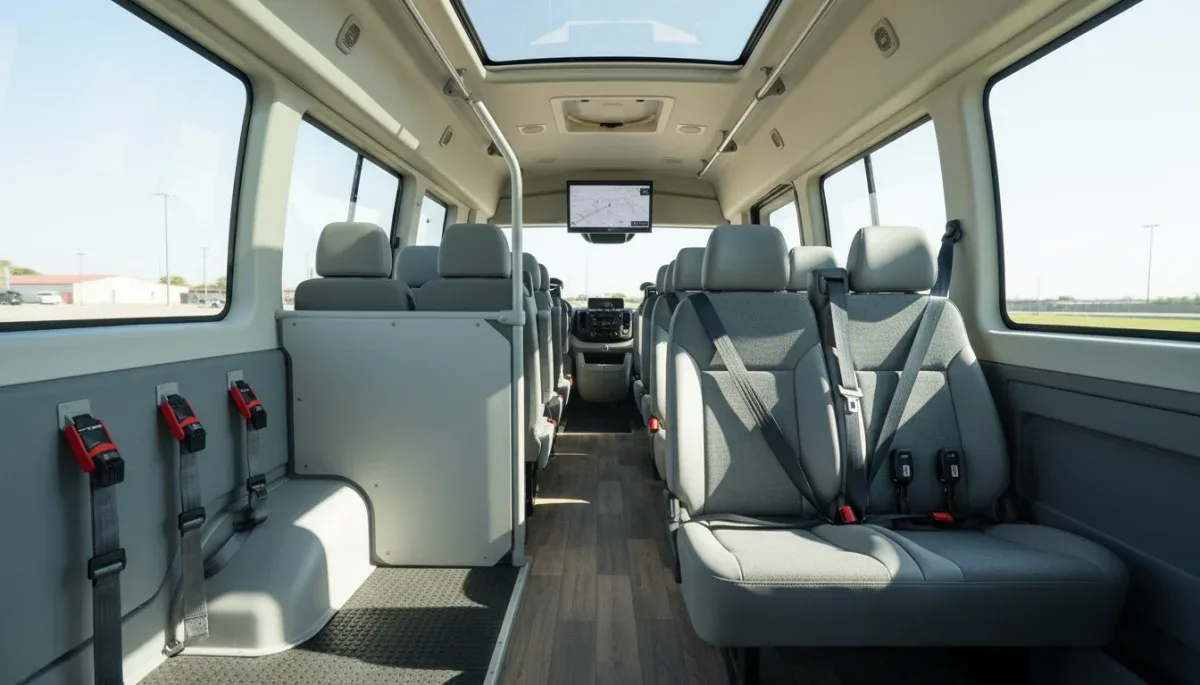
Safety regulations on microtransit vehicles differ significantly from those governing standard yellow school buses and full-size transit buses. Because microtransit vehicles are typically built on standard passenger van or cutaway chassis, federal and state motor vehicle safety standards generally require passenger seat belts and the proper use of child restraint systems. Parents traveling with infants, toddlers, or young children must verify specific agency policies regarding car seats before booking.
Unlike full-size public buses, which are often exempt from child restraint laws due to compartmentalization design, smaller vans require appropriate safety seats for young children based on state weight and age mandates. In almost all jurisdictions, transit agencies require caregivers to provide, install, and secure their own car seats or booster seats. Drivers are generally instructed not to install child restraints due to liability considerations, meaning parents must be prepared to secure seats independently and quickly.
Accessibility and vehicle features
- Wheelchair and mobility ramps: A defined percentage of every municipal fleet includes low-floor ramps or hydraulic lifts to serve passengers using mobility devices.
- Stroller accommodation: Most programs allow collapsible strollers on board, provided they do not block aisles and children are seated securely.
- Vetted professional drivers: Operators are professional transit employees who undergo commercial licensing requirements, background screenings, and periodic safety training.
Managing daily school runs and youth commuting
Many suburban families turn to microtransit to manage transportation for middle school and high school students commuting to school, extracurricular activities, or part-time jobs. Traditional school buses operate only along strict schedules and designated routes, leaving gaps for students who participate in after-school athletics, arts programs, or tutoring. Microtransit provides a flexible alternative within the community boundary, allowing students to travel safely across town without requiring an adult to drive them.
However, age restrictions represent an important limitation for families. Most suburban microtransit programs set a minimum age requirement for unaccompanied minors, typically requiring children under the age of twelve or thirteen to be accompanied by a paying adult. Parents should review their local transit agency rules regarding account creation, as many mobile booking apps require the account holder to be at least eighteen years old, though dependent passes are increasingly available for teenage riders.
Service boundaries, scheduling limits, and wait times
A central feature of suburban microtransit is its reliance on geofenced service zones. Microtransit is not designed for long-distance travel; rather, it operates within a defined municipality, neighborhood cluster, or commercial corridor. Trips must both originate and terminate within the approved service boundary. If a family needs to travel outside the microtransit zone, they must use the service to connect to a regional transit hub, commuter rail station, or park-and-ride facility.
Availability is also subject to operational hours and vehicle capacity. Unlike private ride-hailing services with large, private fleets, municipal programs maintain a fixed number of vans funded by public budgets. During morning rush hour or after-school pickup windows, wait times can increase substantially, and booking systems may temporarily show no available seats. Families relying on microtransit for time-sensitive appointments should book early or allow a generous travel cushion.
Integrating microtransit with regional rail and bus networks
Suburban microtransit serves as an effective first-mile and last-mile transit solution, connecting low-density residential subdivisions to major commuter rail stations and central transit hubs. Suburban neighborhoods often feature winding streets and cul-de-sacs that cannot accommodate thirty-foot or forty-foot transit buses, creating transit deserts where residents feel forced to own multiple cars. Microtransit vans navigate these residential streets with ease, bringing riders directly from their doorsteps to high-frequency transit trunks.
This integration supports households attempting to reduce their automotive footprint or manage life with a single vehicle. Commuting parents can take a microtransit van to the morning train, leaving the family vehicle at home for other household needs. Many transit authorities offer integrated digital ticketing, where a single app or fare card covers both the microtransit feeder trip and the subsequent train or regional express bus journey.
At a glance
| Factor | What to know |
|---|---|
| Average fare cost | Flat public rates typically range between one and five dollars per passenger per trip. |
| Car seat regulations | Caregivers must bring and install their own child safety seats in passenger vans. |
| Service area limits | Rides are restricted to defined local zones and do not provide direct cross-regional travel. |
| Unaccompanied youth | Children under twelve or thirteen generally require an accompanying adult on board. |
Frequently asked questions
Can children ride suburban microtransit alone?
Most suburban transit agencies permit teens aged thirteen and older to ride alone, while younger children must travel with a responsible adult. Booking accounts typically require an adult user, though some agencies offer linked student accounts. Families should check their local transit agency guidelines for exact unaccompanied minor rules.
Do microtransit vans provide car seats for toddlers?
No, public microtransit vans do not provide child safety seats or booster seats for passengers. Because these vehicles are regulated like passenger vans rather than large buses, caregivers are legally required to bring and properly install their own child restraints for young children before departure.
How much does a community microtransit ride cost?
Fares are publicly subsidized and generally cost between one and five dollars per person, significantly less than commercial ride-hailing services. Many programs offer reduced rates for students and low-income residents, as well as free transfers to connecting commuter trains and fixed-route bus lines.
What happens if a microtransit van is fully booked?
If all fleet vehicles are operating at capacity during peak periods, the booking app will display extended wait times or suggest alternate departure windows. Because fleets are limited in size, agencies recommend booking trips well in advance during typical morning and afternoon commuter rush hours.
The bottom line
Suburban microtransit provides families with an affordable, accessible alternative to private car trips for neighborhood errands, school commutes, and transit connections. While the service offers flat-rate fares and flexible routing, households must account for geofenced zone restrictions, limited fleet capacity during peak hours, and strict child car seat requirements. Before planning trips, check your local transit provider official website to verify exact operating boundaries, age limits, and child safety seat rules.
Written by
Rita Lima
Rita Lima writes about conscious living and personal growth for portalreborn.com. Each article explains how things work, compares published details such as prices, policies and program rules, and points readers to the official source before they decide.