
Shampoo Bars versus Liquid Shampoo for Families
Advertisement
Shampoo bars reduce household plastic waste and declutter crowded family showers, while traditional liquid shampoo offers familiar convenience and easier handling for young children. Switching to solid bars eliminates single-use plastic bottles, but success depends on managing bathroom humidity and choosing the right formulation for each family member's hair type.
For busy households aiming to cut down on daily landfill waste, solid personal care products provide a measurable way to lower packaging consumption. However, the practical reality of shared family bathrooms means that melting bars, varied hair textures, and differing washing habits can complicate the transition without proper storage and realistic expectations.
Understanding the chemical differences between bars and liquids
Liquid shampoo consists mostly of water, often making up seventy to eighty percent of the volume in a standard retail bottle. Manufacturers blend this water with synthetic surfactants, conditioning agents, preservatives to prevent bacterial growth in wet environments, and fragrance compounds. Because liquid shampoo is already diluted, it disperses immediately through wet hair and builds lather with minimal friction.
Advertisement
Shampoo bars fall primarily into two distinct categories: true soap bars and syndet bars. True soap bars are created through saponification, a chemical process combining plant oils or animal fats with an alkaline substance like sodium hydroxide. These bars naturally carry an alkaline pH, typically between eight and ten, which can lift the hair cuticle and cause tangles or residue build-up without an acidic rinse.
Syndet bars, short for synthetic detergent bars, use concentrated, solid surfactant noodles such as sodium cocoyl isethionate derived from coconut oil. Cosmetic chemists formulate syndet bars to match the natural, slightly acidic pH of human hair and scalp, usually between 4.5 and 5.5. For most families, syndet bars behave much more like concentrated liquid shampoo and require no transitional adjustment period.
Key ingredients in modern solid formulations
- Sodium cocoyl isethionate: A mild coconut-based surfactant that creates rich foam without stripping natural scalp lipids.
- Plant butters and oils: Ingredients like shea butter, cocoa butter, and argan oil that provide weightless moisture.
- Hydrolyzed plant proteins: Wheat, oat, or rice proteins that temporarily reinforce strands and improve manageability for long hair.
- Panthenol (provitamin B5): A humectant that attracts ambient moisture into the hair shaft to prevent brittleness.
Environmental impact and packaging considerations

The primary appeal of shampoo bars for conscious households is packaging reduction. The United States Environmental Protection Agency tracks municipal solid waste data, showing that containers and packaging represent nearly thirty percent of total municipal waste generation in the country. Standard plastic shampoo bottles, typically made from high-density polyethylene or polyethylene terephthalate, often end up in landfills due to regional recycling limitations or leftover product residue that contaminates recycling streams.
Solid hair care bars arrive wrapped in recycled paper, cardboard cartons, or entirely package-free from local bulk refill shops. Eliminating water content also dramatically reduces product weight and physical volume during shipping. Lighter, more compact products require less fuel to transport from manufacturing facilities to home doorsteps or retail store shelves, lowering the indirect carbon footprint associated with family hygiene purchases.
Concentration also plays an environmental role in product lifespan. Because the user adds water directly from the shower stream, a single solid bar often matches the active washes of two to three standard liquid bottles, depending on bar size and hair length. For households striving toward minimal waste, removing multiple rigid plastic containers every month provides an immediate reduction in household waste volume.
Family bathroom dynamics and usability
Applying liquid shampoo is straightforward for toddlers, school-aged children, and teenagers alike. Pump tops allow small hands to dispense measured amounts without dropping slick containers, and liquid distributes quickly across the scalp. In shared tubs, liquid products remain sealed inside their dispensers, completely protected from splashing bathwater and accidental dissolution.
Shampoo bars require slightly more manual dexterity and intentional handling. Users must either rub the wet bar directly over their scalp or generate lather between their palms before massaging it through wet strands. Young children frequently drop slick bars, which can lead to broken pieces or slippery tub bottoms. Moreover, if a child leaves a shampoo bar sitting in a standing puddle of bathwater, the bar quickly softens into a wasteful paste.
To make solid bars work for multiple ages, many families introduce dedicated soap pouches or cut large bars into smaller, hand-friendly quarters. Mesh sisal or synthetic soap saver bags provide extra grip for little fingers while generating instant foam. Slicing a bar into smaller pieces also preserves the main bar from premature moisture exposure, ensuring that dropped pieces do not ruin the entire purchase.
Managing solid bars with young children
- Pre-lathering: Teach young children to rub the bar between their hands rather than scrubbing it directly against their scalp.
- Segmented portions: Cut full-size bars into halves or thirds to make them easier for small hands to hold securely.
- Hanging pouches: Use mesh drainage bags hung high on shower hooks away from continuous bathwater spray.
- Visual labels: Use color-coded dishes or distinct shapes so kids never confuse body soap with hair care bars.
Storage requirements and product lifespan
Proper storage makes the difference between an economical bar that lasts several months and a messy product that turns into soft mush in two weeks. Liquid shampoo is completely self-contained; its plastic bottle can sit safely on wet shower ledges or hanging wire caddies without compromising product integrity. Solid bars require air circulation and drainage to dry fully between uses.
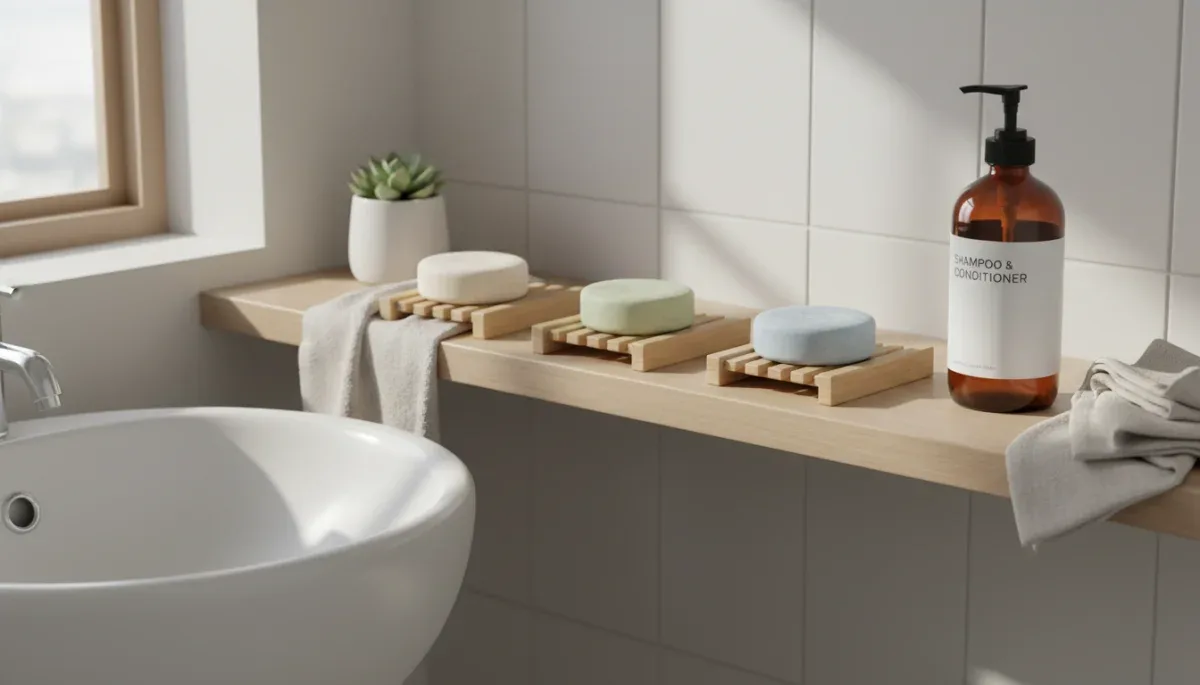
Leaving a damp shampoo bar on a flat, non-draining ledge traps residual water beneath the cake, rapidly dissolving the concentrated surfactants. To prevent premature degradation, bathrooms require draining soap dishes made from slatted bamboo, silicone with raised ridges, or porous diatomaceous earth. In high-traffic family showers used multiple times per day, bars rarely dry completely if stored inside the damp shower enclosure.
Households with back-to-back morning shower routines often store their bars on a dry windowsill or vanity shelf outside the shower curtain. Transporting the bar into the stall during washing and moving it out afterward adds an extra step to daily routines, but it significantly extends product life. A well-drained, well-ventilated syndet bar can easily outlast traditional liquid counterparts, offering substantial household savings over time.
Cost comparison and household budget impact
Evaluating shampoo bars versus liquid shampoo requires comparing upfront purchase price against total washes delivered. Drugstore liquid shampoos remain accessible, often priced between three and seven dollars per bottle at retail chains across the United States. In contrast, quality syndet shampoo bars typically range from eight to sixteen dollars per cake at retail stores and specialty sustainable outlets.
While the initial cost of a solid bar is noticeably higher, its longevity offsets the initial expense when stored correctly. Because commercial liquid shampoo contains mostly water, users often pump more product than necessary, particularly children who enjoy excessive foam. Solid bars encourage measured application, preventing the rapid overconsumption common with standard pump or squeeze bottles.
However, unexpected costs can arise if storage accessories are not factored into the transition. Families adopting solid routines often need to purchase draining dishes, travel tins, or hanging mesh sacks. If household members repeatedly leave bars in standing water, the financial advantage disappears completely. Families on strict budgets must weigh these storage demands before completely overhauling their hair care routines.
Hair type considerations and performance
Individual hair textures and scalp conditions dictate how well shampoo bars perform compared to liquid formulas. Straight or fine hair often benefits from the lightweight nature of syndet bars, which cleanse thoroughly without leaving heavy silicone films. Because many commercial liquid shampoos rely on dimethicone to provide immediate slip, fine hair can become weighed down over consecutive wash cycles.
Coarse, curly, or textured hair patterns demand careful ingredient scrutiny. Traditional lye-based soap bars disrupt the natural cuticle alignment of textured hair, leading to significant frizz, dryness, and breakage. Individuals with delicate curl patterns should look specifically for syndet bars enriched with natural emollients, glycerin, and gentle surfactants that preserve essential hydration.
Scalp sensitivities also influence the choice between solid and liquid hair products. Solid bars eliminate the need for strong chemical preservatives like parabens or methylisothiazolinone, which are necessary to stabilize liquid water-based formulas against mold. Families managing sensitive scalps often appreciate shorter ingredient lists, though bars containing synthetic dyes or concentrated essential oils can still trigger contact dermatitis in sensitive individuals.
At a glance
| Factor | What to know |
|---|---|
| Packaging waste | Shampoo bars eliminate rigid plastic bottles and lower shipping emissions entirely. |
| Ease of use for kids | Liquid pumps remain significantly easier for toddlers and young children to handle. |
| Storage requirements | Solid bars demand well-ventilated, slatted draining trays to prevent rapid melting. |
| Upfront purchase cost | Bars carry a higher initial price tag but offer lower long-term cost per wash. |
Frequently asked questions
Do shampoo bars leave a waxy buildup on hair?
True soap-based bars can leave an alkaline residue that feels waxy, especially in areas with hard municipal tap water. Modern syndet bars do not leave buildup because they use pH-balanced synthetic surfactants that rinse away cleanly just like liquid formulas.
How long does an average shampoo bar last for a family?
A standard three-ounce syndet bar lasts between fifty and eighty washes when kept dry between uses. For an individual, this can mean two to four months of regular washing, though shared family use shortens that timeframe accordingly.
Can young children safely use solid shampoo bars?
Yes, children can use solid bars, but parents should choose tear-free or fragrance-free syndet formulas designed for sensitive skin. Placing smaller cut portions into a mesh soap bag makes handling much easier for small hands in the tub.
What should I do if my shampoo bar breaks into pieces?
Small broken pieces can be gathered together inside a mesh soap saver pouch and used until completely dissolved. Alternatively, press the damp scraps together firmly into the top of a new bar during your next shower.
The bottom line
Shampoo bars offer an effective, practical way to reduce household plastic packaging and declutter your family bathroom shelves, provided your household commits to proper drainage and selects pH-balanced syndet formulations. While liquid shampoo remains unbeatable for sheer convenience and toddler-friendly handling, solid bars deliver comparable cleansing performance with a smaller environmental footprint. Before purchasing solid bars for the entire family, check your bathroom storage setup to confirm you have adequate draining space outside the direct shower stream.
Written by
Lucas Bastos
Lucas Bastos writes about societal shifts for portalreborn.com. Each article explains how things work, compares published details such as prices, policies and program rules, and points readers to the official source before they decide.