
How residential composting pickup services work
Advertisement
Residential composting pickup services collect household organic waste directly from doorsteps or curbsides and transport it to commercial processing facilities. This system helps city residents divert food scraps and yard debris from landfills without requiring backyard space, though users must pay close attention to accepted materials and local sorting rules.
City households generate significant amounts of compostable material each week, yet traditional backyard piles are rarely practical in dense neighborhoods, multi-unit buildings, or rented apartments. By outsourcing the collection and high-heat decomposition process to dedicated haulers, urban households can reduce their solid waste footprint while supporting regional soil restoration programs.
The mechanics of urban collection models
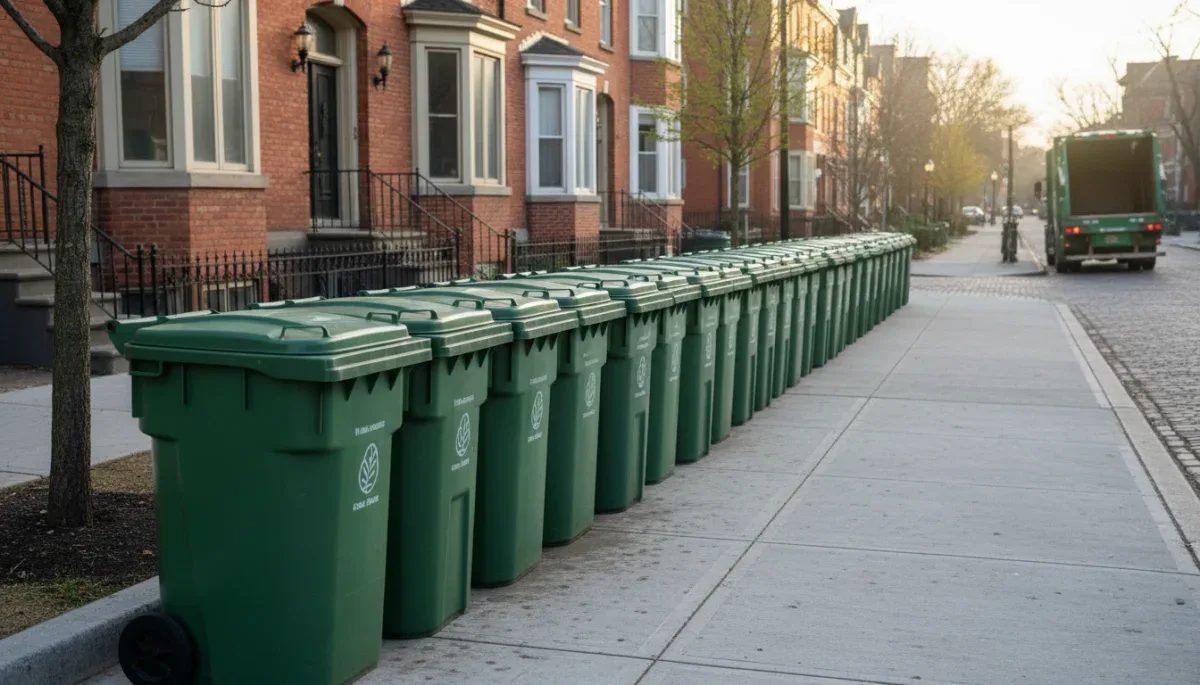
Urban organic waste collection operates under two primary structures: municipal programs managed by local government departments and private subscription services operated by independent hauling companies. Municipal programs function similarly to standard trash and recycling routes, providing standardized green or brown curbside rolling carts to single-family homes and small residential buildings on a fixed weekly schedule. In cities such as San Francisco, Seattle, and New York, local ordinances either encourage or mandate participation, integrating organics collection into basic public utility services.
Advertisement
Private subscription services typically fill service gaps in metropolitan regions that lack universal municipal organics collection. Subscribers register online, receive specialized collection hardware, and pay a monthly or annual service fee. Haulers usually provide five-gallon airtight buckets lined with compostable bags, picking them up from building lobbies, porches, or curbsides on a designated collection day. In exchange, the driver replaces the full container with a clean, sanitized bucket to maintain hygiene in high-density residences.
Standard collection hardware provided to residents
- Countertop caddies: Small ventilated or sealed containers designed to hold one to two days of kitchen scraps before transfer.
- Five-gallon sealed buckets: Heavy-duty plastic pails with gamma-seal airtight lids used by private subscription haulers to prevent odors.
- Curbside rolling carts: Large, durable wheeled bins supplied by municipal haulers for street-side automated truck collection.
- Certified liner bags: Plant-based bags that keep containers clean while breaking down completely during industrial processing.
Daily management and odor control in small spaces
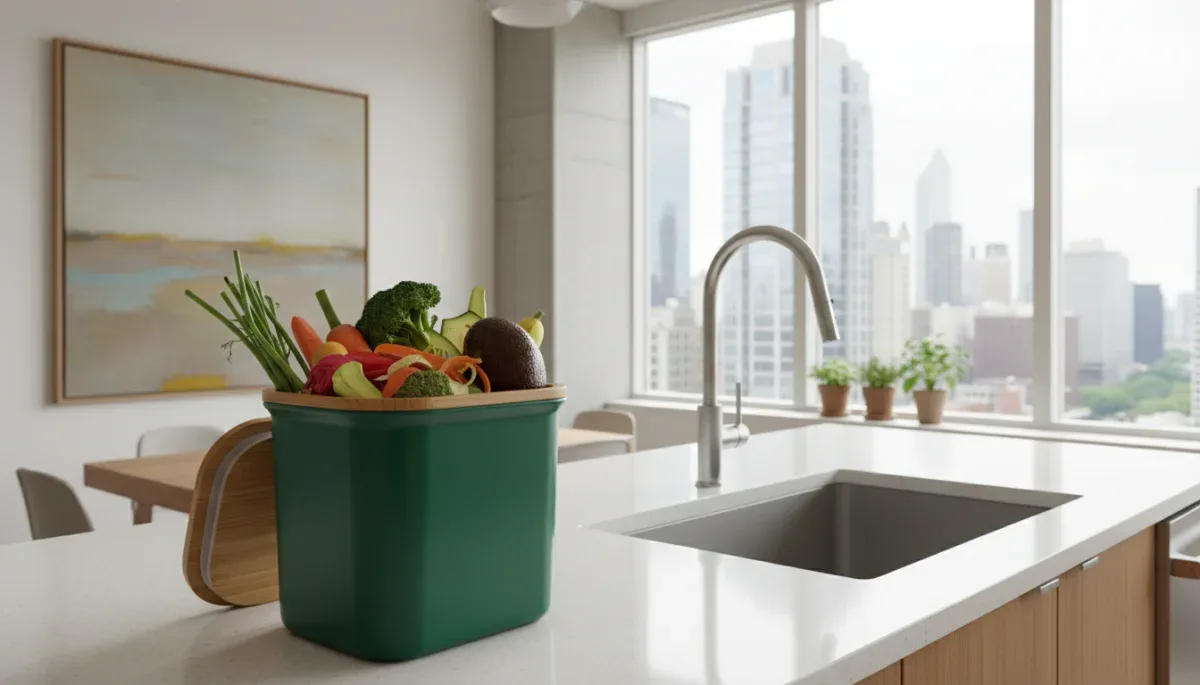
Managing food scraps inside a compact living space requires a practical routine to prevent odors, fruit flies, and leaks. Most residential subscribers rely on a small kitchen caddy positioned near food preparation areas. Storing scraps in breathable containers fitted with activated charcoal filters allows moisture to evaporate without releasing foul odors. In warmer climates or during summer months, many apartment residents store their most volatile food scraps, such as seafood trimmings or soft produce, in reusable bags inside the freezer until the morning of scheduled collection.
Lining collection containers with certified compostable bags helps maintain hygiene inside the home. Standard plastic bags made from polyethylene are never permitted, as they contaminate the organic waste stream and cannot decompose in industrial systems. Many services require liners to carry the Biodegradable Products Institute certification label, which confirms that the material breaks down safely in commercial facilities within a defined testing window. Alternatively, residents often line their caddies with unbleached paper towels or plain newsprint to absorb excess liquid naturally.
Acceptable materials and contamination standards
Commercial composting operations reach much higher internal temperatures than home garden piles, allowing them to process a broader variety of organic materials safely. Because commercial facilities maintain temperatures above 131 degrees Fahrenheit for extended periods, pathogens, weed seeds, and animal fats are destroyed during the decomposition cycle. As a result, most urban collection services accept cooked food, meat scraps, poultry bones, dairy solids, greasy pizza boxes, coffee grounds, and certified compostable takeout containers alongside standard raw fruit and vegetable peels.
Despite the broader acceptance criteria, contamination remains the primary operational challenge for composting haulers. Non-organic items that enter the collection bin cannot break down and can ruin entire batches of finished compost. Common contaminants include plastic produce stickers, conventional plastic wrap, twist ties, rubber bands, metal foil, and pet waste. Haulers enforce strict rejection policies: drivers may refuse to collect contaminated bins or charge penalty fees if foreign materials are repeatedly detected during pickup.
Items commonly accepted by industrial haulers
- Animal proteins: Meat scraps, small bones, seafood shells, cheese rinds, and dairy residues.
- Prepared foods: Bread, cooked grains, pasta, sauces, and cooking grease absorbed on paper.
- Uncoated paper goods: Coffee filters, unbleached paper napkins, plain paper plates, and soiled cardboard delivery boxes.
- Plant debris: Houseplant cuttings, floral arrangements, and small yard trimmings free of chemical treatments.
Industrial processing methods and soil regeneration
Once collected from urban neighborhoods, organic waste travels by truck to regional industrial composting facilities situated outside dense city limits. These operations process thousands of tons of material using controlled, scientifically monitored decomposition techniques. The two most common methods are aerated static pile composting and turned windrow systems. In both approaches, operators carefully balance nitrogen-rich green waste with carbon-rich brown waste, such as wood chips and shredded yard trimmings, to sustain optimal microbial activity.
During the active composting phase, large mechanical blowers or specialized turning machines ensure consistent oxygenation throughout the piles. Temperature and moisture sensors continuously track the biological activity inside the mass. After several months of active decomposition and subsequent curing, the material passes through mechanical vibrating screens to remove oversized wood fragments or stray contaminants. The final output is nutrient-dense, mature compost that municipalities and private operators distribute to regional agricultural projects, community gardens, erosion control initiatives, and local landscaping projects.
Program costs, logistics, and neighborhood adoption
The cost of residential composting pickup varies depending on whether a household uses a publicly funded municipal service or an independent private hauler. In cities with integrated curbside programs, the cost is typically embedded into monthly municipal utility bills or funded through standard property taxes, requiring no separate contractor relationship. Where private services operate, monthly subscription rates generally range from fifteen to thirty-five dollars at the time of writing, depending on pickup frequency, bin size, and the distance traveled by collection vehicles.
To lower individual costs and reduce truck traffic, many urban residents organize neighborhood or multi-unit drop-off programs. Apartment buildings and condominium associations frequently partner with private haulers to install centralized organics collection toters in shared waste rooms or loading docks. In addition to lower per-unit fees, many commercial and non-profit compost operators offer subscribers seasonal benefits, such as free bags of finished compost in the spring for household houseplants, balcony planters, or neighborhood community gardens.
At a glance
| Program aspect | What to know |
|---|---|
| Collection frequency | Most urban services collect bins once per week on a scheduled morning route. |
| Accepted waste | Commercial haulers take meat, dairy, bones, and soiled paper alongside produce. |
| Contamination rules | Stickers, conventional plastics, and pet waste lead to bin rejection or fines. |
| Service pricing | Private subscriptions generally cost between fifteen and thirty-five dollars monthly. |
Frequently asked questions
How does residential composting pickup control bad odors?
Airtight bucket seals and weekly collections prevent strong smells from escaping indoors. Liners absorb base moisture, while storing volatile proteins in the freezer until collection day keeps indoor spaces clean.
Can I put meat and dairy products into my collection bin?
Yes, most commercial pickup programs accept meat, dairy, and bones. Industrial facilities reach sustained high temperatures that break down animal fats and destroy harmful pathogens safely.
What happens if plastic or non-compostable trash gets into the bin?
Drivers may tag the container, refuse collection, or charge a contamination fee. Non-degradable items damage sorting machinery and lower the quality of finished agricultural soil.
Do I get free compost back from my pickup subscription?
Many private haulers and city programs provide free finished compost to subscribers during designated spring events. Check your local hauler terms to confirm delivery or pickup logistics.
The bottom line
Residential composting pickup services offer urban households an efficient method to reduce domestic waste and support sustainable soil management without requiring outdoor yard space. While collection logistics, hardware, and pricing vary between municipal programs and private subscription haulers, adhering strictly to material acceptance guidelines ensures clean processing. Before signing up for a service, confirm the specific accepted items list and container rules with your local waste authority or private provider.
Escrito por
Lucas Bastos
Lucas Bastos writes about societal shifts for portalreborn.com. Each article explains how things work, compares published details such as prices, policies and program rules, and points readers to the official source before they decide.