Mindfulness for Modern Life: Your 20-Minute Daily Well-being Practice
Advertisements
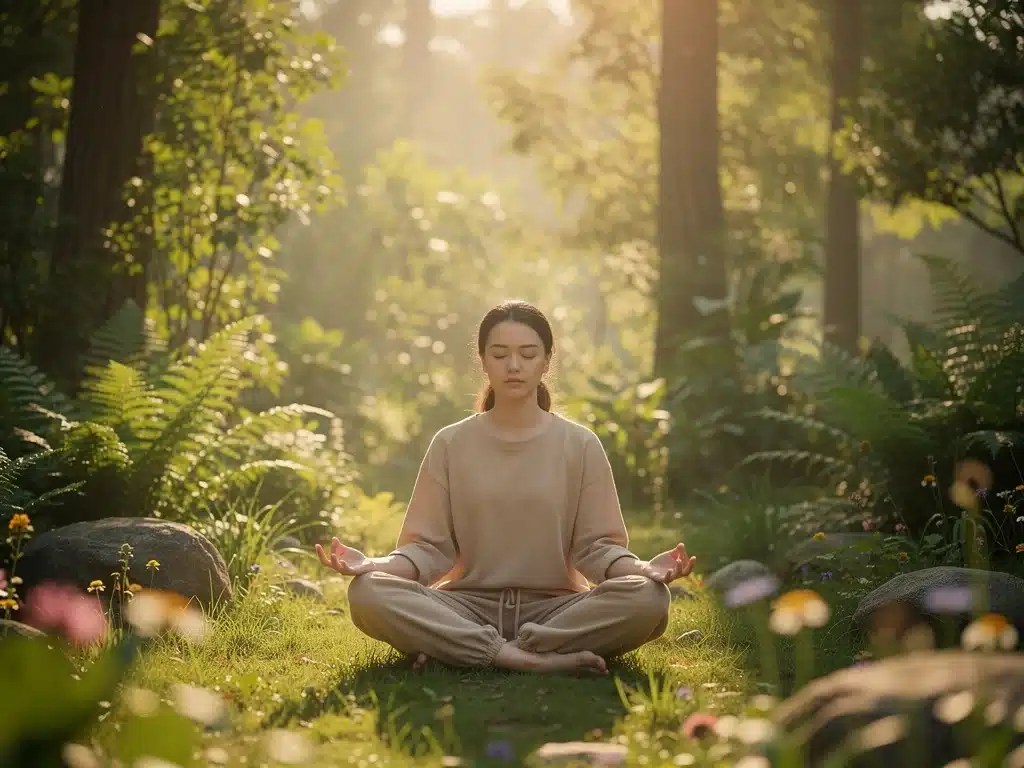
A 20-minute daily mindfulness practice offers a powerful pathway to enhanced well-being, providing essential tools to navigate the complexities of modern life with greater calm and focus, fostering resilience and inner peace.
Advertisements
In our fast-paced world, finding moments of calm can feel like a luxury, but a consistent
mindfulness daily practice is more accessible than you think. This article explores how just
20 minutes each day can profoundly enhance your well-being, offering practical strategies to integrate
mindfulness into your modern life and cultivate a deeper sense of presence and peace.
Understanding mindfulness in a busy world
Modern life often feels like a relentless treadmill, demanding constant attention and quick responses.
This perpetual state of busyness can lead to increased stress, anxiety, and a feeling of disconnection.
Mindfulness, in this context, is not about escaping reality but rather engaging with it more fully and consciously.
It’s about cultivating an awareness of the present moment, without judgment, allowing us to observe our thoughts,
feelings, and bodily sensations as they arise, rather than being swept away by them.
For many, the idea of adding another \”to-do\” to an already packed schedule seems daunting. However,
mindfulness is not another task; it’s a way of being that can permeate all aspects of your life.
It offers a pause, a moment to breathe and recenter, which can paradoxically make you more efficient
and effective in your daily activities. The practice helps in developing a greater capacity for attention,
reducing reactivity, and fostering a sense of inner calm, even amidst external chaos.
The essence of mindfulness
At its core, mindfulness involves bringing your full attention to the present experience. This means
not dwelling on the past or worrying about the future, but simply observing what is happening right now.
This observation is done with curiosity and kindness, free from evaluation or analysis. It’s a skill that
can be developed through various practices, from formal meditation to informal moments of mindful awareness
throughout the day.
- Present Moment Awareness: Focusing on what is happening in the current moment.
- Non-Judgmental Observation: Not labeling experiences as \”good\” or \”bad.\”
- Acceptance: Acknowledging experiences as they are, without trying to change them.
- Curiosity: Approaching experiences with an open mind and a sense of wonder.
The benefits of cultivating mindfulness extend far beyond the meditation cushion, influencing how we interact
with others, how we approach challenges, and how we experience joy. It’s a tool for inner transformation that
empowers individuals to live more authentically and purposefully, making it an invaluable asset in the complexities
of modern life. Understanding this foundational concept is the first step toward integrating a meaningful
mindfulness daily practice into your routine.
The science behind 20 minutes of mindfulness
While the concept of mindfulness has ancient roots, modern science has increasingly validated its profound
impact on the brain and overall well-being. Research in neuroscience and psychology has shown that even short,
consistent periods of mindfulness practice can lead to significant structural and functional changes in the brain,
underscoring why a 20-minute daily practice is so effective.
Studies utilizing fMRI scans have revealed that regular mindfulness meditation can increase gray matter density
in areas of the brain associated with learning, memory, emotion regulation, and empathy. Conversely, it can reduce
the size and activity of the amygdala, the brain’s \”fear center,\” which is often overactive in individuals
experiencing stress and anxiety. These changes are not instantaneous but accumulate over time, making consistency
key to reaping the full benefits.
Neurological benefits of consistent practice
The brain’s ability to reorganize itself by forming new neural connections, known as neuroplasticity, is a key factor
in why mindfulness works. When you consistently engage in mindfulness, you are essentially training your brain to
respond differently to stress and to cultivate states of calm and focus. This training strengthens neural pathways
that support positive emotional regulation and executive function, while weakening those associated with rumination
and reactivity.
- Improved Attention and Focus: Enhanced ability to sustain attention and reduce mind-wandering.
- Reduced Stress and Anxiety: Lowered cortisol levels and decreased activity in stress-related brain regions.
- Enhanced Emotional Regulation: Greater capacity to observe emotions without being overwhelmed.
- Increased Self-Awareness: Better understanding of one’s own thoughts, feelings, and motivations.
Furthermore, mindfulness has been shown to impact the prefrontal cortex, the part of the brain responsible for
planning, decision-making, and conscious control. Strengthening this area can lead to improved problem-solving skills
and a greater sense of agency over one’s actions and reactions. This scientific backing provides a compelling reason
to commit to a mindfulness daily practice, knowing that you are actively reshaping your brain for better health
and resilience.

Crafting your 20-minute daily practice
Establishing a consistent mindfulness daily practice doesn’t require a spiritual retreat or hours of dedication.
The beauty of a 20-minute routine lies in its attainability and adaptability to modern schedules.
The key is to approach it with intention and a willingness to experiment to find what resonates most with you.
This section outlines practical steps and specific techniques to help you build a robust and sustainable practice.
Start by designating a specific time and space for your practice. This could be first thing in the morning,
during a lunch break, or before bed. A dedicated space, even a small corner of a room, can signal to your mind
that it’s time to transition into a mindful state. Consistency in time and location can help solidify the habit,
making it an integral part of your daily rhythm rather than an occasional activity.
Essential elements for your practice
Your 20-minute practice can be a combination of different techniques, or you might choose to focus on one specific
method for a period. The goal is to cultivate present moment awareness and non-judgmental observation.
- Mindful Breathing (5-10 minutes): Sit comfortably, close your eyes, and focus solely on the sensation of your breath.
Notice the inhale and exhale, the rise and fall of your abdomen or chest. When your mind wanders, gently bring it back to your breath. - Body Scan Meditation (10-15 minutes): Lie down or sit comfortably. Bring your attention to different parts of your body,
starting from your toes and moving up to your head. Notice any sensations without judgment, simply observing what is present. - Walking Meditation (10-20 minutes): If sitting still is challenging, try walking mindfully. Pay attention to the sensation of your feet
touching the ground, the movement of your legs, and the rhythm of your breath as you walk.
Remember, there’s no \”right\” or \”wrong\” way to practice mindfulness. The intention is what matters.
Even if your mind is busy, the act of continually bringing your attention back to the present moment is the practice itself.
Be patient and kind to yourself, recognizing that consistency, not perfection, is the pathway to cultivating a deeper
mindfulness daily practice and enhancing your overall well-being.
Integrating mindfulness into daily routines
A common misconception about mindfulness is that it’s confined to formal meditation sessions. While dedicated practice is beneficial,
the true power of mindfulness lies in its integration into the fabric of your everyday life. Transforming ordinary activities
into opportunities for mindful awareness can profoundly deepen your connection to the present moment and extend the benefits of your
20-minute formal practice throughout your day.
Think about the routine activities you perform without much thought: eating, drinking, walking, showering, or even doing chores.
Each of these can become a mini-mindfulness exercise. By bringing conscious attention to these moments, you can break free from
autopilot mode, reduce mental clutter, and experience a richer, more engaged existence. This intentional shift helps to train your
mind to be more present, even when not actively meditating.
Mindful moments throughout your day
Incorporating mindfulness into your daily routine doesn’t require extra time; it simply requires a shift in attention.
Here are a few ways to weave mindful moments into your day:
- Mindful Eating: Before eating, take a moment to observe your food – its colors, textures, and aromas. Chew slowly,
savoring each bite, and notice the flavors and sensations in your mouth. Pay attention to when you feel full. - Mindful Walking: As you walk, feel your feet on the ground, notice the rhythm of your steps, and observe the sights
and sounds around you without judgment. Let go of distractions and simply be present with the act of walking. - Mindful Listening: When conversing with someone, practice truly listening without formulating your response.
Give them your full attention, noticing their tone of voice, body language, and the content of their words. - Mindful Chores: Whether washing dishes or folding laundry, bring your full attention to the task. Notice the water
on your hands, the texture of the fabric, or the smell of cleaning products. Engage all your senses in the activity.
These informal practices reinforce the skills developed during your formal 20-minute mindfulness daily practice.
They help to bridge the gap between meditation and daily life, making mindfulness a continuous state of awareness rather
than an isolated activity. By regularly pausing to engage mindfully with your surroundings, you cultivate a greater sense of peace,
clarity, and appreciation for the simple moments that make up your day.
Overcoming common challenges in mindfulness practice
Embarking on a mindfulness journey, particularly a consistent 20-minute daily practice, often comes with its share of challenges.
It’s natural to encounter resistance, distraction, or feelings of inadequacy. Recognizing these common hurdles and equipping
yourself with strategies to navigate them is crucial for maintaining a sustainable and beneficial practice.
Many beginners find their minds racing or their bodies restless, leading to frustration and the temptation to give up.
The modern world itself presents significant obstacles, from constant digital notifications to the ingrained habit of multitasking.
These external pressures, coupled with internal mental patterns, can make it difficult to settle into a mindful state.
However, understanding that these challenges are part of the process, rather than a sign of failure, can transform your approach
and foster greater resilience in your practice.
Strategies for common obstacles
Addressing specific challenges with targeted strategies can significantly improve your experience and commitment to your
mindfulness daily practice:
- Dealing with a Busy Mind: Instead of fighting distracting thoughts, acknowledge them gently.
Mentally label them as \”thinking,\” and then gently redirect your attention back to your anchor (e.g., breath).
Remember, the goal is not to stop thinking, but to observe thoughts without judgment. - Managing Restlessness: If physical restlessness arises, try incorporating a walking meditation or gentle mindful movement.
Alternatively, acknowledge the sensation of restlessness, breathe into it, and observe how it changes. Sometimes, simply acknowledging it can lessen its intensity. - Finding Time: If 20 minutes feels too long initially, start with 5 or 10 minutes and gradually increase. Consistency is more
important than duration. Schedule your practice like any other important appointment to prioritize it. - Lack of Motivation: Remind yourself of the benefits you’ve experienced or hope to achieve. Connect with a mindfulness community
or use guided meditations to keep engaged. Celebrate small successes to build momentum.
It’s important to approach your practice with self-compassion. There will be days when it feels effortless and days when it feels like a struggle.
Each moment of returning to the present, regardless of how many times your mind has wandered, is a moment of practicing mindfulness.
By embracing these challenges as opportunities for growth, your mindfulness daily practice will deepen and become more resilient,
ultimately serving as a powerful tool for enhanced well-being in modern life.

Long-term benefits of a consistent practice
While the immediate relief and clarity gained from a 20-minute mindfulness daily practice are often noticeable,
the true transformative power emerges through consistent, long-term engagement. Over weeks, months, and years,
mindfulness cultivates profound and lasting changes in your cognitive, emotional, and social landscape.
These cumulative benefits extend far beyond stress reduction, shaping a more resilient, compassionate, and fulfilling life.
One of the most significant long-term benefits is the development of emotional intelligence. Regular practice enhances
your ability to recognize and understand your own emotions, as well as those of others. This heightened awareness leads
to more skillful responses to challenging situations, improved relationships, and a greater capacity for empathy.
You become less reactive and more responsive, navigating life’s ups and downs with greater equanimity.
Sustained transformation through mindfulness
The enduring impact of a consistent mindfulness practice touches multiple facets of well-being:
- Enhanced Cognitive Function: Long-term practitioners often report improved memory, better problem-solving skills,
and sustained attention, making them more effective in both personal and professional spheres. - Deepened Self-Compassion: Mindfulness fosters a kinder, more accepting relationship with oneself.
This reduces self-criticism and promotes a sense of inner peace, even in the face of perceived failures or imperfections. - Stronger Relationships: By increasing empathy and mindful listening, individuals can build more authentic
and supportive relationships, fostering deeper connections with family, friends, and colleagues. - Increased Resilience: A consistent practice builds mental and emotional resilience, enabling individuals to bounce back
more effectively from adversity and navigate life’s inevitable stressors with greater strength.
Moreover, mindfulness can lead to a greater sense of purpose and meaning in life. By regularly connecting with the present moment
and observing internal experiences, individuals often gain clarity about their values and priorities.
This clarity can guide life choices that are more aligned with their authentic selves, leading to a profound sense of satisfaction
and contentment. The dedication to a mindfulness daily practice is an investment in a richer, more meaningful existence.
Mindfulness for specific modern challenges
Modern life presents a unique set of challenges, from digital overload and information fatigue to chronic stress and social isolation.
Mindfulness isn’t just a general panacea; it offers targeted strategies and a powerful framework for addressing these specific contemporary issues.
A 20-minute daily practice can serve as a vital antidote, equipping individuals with the mental and emotional tools needed to navigate these complexities with greater ease and resilience.
Consider the pervasive nature of technology and social media. While offering connectivity, they often lead to comparison, distraction, and \”doomscrolling.\”
Mindfulness helps in cultivating a conscious relationship with technology, allowing you to engage with it intentionally rather than being passively consumed. It empowers you to create boundaries and reclaim your attention, fostering a more balanced digital life.
Targeted mindful approaches
Applying mindfulness principles can directly alleviate the impact of several modern challenges:
- Digital Detox: Dedicate specific times each day to be device-free, practicing mindful presence instead. During your 20-minute practice, ensure all notifications are off, creating a sanctuary from digital demands.
- Stress Management: Use mindful breathing techniques during stressful moments, noticing physical sensations of stress without judgment. This helps to interrupt the stress response cycle and promote calm.
- Combating Loneliness: Practice mindful connection with others, truly listening and being present in interactions.
- Information Overload: When consuming news or information, practice mindful awareness. Notice the feelings and thoughts that arise, and consciously choose to disengage when feeling overwhelmed, protecting your mental space.
Furthermore, mindfulness aids in developing a greater sense of self-awareness regarding your habits and triggers. This understanding is particularly beneficial in navigating issues like unhealthy eating patterns, procrastination, or sleep disturbances, which are often exacerbated by modern stressors. By observing these patterns mindfully, you gain the power to make conscious choices that support your well-being. A dedicated mindfulness daily practice thus becomes a personalized toolkit for thriving amidst the unique demands of contemporary living.
Sustaining your mindfulness journey
Starting a 20-minute mindfulness daily practice is a commendable first step, but sustaining it over the long term is where the true transformation lies. Like any valuable skill, mindfulness requires ongoing commitment, adaptability, and a willingness to navigate inevitable plateaus or setbacks. The journey is not linear, and cultivating a sense of curiosity and self-compassion towards your practice will be your greatest allies.
One of the most effective ways to sustain your journey is to view mindfulness not as a destination, but as an ongoing process of learning and discovery. Embrace the imperfect nature of practice; some days will feel effortless, others challenging. The key is to return to the present moment, again and again, without judgment. This continuous return is the essence of mindfulness itself.
Tips for long-term adherence
To ensure your mindfulness practice remains a vital part of your life, consider these strategies:
- Join a Community: Connecting with others who share similar intentions can provide support, motivation, and a sense of accountability. Online forums, local meditation groups, or even a mindful friend can make a significant difference.
- Utilize Resources: Explore various guided meditations, apps, books, and workshops. Different voices and approaches can keep your practice fresh and help you discover new techniques that resonate.
- Be Flexible: Life happens. There will be days when 20 minutes is simply not feasible. On those days, even 5 minutes of mindful breathing or a brief body scan is better than nothing. Adapt your practice to your circumstances without guilt.
- Reflect and Journal: Regularly reflect on your experiences. How has mindfulness impacted your day, your relationships, your stress levels? Journaling about your insights and challenges can deepen your understanding and reinforce your commitment.
- Seek Retreats or Workshops: Periodically engaging in deeper dives, such as a mindfulness retreat or an intensive workshop, can reinvigorate your practice and offer new perspectives, solidifying your dedication to the path.
Ultimately, sustaining your mindfulness journey is about cultivating a loving and patient relationship with yourself. It’s about recognizing that every moment of mindful awareness, no matter how brief or imperfect, contributes to your overall well-being. By nurturing this practice with consistency and kindness, you build an enduring foundation for peace, clarity, and resilience in the face of modern life’s challenges.
| Key Aspect | Brief Description |
|---|---|
| Daily Commitment | Consistently dedicating 20 minutes to mindfulness practice. |
| Present Moment Awareness | Focusing on the \”now\” without judgment, observing thoughts and sensations. |
| Integration into Life | Applying mindful attention to everyday activities beyond formal meditation. |
| Long-term Benefits | Enhanced resilience, emotional intelligence, and overall well-being. |
Frequently Asked Questions about Mindfulness
The best time is highly personal, but many find mornings effective for setting a calm tone for the day. Others prefer evenings to de-stress before bed. Experiment to see when you can commit most consistently without interruption, aligning with your natural rhythm and schedule.
No, mindfulness requires no special equipment. A quiet space where you can sit or lie down comfortably is ideal. Some people use cushions or blankets for comfort, but they are not mandatory. The most important \”equipment\” is your willingness to be present.
Mind wandering is a normal part of mindfulness practice. The practice isn’t about clearing your mind, but noticing when it wanders and gently bringing your attention back to your anchor (like your breath). Each time you do this, you strengthen your \”mindfulness muscle.\”
Yes, extensive research shows mindfulness is highly effective in reducing symptoms of anxiety and stress. By cultivating present moment awareness and non-judgmental observation, individuals learn to respond to stressors more skillfully, decreasing their emotional reactivity and promoting calm.
Some individuals report noticeable changes in stress levels and focus within a few weeks of consistent daily practice. Significant, lasting benefits, such as enhanced emotional regulation and resilience, typically emerge after several months of dedicated engagement. Consistency is key.
Conclusion
Embracing a 20-minute mindfulness daily practice is not merely an addition to your routine; it is an investment in your overall well-being and a powerful tool for navigating the complexities of modern life. From the scientific validation of its neurological benefits to its practical application in everyday challenges, mindfulness offers a pathway to greater calm, clarity, and resilience. By committing to this simple yet profound practice, you cultivate a deeper connection to the present moment, fostering inner peace and empowering yourself to live a more conscious and fulfilling life. The journey of mindfulness is continuous, promising sustained growth and transformation for those who dedicate themselves to its gentle yet powerful embrace.