
Microfiber laundry filters compared with washing bags
Advertisement
External microfiber laundry filters and specialty washing bags represent the two primary consumer methods for intercepting synthetic microfibers before they enter municipal waterways. Choosing between them comes down to whether you prefer an automatic, whole-load plumbing attachment or a portable, zero-installation pouch designed for specific garments.
This comparison helps households that wash synthetic textiles like polyester fleece, nylon activewear, and acrylic knits reduce their environmental footprint. The catch is that both approaches require ongoing physical maintenance and responsible disposal of captured lint in solid trash bins to prevent the trapped plastic particles from washing down the sink during cleaning.
Understanding synthetic fabric shedding and microfibers
Modern clothing relies heavily on synthetic textiles derived from petroleum, including polyester, nylon, elastane, and acrylic. During a standard laundry cycle, fabrics experience mechanical agitation, water turbulence, and chemical interaction with detergents. This constant friction causes microscopic filament fragments, commonly called synthetic microfibers, to snap and detach from garment yarns. Because standard residential washing machine lint traps only capture coarse threads, these microscopic plastic fibers drain out with the wastewater.
Advertisement
Municipal wastewater treatment facilities filter out large debris, but microscopic fibers frequently bypass standard municipal screening systems. When treated effluent discharges into rivers, lakes, and oceans, these non-biodegradable particles accumulate in aquatic ecosystems. Addressing microfiber pollution at the laundry source prevents thousands of individual synthetic strands from leaving the home during every wash cycle.
Key factors that accelerate synthetic fiber shedding
- High-speed spin cycles and aggressive wash agitation that increase mechanical friction between garments.
- Top-loading washing machines with central agitators compared to gentler front-loading drums.
- Coarse knit structures, such as high-pile fleece jackets, plush blankets, and brushed athletic leggings.
- Powdered laundry detergents and warm or hot water temperatures that increase fiber brittleness during cleaning.
How inline microfiber laundry filters operate
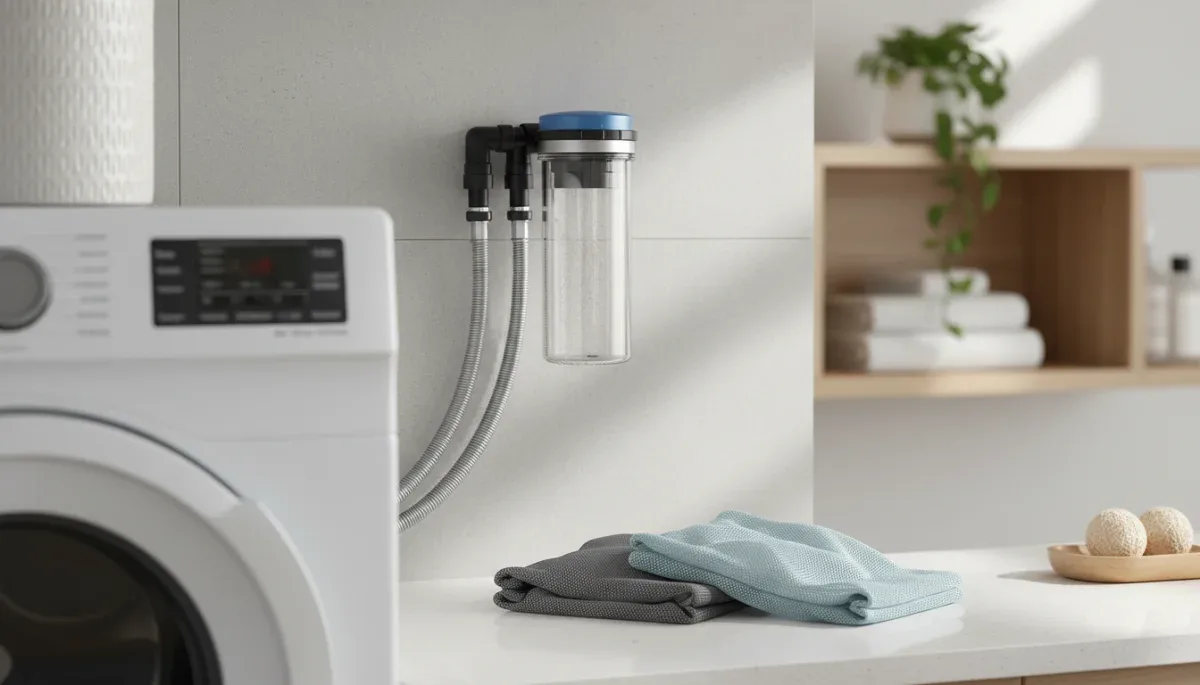
An external microfiber laundry filter is a dedicated canister system mounted on the wall or adjacent cabinetry next to a washing machine. The appliance discharge hose connects directly into the filter inlet, channeling all expelled wash and rinse water through a reusable stainless steel or fine synthetic mesh cartridge. As water passes through the internal screen, the device traps microscopic fibers and suspended solids before directing the cleaned effluent into the household standpipe or utility sink.
Because an inline filter processes one hundred percent of the machine drainage, it captures fibers from every item in the drum, including mixed loads, synthetic bedding, towels, and blended fabrics. Homeowners and renters with accessible plumbing connections benefit from set-and-forget operation during the cycle, as the unit runs automatically without requiring garment sorting. However, the system requires sufficient wall space near the drainage outlet and basic plumbing connections using hose clamps and mounting brackets.
Practical considerations for external filter units
- Wall mounting requires securing brackets into drywall anchors or wall studs near the drain line.
- Bypass mechanisms are built into most units to prevent pump burnout if the internal screen becomes completely clogged.
- Periodic cartridge cleaning is necessary every few wash cycles depending on load size and fabric composition.
- Flow rates must match the discharge pump specifications of the washing machine to avoid water backflow.
How specialty washing bags protect fabrics and capture fibers
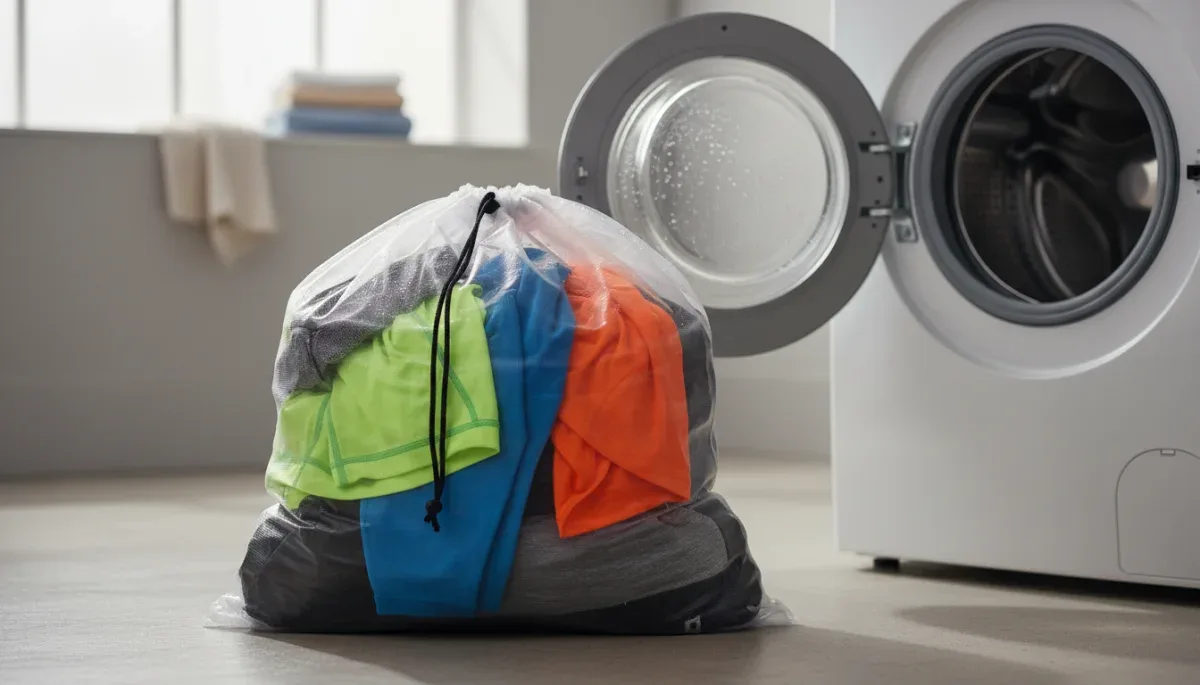
Specialty washing bags for synthetic fabrics, such as the Guppyfriend washing bag, take a preventative approach by addressing microfiber shedding inside the wash drum. These pouches are constructed from untreated, smooth monofilament polyamide mesh with microscopic apertures. Garments made from polyester, acrylic, or nylon are placed inside the zipped pouch before entering the washing machine alongside regular laundry.
The bag functions through a dual mechanism. First, the smooth interior lining minimizes surface friction between clothing items, significantly reducing the initial breakage of fibers during agitation. Second, any microfibers that do break off remain trapped inside the interior corners and seams of the bag rather than floating freely in the wash water. After the cycle finishes, damp clothes are removed, and the collected lint along the internal seams is wiped out by hand.
Best practices for using synthetic wash bags
- Filling bags only half to two-thirds full allows garments to circulate and clean effectively without excess friction.
- Separating heavy hardware like metal zippers and buttons from delicate knits prevents snagging the micro-mesh.
- Using cold water settings and liquid detergents preserves the integrity of both the bag fabric and garments.
- Air drying the washing bag rather than placing it in a heated tumble dryer maintains the mesh structure over time.
Comparing filtration efficiency and everyday convenience
When evaluating microfiber laundry filters against washing bags, filtration efficiency must be weighed against daily household workflow. External canisters typically utilize fine filter sieves rated between 50 and 150 microns, intercepting shedding across entire multi-garment loads. In contrast, washing bags primarily address the specific items placed inside them. If a household washes large synthetic blankets, bulky winter coats, or mixed loads without sorting, an external filter offers broader passive coverage.
Convenience varies substantially depending on household routines and living arrangements. Renters who cannot mount hardware or modify appliance hoses find washing bags to be an accessible, portable solution requiring no tools. Conversely, busy households washing multiple loads daily often prefer an external filter because it eliminates the tedious step of sorting synthetic garments into separate zippered pouches before every wash cycle.
Routine workflow differences
- Inline filters work invisibly during the cycle but require regular canister unscrewing and manual screen scraping.
- Washing bags require pre-sort preparation and garment bagging before every wash load.
- Canisters handle bulky items like synthetic sleeping bags and comforters that cannot fit inside standard wash bags.
- Washing bags travel easily to laundromats, shared apartment laundry rooms, and vacation rentals.
Proper cleaning and solid waste disposal methods
Capturing synthetic fibers is only half the process; disposing of the trapped residue correctly determines whether the microplastics stay out of the water system. Wet lint gathered from either a canister screen or the interior seams of a wash bag must never be rinsed off under a running tap or flushed down a toilet. Doing so sends the concentrated microfibers straight into the municipal sewer, completely undoing the capture process.
The correct method involves allowing the filter screen or bag to dry partially, making the fibers easier to roll up with a finger, paper towel, or small brush. Once collected into a compact clump, the lint belongs in the standard solid household trash destined for a landfill. Some environmental programs and research initiatives accept sealed collections of microfibers for specialized waste tracking, but standard municipal solid waste remains the primary disposal route for residential households.
Safe maintenance steps for microfiber management
- Let wet lint dry slightly on the collection surface to form a cohesive, peelable layer.
- Wipe the cartridge or bag corners with a damp cloth or soft brush to capture loose particles.
- Deposit the gathered fibers directly into a sealed trash receptacle.
- Inspect seals, rubber gaskets, and zipper teeth regularly to prevent leaks or mechanical failure.
Cost considerations and long-term durability
The upfront financial investment differs markedly between external filtration systems and fabric pouches. Dedicated external filter canisters, such as PlanetCare, Lint LUV-R, or Filtrol units, generally cost between one hundred and two hundred dollars at the time of writing, excluding any additional plumbing adapters or mounting hardware that may be needed. Over time, replacement parts like rubber O-rings, spare mesh cartridges, or subscription-based recycling filters add minor ongoing maintenance expenses.
Washing bags represent an entry-level financial threshold, usually retailing between thirty and forty dollars per pouch. A high-quality monofilament wash bag can last for hundreds of wash cycles when handled according to manufacturer guidelines, without requiring replacement parts. However, households with large volumes of synthetic activewear often find they need three or four individual bags to process a full family laundry load simultaneously, which narrows the initial price gap between the two solutions.
Summary of financial and lifespan factors
- External filters involve higher upfront equipment costs balanced by whole-appliance protection over many years.
- Wash bags require low initial spending but have capacity limits that may necessitate purchasing multiple units.
- Reusable stainless steel filter sieves eliminate ongoing consumable costs compared to single-use cartridge systems.
- Proper handling and avoiding high heat ensure both filtration systems deliver years of reliable service.
At a glance
| Factor | What to know |
|---|---|
| Installation need | Filters require wall mounting and drain hose plumbing; bags require no installation. |
| Load capacity | Filters clean entire loads automatically; bags protect only the items zipped inside. |
| Upfront cost | Filters represent a higher equipment investment; bags provide an affordable entry point. |
| Fiber disposal | Both systems require manual lint removal into solid household trash bins. |
Frequently asked questions
Do microfiber laundry filters reduce shedding or only catch loose fibers?
External inline filters only catch fibers after they have detached from clothing and entered the drain line. They do not alter friction inside the machine drum, whereas washing bags physically reduce fabric friction to prevent shedding from occurring in the first place.
Can I wash natural fabrics like cotton and wool inside a synthetic wash bag?
Yes, natural fabrics can be placed inside washing bags, but it is rarely necessary. Cotton and wool shed biodegradable organic fibers rather than synthetic microplastics, so reserving bag space for polyester, nylon, and acrylic garments is the most efficient approach.
How often do external laundry filter screens need to be cleaned?
Most external filter screens require cleaning every three to ten wash loads depending on household size and fabric types. Built-in bypass valves prevent water backups if cleaning is delayed, but regular maintenance maintains optimal water filtration efficiency.
Are microfiber laundry filters compatible with all washing machine models?
Most external filters work with standard residential front-load and top-load machines that feature an accessible discharge hose. However, compact all-in-one washer-dryer combination units or machines integrated behind permanent cabinetry may require specialized plumbing adapters or custom hose routing.
The bottom line
External microfiber filters offer whole-load capture for busy households with accessible plumbing, while washing bags provide a flexible, low-cost solution that protects individual garments and requires no installation. Both tools effectively divert non-biodegradable synthetic fibers from entering municipal wastewater networks when maintained properly. Before purchasing either option, inspect your laundry space and washing machine drain hose configuration to ensure you select the system that seamlessly fits your home layout and weekly washing routines.
Written by
Lucas Bastos
Lucas Bastos writes about societal shifts for portalreborn.com. Each article explains how things work, compares published details such as prices, policies and program rules, and points readers to the official source before they decide.