
Induction Cooktops Versus Gas Stoves for Energy Efficiency

Advertisement
Induction cooktops deliver significantly higher energy efficiency than traditional gas stoves by transferring electromagnetic energy directly into the cookware rather than heating the surrounding air. An induction burner sends alternating electric currents through an internal copper coil to create an oscillating magnetic field, which induces electric currents inside compatible pots and pans to generate heat instantaneously.
This process helps family households lower their monthly energy waste, reduce meal preparation times, and eliminate combustion exhaust inside living areas, but switching from a gas line to a high-voltage electrical setup can introduce notable upfront installation costs. Understanding how each fuel type functions, where energy losses occur, and what your home infrastructure requires ensures you make a practical investment tailored to your daily cooking routines.
How induction and gas cooktops transfer heat
Gas stoves rely on open thermal combustion to produce heat. When you turn a burner knob, pressurized natural gas or propane flows through an orifice, mixes with oxygen, and ignites via an electric spark to create a visible flame. That flame heats the cast iron burner grate, the ambient room air, and the bottom exterior of your cookware. Because flames travel upward around the sides of pans, a substantial volume of heat escapes directly into your kitchen without ever reaching your food. This thermal radiation raises ambient room temperatures and forces household air conditioning systems to work harder during warmer months.
Advertisement
In contrast, an induction cooktop does not produce heat on the surface of the glass ceramic panel. The heat originates inside the base of the magnetic cookware itself through a physical phenomenon known as Joule heating, coupled with magnetic hysteresis losses. Because the glass surface only absorbs residual heat radiating back downward from the hot pan, the appliance leaves the surrounding air completely unaffected. This direct heat generation eliminates the intermediary heating stages that make standard gas burners inherently inefficient.
Key differences in physical heat delivery
- Gas burners generate open flames that heat ambient air, burner grates, and pan exteriors simultaneously.
- Induction units use electromagnetic coils to create heat directly within the metal structure of the pan.
- Gas systems depend on atmospheric oxygen for combustion, whereas induction uses household electricity.
- Induction cooktop glass surfaces remain relatively cool compared to the red-hot grates of standard gas ranges.
When selecting kitchen appliances for a busy household, understanding these fundamental mechanics clarifies why two appliances that achieve the same culinary outcomes consume radically different amounts of input energy to do so.
Energy transfer and kitchen heat loss
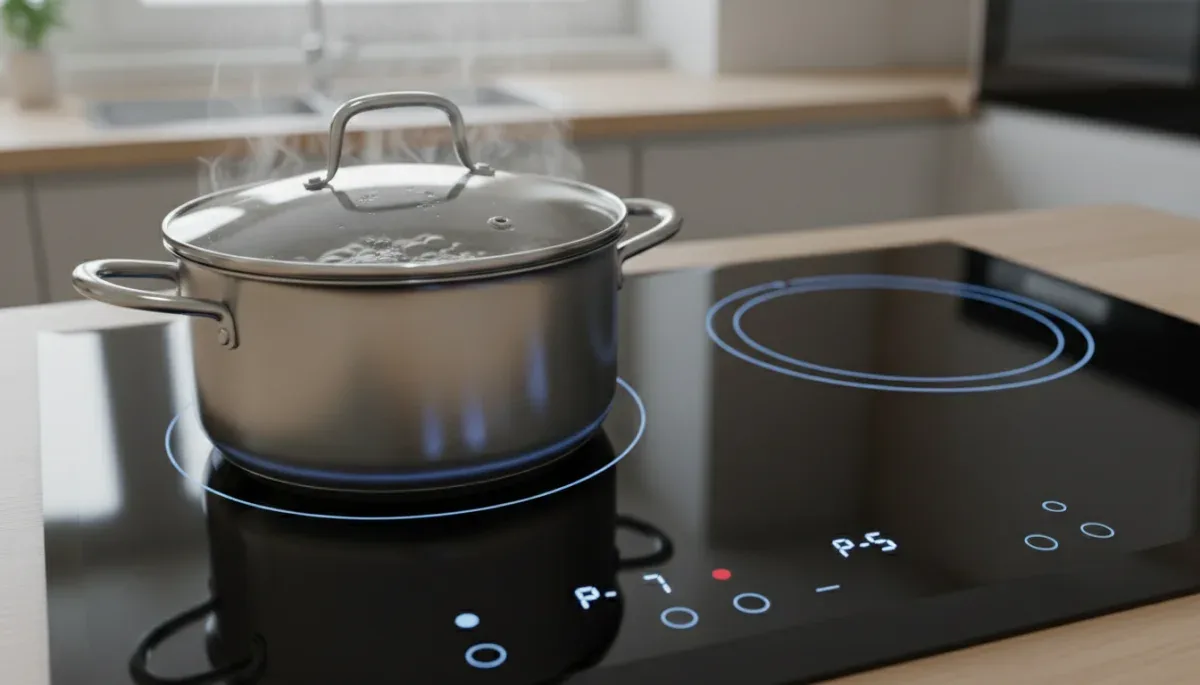
Evaluating energy performance requires looking at published research from established testing organizations. Data published by the U.S. Department of Energy indicates that induction cooktops typically convert approximately 85 percent of their electrical energy directly into usable cooking heat. Standard residential gas burners, by comparison, generally operate at an energy efficiency rate between 30 and 40 percent, meaning that roughly 60 to 70 cents of every dollar spent on cooking gas dissipates into your kitchen as uncaptured waste heat.
This massive gap in efficiency translates directly into cooking speeds. Boiling a large stockpot of water for family pasta night takes roughly half the time on an induction burner compared to an equivalent output gas burner. Because thermal energy begins generating throughout the pan immediately upon activation, preheating occurs almost instantly. For families managing tight evening schedules around school, sports, and homework, faster cooking cycles conserve both operational energy and valuable personal time.
Beyond the direct cooking process, secondary energy consumption represents an overlooked factor in whole-home efficiency. When an inefficient gas stove radiates excess heat into the home, your central air conditioning must run longer cycles to maintain indoor temperature setpoints. Swapping an inefficient thermal source for an induction cooktop lowers cooling loads across your kitchen and adjacent dining spaces, creating a compounding reduction in household energy consumption during peak summer seasons.
Indoor air quality and family health considerations
Energy efficiency in residential design extends to the ventilation and indoor air quality performance of your living space. When a gas stove burns natural gas, combustion produces several chemical byproducts, including nitrogen dioxide, carbon monoxide, fine particulate matter, and unburned methane. Research published by the California Air Resources Board highlights that indoor concentrations of nitrogen dioxide from unvented gas stoves can frequently exceed federal outdoor air quality standards, posing potential respiratory risks for developing children and individuals with asthma.
To safely manage these combustion byproducts, homes with gas stoves require high-capacity range hoods that vent directly to the exterior. Running powerful range hoods removes significant volumes of conditioned indoor air from the home, which must then be replaced by outdoor makeup air that requires heating or cooling. This continuous exchange creates an additional thermal load on household HVAC systems, subtly undermining the home's total heating and cooling performance throughout the year.
Air quality factors for family kitchens
- Induction cooking produces zero on-site combustion byproducts or greenhouse gas emissions.
- Gas burners require high-cfm exhaust hoods that draw conditioned indoor air out of the building.
- Eliminating open flames reduces volatile organic compound accumulation in multi-generational living areas.
- Cleaner cooking air reduces the operational run-time needed for freestanding indoor HEPA air purifiers.
Because induction cooktops produce no combustion gases, ventilation requirements focus purely on removing cooking grease, steam, and food odors. This allows families to run kitchen exhaust fans at lower speeds for shorter durations, keeping conditioned air inside the home and maintaining an energy-efficient building envelope.
Electrical demands and installation costs
Transitioning from a standard gas stove to an induction appliance involves electrical considerations that every homeowner should inspect before purchasing hardware. While a typical gas stove plugs into a standard 120-volt, 15-ampere household wall outlet simply to power its electronic clock, timers, and spark igniters, a full-sized 30-inch or 36-inch induction range requires a dedicated 240-volt circuit capable of delivering between 40 and 50 amperes of electrical current.
Older residential properties frequently feature 100-amp main breaker panels that may already operate near full capacity due to central air conditioning units, electric clothes dryers, and water heaters. In such homes, installing an induction cooktop may necessitate a complete service panel upgrade to 200 amperes, along with running heavy-gauge copper wiring from the panel through finished walls to the kitchen location. Depending on local labor rates and the physical distance between the breaker and the cooking zone, hiring a licensed electrician for these modifications can represent a substantial initial expenditure.
However, modern federal incentive programs help offset these upfront transition expenses for many households. Under the Inflation Reduction Act in the United States, qualifying homeowners may access point-of-sale rebates or energy efficiency tax credits through state-administered programs when upgrading electrical service panels and installing certified electric cooking appliances. Homeowners should always confirm current eligibility criteria and program availability through official state energy offices before committing to equipment purchases.
Daily cooking control and cookware compatibility
A longstanding argument in favor of gas ranges has been the tactile, immediate visual control offered by an open flame. When you turn down a gas valve, the flame shrinks instantly, and the heat input drops without delay. However, high-quality induction cooktops match or exceed this level of responsiveness through digital pulse-width modulation and multi-tier power settings. Because the cookware itself generates the thermal energy, cutting the power immediately halts heat production, virtually eliminating the risk of sauces boiling over or delicate dishes scorching.
The primary operational hurdle for many households centers on cookware compatibility. Induction cooktops function exclusively with cookware constructed from ferromagnetic materials. Cast iron, enameled iron, and magnetic stainless steel work exceptionally well on induction elements. Conversely, solid copper, pure aluminum, and standard ceramic or glass cookware will not respond to the magnetic field and cannot heat up on an induction surface.
Checking cookware suitability at home
- Hold a common refrigerator magnet firmly against the flat bottom exterior of your pans.
- If the magnet clings strongly to the base, the pan is fully compatible with induction burners.
- Pans with warped or rounded bottoms will exhibit reduced efficiency due to inadequate contact surface area.
- Multi-ply clad stainless steel sets marked with the induction coil symbol are optimized for performance.
If a substantial portion of your current kitchen inventory consists of non-magnetic aluminum pots, factoring in the cost of a replacement cookware set is necessary when calculating the total investment required to modernize your kitchen.
Operating expenses and utility calculations
Calculating the true operational cost comparison between induction vs gas cooktops depends heavily on regional utility rates across the United States. In many geographic markets, natural gas historically costs less per delivered unit of energy (measured in British Thermal Units, or BTUs) than retail grid electricity (measured in kilowatt-hours). Because of this raw fuel cost disparity, a gas stove might appear less expensive to run on paper if you only evaluate the price per unit of raw fuel entered into the home.
However, the significant thermal efficiency advantage of induction bridges much of this gap in actual practice. Because an induction burner uses roughly half the gross energy of a gas burner to deliver the exact same amount of heat to the food, the kilowatt-hour consumption remains modest over a standard billing cycle. According to appliance profile data from the U.S. Energy Information Administration, residential cooking represents less than five percent of total household energy consumption, meaning the absolute monthly operating dollar difference between gas and induction cooking rarely exceeds five to ten dollars for an average family.
Furthermore, households that invest in rooftop solar photovoltaic panels or participate in community clean energy programs tilt the economic equation heavily in favor of induction. While gas stoves lock a family into ongoing fossil fuel utility bills subject to market volatility, an electric induction cooktop can run entirely on self-generated or fixed-rate renewable energy, establishing predictable long-term utility expenses for the conscious household.
At a glance
| Factor | What to know |
|---|---|
| Energy transfer | Induction delivers roughly 85 percent efficiency compared to 35 percent for gas. |
| Indoor air | Induction eliminates combustion byproducts like nitrogen dioxide from living spaces. |
| Electrical needs | Full induction ranges require a dedicated 240-volt, 40-to-50-amp electrical circuit. |
| Cookware fit | Pots and pans must contain magnetic materials like cast iron or magnetic stainless steel. |
Frequently asked questions
Can I use my existing cookware on an induction cooktop?
You can use your current cookware only if a magnet sticks firmly to the bottom exterior of each piece. Cast iron, carbon steel, and magnetic stainless steel work seamlessly, while solid aluminum, glass, and copper pans will not generate heat on an induction burner surface.
Does an induction cooktop require special electrical wiring?
Yes, standard full-sized induction cooktops and ranges require a dedicated 240-volt electrical circuit drawing 40 to 50 amperes. Homes currently wired only for 120-volt gas stoves will need a licensed electrician to run new cabling from the central breaker panel before installation.
Is cooking on an induction stove faster than using gas?
Yes, induction heats food noticeably faster than gas because energy transfers directly into the metal pan without warming the surrounding air. Water typically boils in roughly half the time required by a standard residential gas burner of equivalent output rating.
Are induction cooktop surfaces safer for households with small children?
Yes, induction surfaces are substantially safer because there are no open flames, gas valves, or glowing elements. The glass surface only warms from contact with the hot pot, cooling down much faster than traditional gas grates once cooking finishes.
The bottom line
Induction cooktops outperform gas stoves across thermal efficiency, boiling speeds, and indoor air preservation, making them an exceptional long-term choice for conscious family kitchens looking to minimize environmental footprints. Although the initial transition may require budgeting for professional electrical modifications and compatible magnetic cookware, the ongoing safety and energy management advantages provide reliable household value. Before purchasing a new unit, always inspect your electrical service panel capacity and measure your circuit breaker space with a licensed electrician to verify feasibility.
Written by
Lucas Bastos
Lucas Bastos writes about societal shifts for portalreborn.com. Each article explains how things work, compares published details such as prices, policies and program rules, and points readers to the official source before they decide.