
How to check safety labels on holiday plush toys
Advertisement
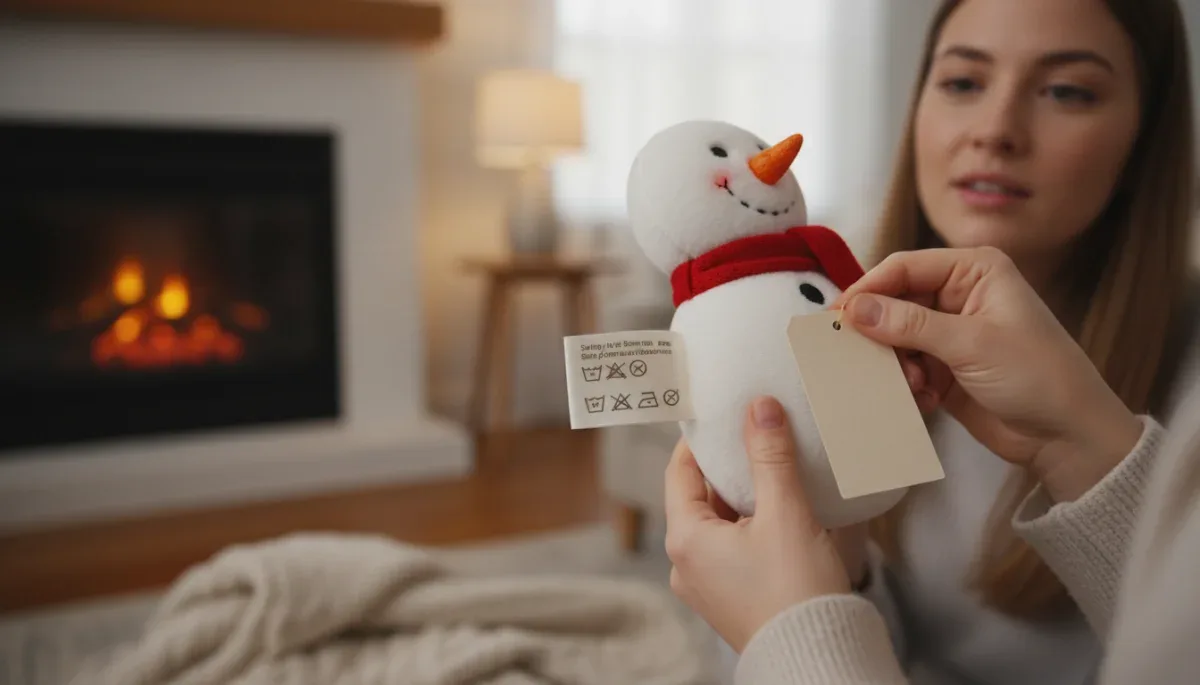
To check safety labels on winter holiday plush toys, locate the permanent sewn-in tag and retail hangtag to verify mandatory age grading, manufacturer tracking details, and compliance with federal toy safety standards. Taking these steps ensures the stuffed item meets mandatory mechanical, chemical, and flammability guidelines before it enters a child's hands.
This process protects infants, toddlers, and young children from preventable hazards such as loose buttons, accessible battery compartments, toxic materials, and unhygienic stuffing. The main challenge is distinguishing authentic regulatory markings from decorative branding, especially on seasonal novelty items sold through third-party online marketplaces or temporary holiday pop-up vendors.
Mandatory federal requirements and the ASTM F963 standard
In the United States, all toys intended for use by children aged twelve and under must comply with federal safety regulations enforced by the Consumer Product Safety Commission. The foundational benchmark for these items is ASTM F963, also known as the Standard Consumer Safety Specification for Toy Safety. When examining a winter holiday plush toy, checking for explicit references to this standard on the packaging or tag is an important first step. While the law mandates compliance, the physical label on the toy is not always legally required to print the phrase ASTM F963 directly on the fabric; however, reputable manufacturers frequently include it on packaging or retail tags to signal certified laboratory testing.
Advertisement
Under federal law, domestic manufacturers and importers must issue a Children's Product Certificate based on passing test results from an accredited, third-party laboratory. This certification confirms that the plush toy does not contain hazardous levels of lead in surface coatings or textiles, complies with strict phthalate limits in plastic components like eyes or internal sound modules, and passes physical torque, tension, and drop tests. A plush toy designed for seasonal holiday display rather than play may attempt to bypass these rules by carrying a decorative item label. If a plush item looks like a toy, safety regulators expect it to meet children's toy safety rules unless clearly marked and marketed exclusively as an adult collectible.
When reviewing the documentation and packaging of holiday stuffed animals, shoppers should look for key compliance indicators that distinguish certified toys from untested decorative novelties.
Key compliance markers to look for
- Statement of compliance with standard consumer safety specifications on outer tags
- Manufacturer or importer business name and domestic contact address
- Batch code or production run identification on the permanent sewn label
- Clear distinction between play items and adult holiday home decor
Decoding age grading labels and small parts warnings
Age grading on plush toys is not a measure of a child's intelligence or developmental maturity; it is a direct safety assessment based on physical hazard testing. The Consumer Product Safety Commission mandates specific warnings for toys containing small parts intended for children between three and six years old. For children under three years of age, federal rules prohibit any plush toy from containing or shedding small parts during standard use and reasonable abuse testing. A small part is legally defined as any object that fits entirely within a standard testing cylinder measuring 1.25 inches in diameter and 2.25 inches deep, which mimics the dimensions of a young child's throat.
Holiday plush toys frequently feature festive accessories such as hard plastic eyes, stitched-on bells, ribbon bows, miniature musical instruments, or plastic noses shaped like carrots on snowmen. If these items detach, they present severe choking risks. A label stating not intended for children under 3 years accompanied by a hazard symbol indicates that the toy contains small parts or could produce them under stress. If you are selecting a holiday gift for an infant or toddler, you must look for an explicit age grade of 0 plus or all ages, which signifies that the toy underwent rigorous pull-force tests on all external features.
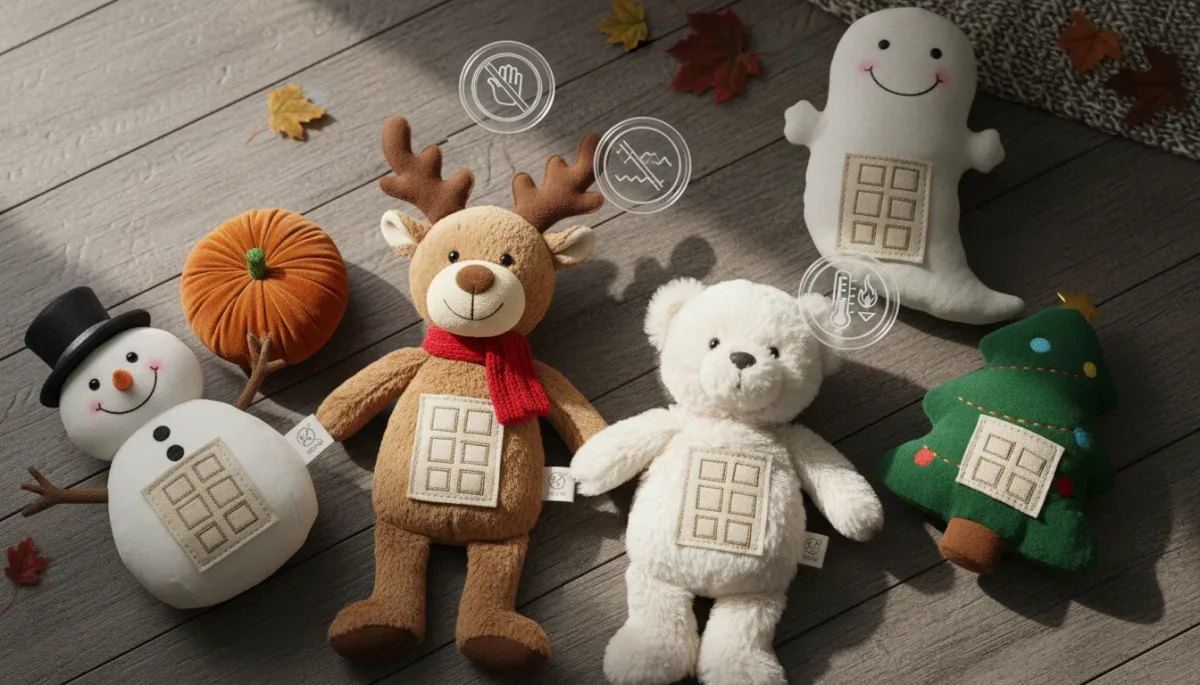
Understanding the difference between developmental suggestions and legal choking hazard warnings helps buyers make informed decisions when browsing seasonal toy aisles.
Common age label categories and meanings
- All ages or 0 months plus indicating secure embroidered features and zero small parts
- Ages 3 and up indicating components that pose a choking hazard if detached
- Warning labels with a hazard icon detailing specific risks like choking or long cords
- Decorative use only tags indicating the item is not tested for children of any age
Verifying tracking labels and manufacturer information
The Consumer Product Safety Improvement Act requires all children's products to carry a permanent, distinguishing mark on both the product and its packaging, commonly referred to as a tracking label. On a winter holiday plush toy, this information is printed on the permanent sewn-in fabric label, usually located along the lower seam or rump of the animal. A legitimate tracking label provides vital provenance details that allow consumers and regulators to trace the item back to its origin in the event of a product recall.
A compliant tracking label must contain several mandatory pieces of information. It must state the manufacturer or private labeler name, the location and date of production, detailed information on the manufacturing process such as a batch, run, or lot number, and any other identifying characteristics that help determine the specific source of the product. If a plush toy has only a temporary paper tag attached with plastic fastener barbs and lacks a permanent sewn-in fabric tag with batch details, it fails federal tracking standards. This is common with unbranded merchandise purchased from discount import bins or unregulated online storefronts.
Checking tracking information ensures that you can readily cross-reference the plush toy against public safety recall databases maintained by federal consumer protection agencies.
Required elements on permanent sewn tags
- Full legal name of the manufacturing company or licensed distributor
- Country of origin and specific city or province of manufacture
- Month and year or specific production date code
- Batch, lot, or purchase order number for supply chain tracing
Fire resistance, stuffing hygiene, and washability markings
Plush toys are composed of textiles, synthetic furs, and internal fibrous stuffing, making material safety labeling essential. Federal regulations under the Flammable Fabrics Act require that all textiles used in children's toys meet specific flammability standards. While toys are not fireproof, compliant plush materials must resist ignition and exhibit slow burn rates if exposed to a small flame, such as a holiday candle or fireplace ember. Look for label phrasing such as flame resistant or surface washable, which indicates the fabric treatments and fibers meet standard flammability benchmarks.
In addition to flammability, several states enforce law labels, often identifiable by the phrase under penalty of law this tag not to be removed except by the consumer. This white rectangular tag details the interior filling materials. A safe and compliant plush toy should list filling materials such as all new materials, polyester fibers, or plastic pellets. The all new materials designation guarantees that the interior stuffing does not contain post-consumer waste, industrial scraps, or unsterilized biological materials that could harbor mold, bacteria, or allergen contaminants.
Hygiene and care markings also dictate how the toy can be cleaned, which is a major factor in maintaining safety throughout its lifespan.
Stuffing and care label terms defined
- All new material confirming clean, virgin stuffing free from post-consumer waste
- Polyester fiberfill indicating synthetic hypoallergenic interior padding
- Plastic pellets or poly pellets denoting weighted base filling contained in secure pouches
- Surface wash only or machine washable guiding safe sanitation without ruining seams
Electronic and sound-producing holiday plush features
Many winter holiday plush toys incorporate interactive elements, such as animated singing reindeer, light-up snowmen, or musical festive bears. While these features add entertainment value, they introduce electrical and chemical hazards that require specialized safety labeling. The primary safety concern with electronic plush toys is the battery compartment, specifically regarding coin and button cell batteries, which present catastrophic internal burn hazards if swallowed by a child.
Under Reese's Law and federal toy safety rules, battery enclosures in toys intended for children must be secured with a tool, such as a screw, or require a multi-step manual motion to open. The packaging and sewn labels on these toys must clearly state the battery type required, the correct voltage, and polarity markings. Labels must also include warnings regarding battery leakage and proper disposal. If an electronic holiday plush item allows easy access to batteries without a secure mechanical fastener, its safety labeling and construction do not comply with current child safety standards.
Sound levels in musical plush toys are also regulated under ASTM F963 to prevent hearing damage. Compliant toys must pass decibel output testing for items held directly against a child's ear.
Safety checks for electronic holiday plush toys
- Battery compartment secured by a countersunk screw that cannot fall out
- Clear voltage and battery replacement instructions on packaging or insert
- Auditory safety markings ensuring decibel levels remain within regulated limits
- Absence of exposed wiring, loose solder joints, or sharp internal battery springs
Inspecting imported, handmade, and seasonal boutique plush
During the winter holiday season, families frequently purchase gifts from craft fairs, local holiday markets, and international e-commerce platforms. While handmade and boutique plush items can be visually appealing, they may not undergo the standard testing required of commercial retail items. Independent crafters in the United States who make children's toys are technically subject to federal safety rules, but many small operations operate without third-party laboratory verification or proper tracking labels.
When purchasing from artisanal or direct-import sources, consumers must perform their own visual and manual inspection of the physical item. Examine all external attachments: tug firmly on button eyes, stitched appliqués, pom-poms on Santa hats, and holiday bows to verify they are securely anchored. Check all outer seams by pulling the fabric gently in opposite directions to confirm there are no weak stitches that could allow stuffing to spill out. If a boutique plush item lacks sewn tracking labels, law tags, or clear age markings, it should be treated as a display decoration rather than a toy for an infant or young child.
Understanding how to evaluate non-standard retail plush allows parents and gift-givers to support small makers while protecting young recipients.
Manual inspection checklist for boutique items
- Tension test on all attached embellishments, ribbons, and decorative bells
- Seam strength examination along all body joints, ears, and limb attachments
- Assessment of interior wiring or armatures that could pierce through fabric
- Verification of non-toxic, unscented materials without synthetic chemical odors
At a glance
| Safety factor | What to know |
|---|---|
| ASTM F963 standard | Confirms third-party mechanical, chemical, and flammability testing under federal law. |
| Age grading label | Distinguishes toys safe for babies from those posing small-part choking hazards for under-threes. |
| Permanent tracking tag | Contains batch codes, manufacturing dates, and company details necessary for product recalls. |
| Law label stuffing code | Verifies the interior filling is composed entirely of hygienic, all-new virgin materials. |
Frequently asked questions
Can I give a plush toy labeled decorative item to a toddler?
No, you should not give decorative plush items to toddlers. Decorative holiday items are exempt from mandatory child toy safety testing and often feature weakly attached buttons, uncertified dyes, wire armatures, or small accessories that present severe choking or injury risks to young children.
What does all new material mean on a stuffed animal tag?
All new material means the internal stuffing is manufactured from brand-new fibers rather than recycled post-consumer waste or discarded industrial remnants. This label ensures the interior filling is sanitary, free from biological contamination, and safe for children who may chew on the toy.
How do I know if an electronic plush toy is safe?
Check that the battery compartment is locked with a physical screw and requires a tool to open. The packaging must list battery requirements, provide polarity diagrams, and confirm compliance with ASTM F963 sound limits to ensure hearing safety and prevent battery ingestion.
Where can I verify if a holiday plush toy has been recalled?
You can verify product recalls directly on the official Consumer Product Safety Commission database at cpsc.gov. Match the brand name, model number, and batch code found on your toy's sewn-in tracking tag against the published recall listings.
The bottom line
Reading safety labels on winter holiday plush toys ensures that seasonal gifts are free from choking hazards, unhygienic filling, and accessible batteries. Taking thirty seconds to locate the permanent sewn-in tag, verify age recommendations, and check for all-new materials prevents avoidable holiday injuries. Before handing any stuffed toy to a child, confirm that all exterior eyes, bells, and decorative trims are firmly stitched in place.
Escrito por
Maria Eduarda
Maria Eduarda writes about tech & life, gift guides and seasonal toys for portalreborn.com. Each article explains how things work, compares published details such as prices, policies and program rules, and points readers to the official source before they decide.