
How to check button battery safety in holiday toys
Advertisement
Evaluating button battery safety in holiday electronic toys requires checking the battery enclosure for tool-secured fasteners or two-stage locking mechanisms before allowing a child to handle the item. This inspection process helps parents, grandparents, and caregivers prevent severe internal tissue injuries in young children, though it requires thorough manual verification of every battery-powered holiday novelty that enters the home.
During festive gatherings, households routinely see an influx of small electronic goods, ranging from musical picture books and flashing wearable pins to remote controls and lighted decorations. Many of these items rely on small, disc-shaped power sources known as button batteries or coin cells. When a young child swallows one of these batteries, saliva triggers an electrical current that forms caustic sodium hydroxide, which can burn through the esophagus in as little as two hours. Ensuring that every holiday gift complies with modern safety mandates and physical integrity checks is a necessary step for household injury prevention.
Federal standards and mandatory safety rules
In the United States, commercial toys intended for children under fourteen years of age must comply with mandatory federal safety standards under ASTM F963, which is enforced by the Consumer Product Safety Commission. This standard mandates that any battery compartment holding accessible cells must require a coin, screwdriver, or other common household tool to open, or require at least two independent and simultaneous manual movements to release the latch. These mechanical constraints are designed to prevent children from opening compartments during rough play or standard operation.
Advertisement
Federal protection expanded significantly with the passage of Reese's Law, codified under 16 CFR Part 1263. This law establishes stringent performance requirements for consumer products containing coin and button cell batteries, extending beyond traditional children's toys to encompass household remotes, festive decor, key fobs, and novelty items. Under these federal rules, packaging must feature prominent safety warnings, and battery access doors must resist specific mechanical stress tests, including drop, impact, torque, and tensile forces applied during regulatory evaluations.
Key regulatory benchmarks for holiday products
- Verification that the battery housing requires a tool or dual-action release to access.
- Presence of standardized warning labels describing the chemical burn hazard on the packaging.
- Compliance markings indicating certification under ASTM F963 or 16 CFR Part 1263.
- Captive screw designs that keep the fastener attached to the compartment door when unscrewed.
Identifying high-risk holiday novelties and seasonal gifts
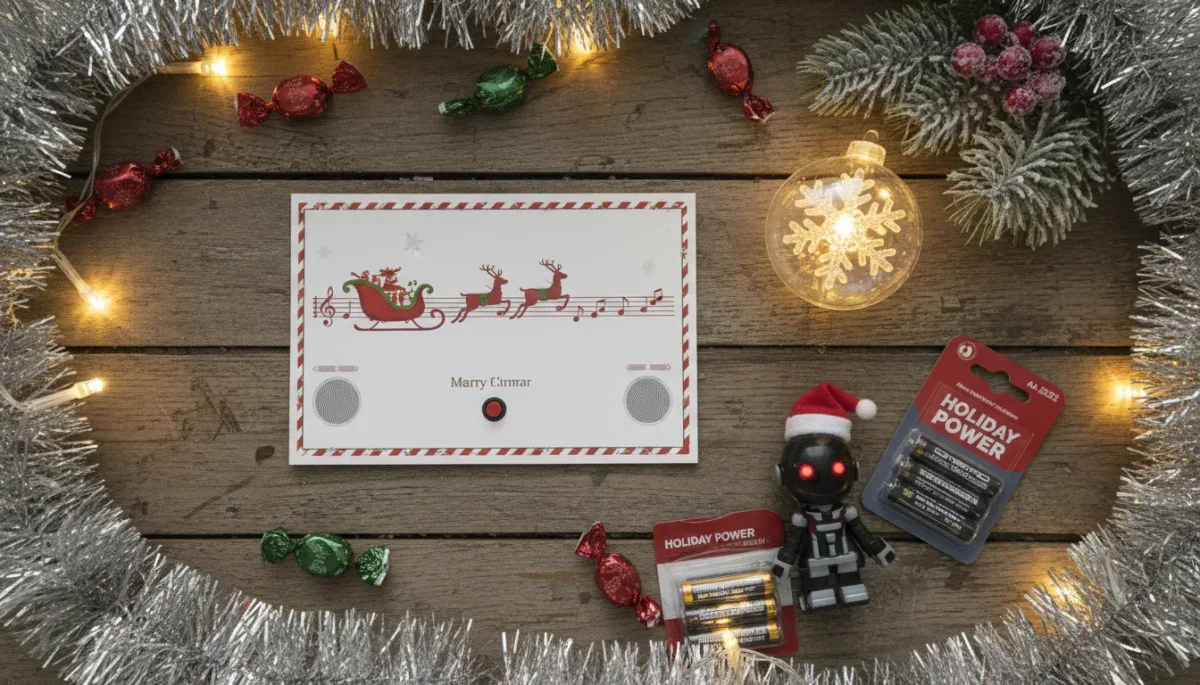
While mainstream toy manufacturers strictly monitor mechanical compliance, seasonal holiday novelties frequently represent a notable risk point for households. Low-cost novelty products sold online or through temporary seasonal displays may bypass strict quality inspections or enter the supply chain through direct-import marketplaces. Items such as flashing Santa hats, lighted holiday jewelry, electronic greeting cards, singing ornaments, and mini flashlights are frequently built with thin, brittle plastics that split open when dropped on hardwood or tile flooring.
Unlike certified toys, generic holiday decorations might rely on simple slide-off battery covers or friction-fit latches that release their contents upon impact. In many cases, these decorative novelties are not legally classified as toys, meaning manufacturers may attempt to circumvent ASTM F963 standards even though the vibrant colors and flashing lights naturally attract children. Caregivers should treat every seasonal item that emits sound, light, or motion as a potential battery hazard until its mechanical construction has been examined in hand.
Different types of disc-shaped batteries carry varying levels of electrical risk. Alkaline button cells are generally smaller and operate at 1.5 volts, whereas lithium coin cells, such as the common CR2032 model, measure twenty millimeters in diameter and deliver 3.0 volts. The wider diameter of a lithium coin cell makes it prone to lodging in a child's esophagus, while its higher voltage accelerates the chemical reaction that causes severe mucosal perforation. Identifying the exact battery chemistry inside a toy clarifies the urgency of the risk.
Physical inspection protocol for gift packaging and casings
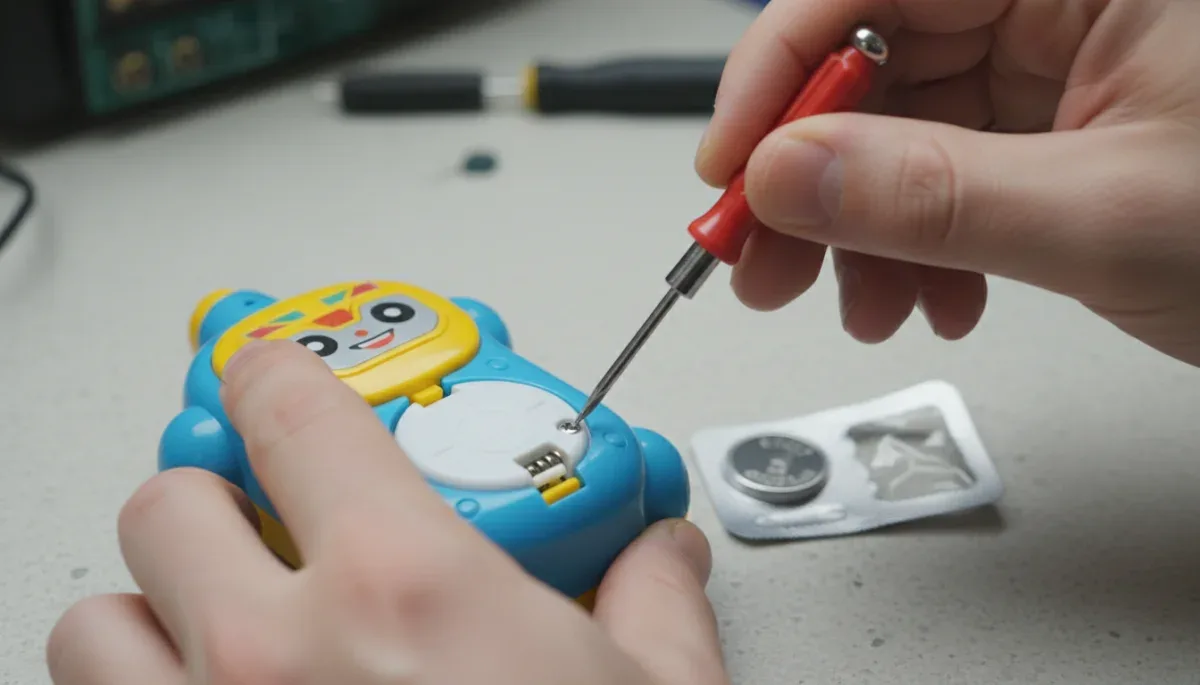
Before introducing any new battery-powered toy into the living room, adults should execute a hands-on physical inspection of the chassis. Begin by checking the screw that secures the battery cover. The screw should fit tightly into a metal-threaded insert or deep plastic thread without stripping or spinning loosely. If a screw strips upon the first battery change or falls free from the plastic hatch entirely, the enclosure no longer meets basic structural expectations and should not be placed in an area accessible to toddlers or young children.
Examine the overall seam integrity of the toy. Gently squeeze and flex the plastic casing along the perimeter joints to confirm that ultrasonic welds or internal retention clips do not separate under moderate hand pressure. A toy that creaks, bends, or exposes internal wiring under minor torsion will likely shatter if stepped on or tossed against a baseboard during ordinary domestic play.
Steps for checking toy construction integrity
- Tighten the enclosure screw completely and confirm that the head sits flush with the casing.
- Perform a moderate drop check from waist height onto a carpeted floor to ensure parts do not eject.
- Inspect the plastic surrounding the screw hole for micro-cracks or stress whitening.
- Confirm that the battery contacts hold the cells firmly without rattling inside the cavity.
Safe domestic storage and depleted cell management
Holiday celebrations often involve stocking replacement batteries alongside gifts, presenting an indirect safety challenge in common living areas. Loose button batteries should never be stored in drawers, kitchen bowls, or bedside tables where young hands can discover them. Keep spare cells sealed in their original, child-resistant blister packaging until the precise moment of installation, and store them inside a locked cabinet or on a high shelf well out of sight and physical reach.
Depleted batteries removed from holiday toys continue to carry residual electrical charge. Even if a battery can no longer illuminate an LED ornament or activate a toy motor, it maintains sufficient voltage to generate chemical electrolysis if lodged in moist anatomical tissue. Whenever replacing a cell, place clear adhesive tape over both the positive and negative terminals immediately upon removal. This taping technique neutralizes electrical discharge risks and insulates the metal surfaces prior to formal recycling.
Household disposal must follow municipal guidelines for hazardous electronic waste rather than general trash cans. Discarding loose or untaped batteries directly into domestic garbage cans creates a hidden hazard if a child sifts through wrapping paper, gift boxes, or food scraps during holiday cleanups. Treat depleted cells with the same structural care and caution as active household chemical products.
Recognizing exposure symptoms and emergency responses
A child who has swallowed a button battery may not display dramatic symptoms immediately, which complicates detection for observing adults. The ingestion is rarely witnessed directly, as it often occurs quietly during solitary play or while an adult is momentarily occupied. Initial signs frequently mimic common childhood viral illnesses, including hoarseness, coughing, throat clearing, persistent drooling, food refusal, or unexplained irritability.
If an adult suspects that a child has ingested or inserted a button battery into their nose or ear, immediate medical intervention is essential. Do not induce vomiting, and do not wait for secondary symptoms such as fever, abdominal pain, or black stools to appear before seeking help. Time is the critical variable in reducing permanent vascular or esophageal damage, and delaying evaluation by even an hour can dramatically alter clinical outcomes.
Immediate steps to take during suspected ingestion
- Transport the child immediately to the nearest hospital emergency department equipped for pediatric care.
- Contact the National Battery Ingestion Hotline at 1-800-498-8666 for specialized medical management advice.
- Provide honey if the child is over twelve months old, administering two teaspoons every ten minutes while en route.
- Inform attending medical staff immediately that an ingested coin or button cell is suspected.
At a glance
| Safety factor | What to know |
|---|---|
| Tool-secured access | Compartments must require a screwdriver or coin to open under federal regulations. |
| Lithium coin hazard | Higher voltage CR-series cells cause severe tissue perforation much faster than alkaline cells. |
| Decorative novelties | Seasonal items like flashing pins and cards often lack certified child-resistant closures. |
| Terminal taping | Covering depleted battery terminals with clear tape prevents residual electrical current flow. |
Frequently asked questions
Can I give honey to a child who swallowed a battery?
Yes, medical guidelines permit administering pure honey to children over one year old while traveling to the emergency room. Honey acts as a viscous barrier that slows localized chemical burns, but it should never delay transportation or medical imaging.
Are screw-secured battery compartments completely childproof?
No closure is entirely childproof if the materials around the screw crack, strip, or break. Caregivers must regularly examine the plastic housing and ensure screws remain fully seated and tightly threaded into their anchor points after each battery change.
How do I know if an imported holiday toy meets safety standards?
Look for direct references to ASTM F963 compliance and official third-party testing laboratory markings on the packaging. Products that feature generic labeling, misspellings, or lack manufacturer contact details often fail to meet domestic child safety mandates.
What should I do if a toy battery compartment cracks?
Stop using the toy immediately and keep it out of reach until it can be repaired or replaced. Applying tape or household glue over a cracked door is inadequate, as curious children can peel adhesives or break brittle components loose.
The bottom line
Maintaining button battery safety during the holiday season requires diligence, proper mechanical inspection, and an understanding of the severe internal burn hazards posed by coin-sized cells. Every electronic toy, musical card, and seasonal novelty should feature a durable, tool-locked compartment before entering a home with children. Before wrapping or handing over any electronic gift this year, examine the battery door with a screwdriver to ensure the fastener holds firmly and cannot be opened by small fingers.
Written by
Maria Eduarda
Maria Eduarda writes about tech & life, gift guides and seasonal toys for portalreborn.com. Each article explains how things work, compares published details such as prices, policies and program rules, and points readers to the official source before they decide.