
Beeswax Wraps Versus Silicone Lids for Food Storage
Advertisement
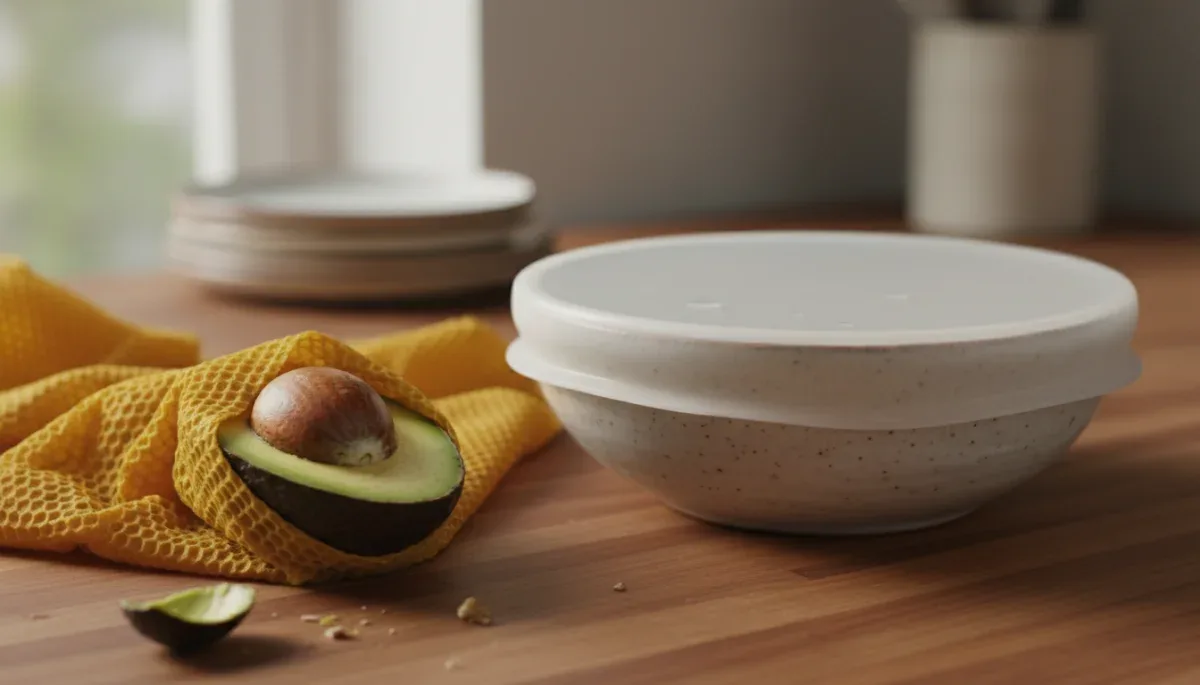
Beeswax wraps and silicone lids both eliminate single-use plastic wrap from a kitchen, but they protect food in fundamentally different ways. Choosing the right tool depends on whether your priority is breathable moisture regulation for produce or an impermeable seal for liquid storage.
This comparison helps households seeking to reduce disposable plastic waste find practical solutions that protect groceries effectively. The catch is that neither material works for every single kitchen scenario, and misusing either option can lead to food waste, bacterial cross-contamination, or damaged goods.
How materials and manufacturing differ between wraps and lids
Understanding the fundamental composition of beeswax wraps and silicone lids reveals how they behave when wrapped around fresh food or stretched over dinnerware. Beeswax food wraps rely entirely on traditional, bio-based ingredients. Most commercial brands use an unbleached cotton fabric base infused with pure beeswax, tree resin (often damar or pine resin), and plant oils such as jojoba or coconut oil. The wax repels water, the resin provides natural tackiness so the cloth can stick to itself, and the oil maintains pliability so the fabric does not crack when folded. Because these components derive from agricultural sources and managed apiaries, their production generally involves minimal synthetic processing.
Advertisement
Food-grade silicone lids, by contrast, are synthetic polymer products created from silica (derived from common quartz and sand). Manufacturers process silica into silicone polymers, usually curating them through heat-stabilized platinum or peroxide curing systems to ensure food safety compliance under United States Food and Drug Administration standards. Platinum-cured silicone is widely considered the higher grade for culinary applications because it leaves fewer chemical byproducts. While silicone is synthetic, it contains no petroleum-derived chemical additives, phthalates, or bisphenol A. The resulting material is chemically inert, non-porous, and capable of extreme elastic tension.
These distinct physical origins dictate how each item interacts with containers and food surfaces. A beeswax wrap relies on the warmth of human hands to soften the wax matrix slightly, allowing the cloth to conform around an apple, an onion, or the rim of a ceramic bowl. Once released, the wax cools to room temperature and retains that molded shape. A silicone lid operates through elasticity, gripping glass, ceramic, or stainless steel rims by exerting constant inward radial tension. The physical contrast between natural moldability and synthetic elasticity forms the foundation of their practical kitchen roles.
Moisture retention and breathability in the refrigerator
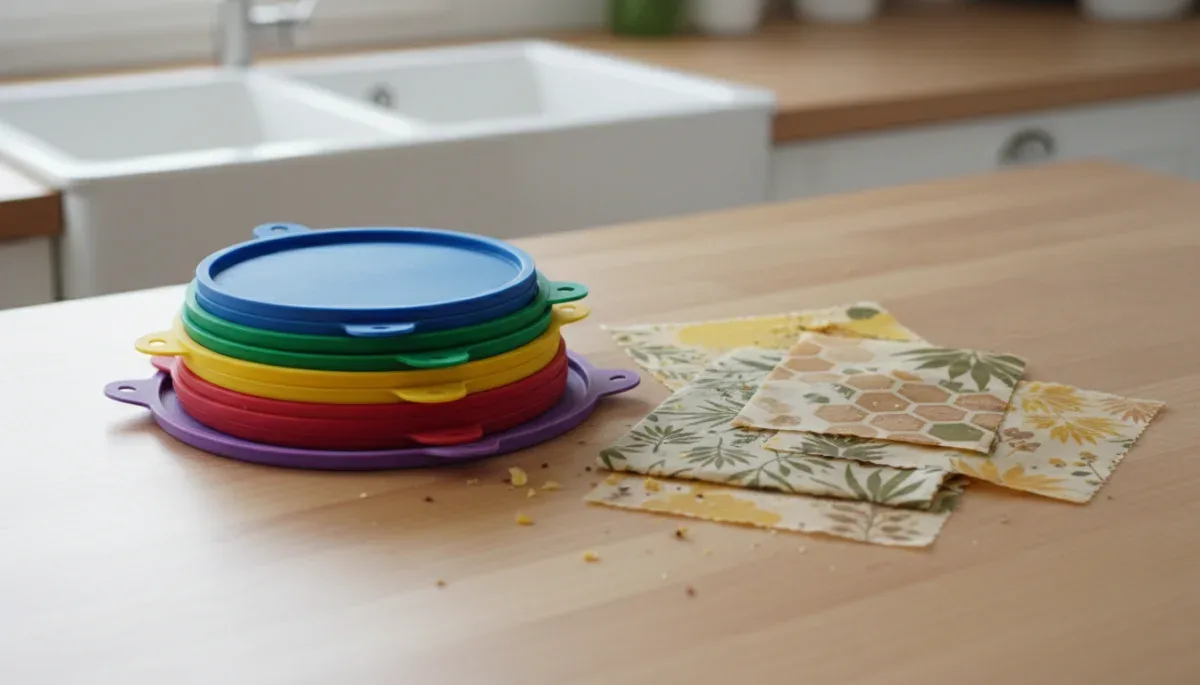
The primary duty of any food covering is managing air exposure and internal moisture. In the debate over beeswax wraps vs silicone lids, the distinction between breathability and airtight isolation is critical. Beeswax cloth acts like natural skin or citrus peel. It allows a small amount of gas exchange while preventing rapid water loss, making it uniquely suited for living produce and cultured foods that suffer when suffocated by impermeable barriers.
Hard cheeses and crusty bakery items demonstrate this breathability advantage clearly. When cheddar or parmesan is sealed inside an airtight enclosure, trapped surface condensation accelerates mold spore germination. Beeswax wraps moderate that moisture balance, maintaining the cheese structure without turning the surface slimy. Similarly, halves of squash, cucumbers, and whole cabbage heads stay firm longer under breathable covers because internal respiration gases do not build up to hazardous concentrations inside the seal.
Silicone lids create the opposite microclimate by establishing an impermeable, liquid-tight barrier. If you stretch a properly sized silicone lid over a bowl of soup, cut citrus, or watermelon, moisture cannot escape, and outside air cannot enter. This feature makes silicone vastly superior for liquid-heavy items, prepared broths, and highly acidic foods that emit intense aromas. An airtight silicone cover prevents garlic and onion smells from transferring across the refrigerator shelves to delicate dairy products.
Kitchen applications suited for each barrier type
- Crusty bread and cheese: Best stored in beeswax wraps to preserve crust texture and reduce mold growth caused by trapped moisture.
- Soups, stews, and dressings: Safely sealed under stretch silicone lids to prevent spills, evaporation, and odor transfer.
- Firm produce halves: Lemons, apples, and bell peppers thrive under moldable beeswax cloth that adapts to irregular cuts.
- Standard mixing bowls: Sealed quickly with universal silicone suction discs that create an airtight vacuum over smooth rimmed containers.
Temperature limits, heat tolerance, and food safety
Temperature thresholds represent the sharpest operational difference between these two reusable categories. Pure beeswax has a relatively low melting point, typically beginning to soften at approximately 144 degrees Fahrenheit and liquefying completely near 147 degrees Fahrenheit. Consequently, beeswax wraps cannot tolerate hot foods, warm water, microwaves, dishwashers, or direct solar heat. Applying a beeswax wrap to a hot casserole dish causes the wax and resin mixture to melt directly into your meal, ruining the wrap and contaminating the food.
Food-grade silicone, however, exhibits remarkable thermal stability across extreme environmental ranges. Most culinary silicone products safely withstand continuous temperatures from minus 40 degrees Fahrenheit in deep freezers up to 400 degrees Fahrenheit or higher in conventional ovens and microwaves. A silicone stretch lid can transition directly from sealing a chilled salad in the refrigerator to covering leftovers inside a reheating microwave without warping, leaching compounds, or losing its elastic memory. This broad thermal tolerance allows silicone to replace aluminum foil on warm baking trays and cling film on cooling stockpots.
Food safety protocols also diverge significantly when dealing with raw animal proteins. The United States Department of Agriculture recommends sanitizing all surfaces that come into contact with raw meat, poultry, and fish using water temperatures of at least 140 degrees Fahrenheit or chemical sanitizers. Because beeswax wraps degrade in hot water and cannot tolerate harsh detergents, they must never be used to cover raw meat or seafood. Harmful pathogens such as Salmonella or Campylobacter cannot be safely washed off wax fabric without destroying the protective coating. Silicone lids, by comparison, can be scrubbed with boiling water or sanitized inside a residential dishwasher cycle, making them fully compliant with standard meat-handling hygiene rules.
Cleaning routines and longevity in everyday use
The daily maintenance required to keep food covers hygienic determines whether they integrate smoothly into a busy household routine. Beeswax wraps demand a gentle, deliberate hand-washing process. Users must rinse them under cool or lukewarm running tap water, using a tiny drop of alcohol-free dish soap and the soft pad of their fingers or a non-abrasive cellulose sponge. Scrubbing with stiff bristle brushes or using hot water removes the protective resin coating. After washing, the wraps must dry naturally on a dish rack away from heat sources before being rolled or folded flat for storage.
With careful handling, a quality beeswax wrap typically lasts between six months and one year of frequent use. Over time, repeated creasing causes the wax to develop fine fracture lines where moisture can penetrate the cotton weave. When a wrap loses its natural stickiness or the fabric begins to look dry, users can refresh it at home by grating a fresh beeswax-and-resin mixture across the surface and gently warming it on parchment paper in a low oven. Once the cotton fabric frays completely or develops persistent discoloration, it must be retired.
Silicone lids require far less delicate maintenance. They can be tossed into the top rack of an automatic dishwasher, boiled in a pot of water for complete sterilization, or soaked in hot soapy water to lift dried residue. Their non-porous surface resists physical tearing and maintains elastic tensile strength through thousands of stretching cycles. A standard silicone stretch lid or suction disc can remain fully functional for five to ten years without degradation, provided it is not punctured by sharp kitchen knives or overstretched beyond the manufacturer’s specified rim diameter limits.
Practical maintenance tips for extended durability
- Wash beeswax with cold water only: Hot tap water instantly dissolves the wax matrix and strips away tree resins.
- Neutralize silicone odors promptly: Soak silicone covers in a baking soda paste or warm vinegar bath if they absorb pungent food aromas over time.
- Keep silicone away from sharp flatware: Small nicks or puncture holes compromise the structural integrity and cause the silicone to tear under tension.
- Avoid acidic detergents on cotton wraps: Harsh citrus-based soaps prematurely strip natural oils from wax-coated fabrics.
End of life and environmental footprint
Both products provide substantial environmental benefits over single-use polyethylene cling wrap, which generally ends up in municipal landfills or marine ecosystems because thin plastic films clog municipal recycling machinery. However, the ecological life cycles of beeswax wraps and silicone lids follow distinctly different paths once they reach the end of their usable working lives. Evaluating their end-of-life impact requires looking at compostability versus long-term material recovery.
Beeswax wraps boast an exceptional cradle-to-grave circular profile. Because they consist entirely of plant-based cotton, natural apiary beeswax, natural tree resin, and vegetable carrier oils, they are 100 percent biodegradable and home compostable. When a wrap reaches the end of its useful lifespan and can no longer be refreshed with fresh wax, it can be cut into narrow strips and placed directly into a backyard compost tumbler or garden soil. Within several months, soil microorganisms break down the natural fibers and organic waxes, leaving behind zero synthetic residues. Alternatively, discarded strips of worn beeswax cloth make effective, non-toxic outdoor fire starters for wood stoves or camping.
Silicone lids present a more complex disposal profile. Although silicone is derived from abundant natural silica sand rather than crude petroleum, it does not biodegrade in municipal landfills or backyard composting bins. Silicone requires specialized high-temperature recycling facilities that break down the polymer chains into silicone oils or industrial silicates. Standard municipal curbside recycling bins in the United States do not accept consumer silicone goods. If a household chooses silicone lids, the primary environmental gain comes from long-term reuse—displacing hundreds of boxes of disposable plastic wrap over half a decade—rather than simple post-consumer composting.
Choosing the right tool for specific kitchen habits
Balancing beeswax wraps vs silicone lids often reveals that the most effective, waste-free kitchens do not rely on one single replacement material. Instead, strategic cooks utilize both tools where their mechanical and thermal properties perform best. Relying entirely on beeswax leaves a household without leakproof options for marinades, soups, or hot dishes. Conversely, relying solely on silicone lids leaves a cook without a flexible, breathable wrap for half-cut cabbages, artisan sourdough boules, and wedges of aged cheese.
Households that purchase large amounts of fresh farm produce, bake scratch breads, and prepare packed dry lunches benefit immediately from an assortment of small, medium, and large beeswax wraps. The wraps mold neatly around odd-shaped sandwiches, loose celery stalks, and snack bundles without requiring bulky rigid containers. Because they take up almost no physical storage volume when folded, they keep kitchen drawers organized and reduce the need for plastic zipper bags.
Families that frequently cook large batches of food, rely on microwave reheating, or routinely store wet leftovers in ceramic bowls find greater utility in silicone lids. Stretch lids fit snugly over canned goods, glass mixing bowls, and cut melons, creating a tight seal that prevents messy spills. Suction-style silicone discs provide immediate one-touch coverage for hot frying pans and casserole dishes on the stove. By deploying each material according to its natural strengths, home cooks minimize food waste and eliminate disposable plastic film entirely.
At a glance
| Factor | What to know |
|---|---|
| Primary material | Beeswax wraps use cotton and natural resins, whereas silicone lids use synthetic silica polymers. |
| Seal capability | Wraps offer breathable moisture control, while silicone lids deliver an airtight and liquid-proof barrier. |
| Heat resistance | Wraps melt near 144 degrees Fahrenheit, but silicone withstands temperatures exceeding 400 degrees Fahrenheit. |
| End of life | Worn beeswax wraps are fully compostable, while silicone lids require specialized recycling channels. |
Frequently asked questions
Can beeswax wraps be sanitized in a dishwasher?
No, beeswax wraps cannot withstand dishwasher cycles because heated water completely melts the wax coating and ruins the cloth. You must always hand-wash wraps using cold water and mild dish soap, followed by air drying on a flat surface away from direct heat.
Are silicone lids completely airtight on all containers?
Yes, silicone lids create an airtight seal on containers with smooth, clean rims like glass, ceramic, or metal. They work less effectively on textured pottery, rough stoneware, or damp rims where moisture prevents the silicone from establishing adequate friction and suction.
Can you use beeswax wraps to store raw poultry or beef?
No, you should never wrap raw meat, poultry, or fish directly in beeswax cloth. Because wraps cannot be sanitized with hot water or strong chemical cleaners, harmful surface pathogens could linger in the fabric and cross-contaminate other stored food items later.
How long do silicone lids last compared to wax wraps?
Silicone lids typically last between five and ten years with basic care, retaining elasticity through repeated washings. Beeswax wraps generally last between six months and one year of regular kitchen duty before requiring a wax touch-up or compost disposal.
The bottom line
Beeswax wraps excel at preserving firm produce, cheeses, and baked goods due to their natural breathability and moldable texture, while silicone lids dominate liquid containment, microwave reheating, and high-heat sanitizing tasks. A functional zero-waste kitchen benefits most from owning a small collection of both options to cover various food types safely. Before purchasing either product, verify that the silicone pieces carry certified food-grade labels and ensure your existing kitchen cookware rims fit standard stretch lid dimensions.
Written by
Lucas Bastos
Lucas Bastos writes about societal shifts for portalreborn.com. Each article explains how things work, compares published details such as prices, policies and program rules, and points readers to the official source before they decide.