Positive Psychology in Parenting: Building Resilience in Kids by Age 5
Advertisements
Positive psychology in parenting fosters resilience in young children by focusing on strengths, gratitude, and emotional regulation. Implementing three key daily habits can significantly enhance a child’s ability to navigate challenges and thrive emotionally by age five.
As parents, we all aspire to raise children who are not only happy but also equipped to face life’s inevitable ups and downs. The journey of fostering resilience begins remarkably early, and understanding how positive psychology in parenting: building resilience in kids with 3 key daily habits by age 5 can transform your child’s developmental trajectory is paramount. This article delves into actionable strategies to nurture a strong emotional foundation in your little ones.
Advertisements
Understanding positive psychology in early childhood
Positive psychology is often associated with adult well-being, but its principles are profoundly applicable and transformative in early childhood development. It shifts the focus from merely correcting problems to actively cultivating strengths, virtues, and optimal functioning. For young children, this means creating an environment where they feel safe, loved, and capable of exploring their world with confidence.
Applying positive psychology in parenting is not about denying negative emotions or experiences. Instead, it’s about providing children with the tools to understand, process, and ultimately grow from those moments. It’s about building an inner reservoir of strength that they can draw upon when confronted with challenges, rather than being overwhelmed by them. This proactive approach sets the stage for a lifetime of mental and emotional well-being.
The foundational principles for young minds
- Cultivating optimism: Teaching children to look for the good in situations, even difficult ones, helps them develop a more positive outlook.
- Developing self-efficacy: Empowering children to believe in their own abilities and encouraging their efforts, regardless of immediate success, builds confidence.
- Fostering positive relationships: Nurturing secure attachments and teaching empathy helps children build strong, supportive connections with others.
The early years are a critical window for brain development, making this period particularly receptive to positive interventions. By embedding positive psychological principles into daily routines, parents can significantly influence their child’s emotional architecture, laying robust groundwork for future resilience. This involves intentional interactions that highlight their child’s unique qualities and contributions.
Ultimately, understanding positive psychology in early childhood means recognizing that parenting is not just about protection, but also about preparation. It’s about equipping children with an internal compass that guides them toward growth, happiness, and meaningful engagement with the world around them. This comprehensive approach ensures that children are not just surviving, but truly thriving.
Habit 1: nurturing gratitude and positive self-talk
One of the most powerful habits you can instill in your child by age five is the practice of gratitude and positive self-talk. These aren’t just feel-good concepts; they are fundamental building blocks for emotional resilience. Gratitude helps children appreciate what they have, shifting their focus away from what they lack, while positive self-talk empowers them to navigate challenges with an inner voice of encouragement rather than criticism.
Starting early with these habits helps wire their brains for optimism and self-compassion. It teaches them to acknowledge their own efforts and successes, no matter how small, and to recognize the good around them. This proactive approach can significantly buffer the impact of negative experiences later in life.
Daily gratitude rituals for young children
- Gratitude jar: Decorate a jar and have your child draw or dictate one thing they are grateful for each day to put inside.
- Bedtime blessings: Before bed, ask your child to share three things that made them happy or for which they are thankful that day.
- Gratitude walk: Point out beautiful things or kind acts you observe during a walk and discuss why you are grateful for them.
Positive self-talk can be modeled by parents and explicitly taught. When your child faces a minor setback, instead of saying, "I can’t do it," guide them to reframe it as, "I can try again," or "I’ll ask for help." This internal dialogue is crucial for developing a growth mindset, where challenges are seen as opportunities for learning rather than insurmountable obstacles.
Encourage your child to celebrate their small victories. Did they finally tie their shoe? "I did it! I’m so proud of myself!" Did they share a toy? "I’m a good friend!" These affirmations, when repeated, become ingrained beliefs that bolster their self-esteem and confidence. The consistent practice of these habits creates a positive feedback loop, reinforcing their ability to cope and thrive.
In essence, nurturing gratitude and positive self-talk in young children provides them with an internal compass that points towards optimism and self-belief. These daily practices are not just cute activities; they are intentional exercises in emotional strengthening, ensuring that children grow up with a robust sense of self-worth and an appreciative perspective on life.
Habit 2: fostering emotional literacy and regulation
Emotional literacy, the ability to identify and express one’s feelings, coupled with emotional regulation, the capacity to manage those feelings appropriately, are critical skills for building resilience. For children under five, this means moving beyond simple labels like ‘happy’ or ‘sad’ to a more nuanced understanding of their inner world. Parents play a vital role in modeling and teaching these complex skills in an age-appropriate manner.
When children can articulate what they are feeling, they are better equipped to understand why they are feeling it and what they might need. This self-awareness is the first step towards managing emotions constructively, rather than being overwhelmed by them. Early intervention in this area can prevent many behavioral challenges and foster healthier coping mechanisms.
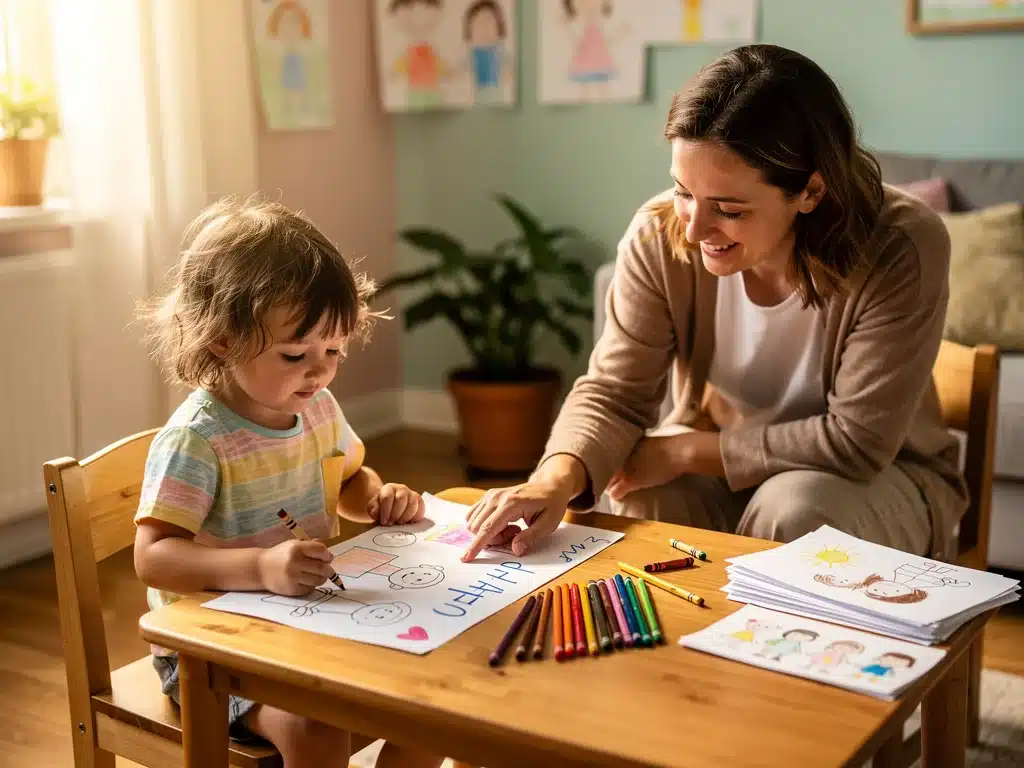
Practical ways to teach emotional literacy
- Feeling charts: Use visual aids with faces depicting various emotions to help children identify their feelings.
- Storytelling: Read books that explore different emotions and discuss how characters feel and why.
- Mirroring emotions: When your child expresses an emotion, acknowledge and name it: "I see you’re feeling frustrated because your tower fell."
Emotional regulation for young children often involves simple strategies like taking deep breaths, counting to ten, or finding a quiet space. It’s crucial for parents to teach these techniques when the child is calm, so they can recall them during moments of distress. The goal isn’t to suppress emotions, but to guide children in expressing them in ways that are safe and constructive.
Co-regulation, where a parent helps a child calm down, is a precursor to self-regulation. This involves the parent remaining calm, offering comfort, and validating the child’s feelings. Through consistent co-regulation, children learn to internalize these calming strategies and eventually apply them independently. This process builds a strong foundation for managing stress and adversity throughout their lives.
By fostering emotional literacy and regulation, parents empower their children with invaluable tools for navigating the complexities of their emotional landscape. These habits ensure that children develop a robust internal framework for understanding and managing their feelings, which is indispensable for building genuine resilience. It’s about teaching them to ride the waves of emotion, rather than being swept away.
Habit 3: promoting problem-solving and adaptive thinking
The third key habit for building resilience in young children is the promotion of problem-solving and adaptive thinking. Life is full of challenges, and the ability to approach these obstacles with a flexible mindset and a toolkit of solutions is a hallmark of resilient individuals. For children under five, this means moving beyond immediate frustration to actively think about different ways to overcome a hurdle, no matter how small.
Encouraging problem-solving from an early age helps children develop a sense of agency and competence. It teaches them that they have the capacity to influence outcomes and that persistence often leads to success. This habit directly counteracts feelings of helplessness and fosters a proactive approach to difficulties.
Simple strategies for fostering problem-solving
- Offer choices: Instead of dictating, ask, "Would you like to wear your blue shirt or your red shirt today?" to give them a sense of control.
- Brainstorm solutions: When a toy breaks, ask, "What are some ways we could fix this?" or "What else could we play with?"
- Encourage experimentation: Allow children to try different approaches to a task, even if it means making mistakes. Emphasize the learning process.
Adaptive thinking goes hand-in-hand with problem-solving. It involves the flexibility to adjust plans or perspectives when initial attempts don’t work. For a young child, this could be trying a different block when one doesn’t fit, or changing a game’s rules when it’s not fun for everyone. Parents can model this by demonstrating their own adaptive thinking in daily situations.
When children encounter a difficulty, resist the urge to immediately solve it for them. Instead, guide them with questions like, "What do you think you could do?" or "What have you tried so far?" This process helps them develop their own cognitive strategies for tackling problems, rather than relying solely on adult intervention. The goal is to build their internal problem-solving muscles.
Celebrating effort and perseverance is also crucial. When a child works hard to solve a puzzle or build a structure, acknowledge their dedication, not just the outcome. "You really stuck with that, even when it was tricky!" This reinforces the value of the process and encourages them to face future challenges with tenacity. By promoting problem-solving and adaptive thinking, we equip children with the mental agility necessary to navigate an ever-changing world with confidence and ingenuity.
Integrating habits into daily family life
Successfully building resilience through positive psychology isn’t about isolated lessons; it’s about seamlessly integrating these habits into the fabric of daily family life. When gratitude, emotional literacy, and problem-solving become natural parts of your routine, children absorb them effortlessly. This consistent exposure reinforces the behaviors and mindsets we wish to cultivate, making them second nature by the time they reach age five.
The key is consistency and authenticity. Children are keen observers, and they learn best by watching and participating. When parents model these behaviors in their own lives, it sends a powerful message that these values are important and achievable. It transforms abstract concepts into tangible, everyday realities.
Creating a positive family culture
- Family meetings: Even with young children, simple family check-ins can be opportunities to share highs and lows, practice gratitude, and collectively solve small family problems.
- Play-based learning: Incorporate emotional and problem-solving challenges into playtime. "How can we make sure everyone gets a turn?" or "What does this doll feel when her toy breaks?"
- Mindful moments: Practice short periods of mindfulness, like focusing on breathing or observing nature, to help with emotional regulation.
The home environment should be a safe space for emotions. This means allowing children to express all their feelings – joy, sadness, anger, frustration – without judgment. When negative emotions arise, it’s an opportunity to teach coping strategies and reinforce emotional regulation, rather than to shut down the expression. This open dialogue builds trust and psychological safety.
Parents can also create routines that naturally incorporate these habits. For example, a "gratitude circle" during dinner, or a "problem-solving playtime" where challenges are introduced. These structured but flexible moments provide regular practice, solidifying the habits over time. The goal is not perfection, but consistent effort and a supportive atmosphere.
Ultimately, integrating these positive psychology habits into daily family life creates a nurturing ecosystem where children can flourish emotionally. It ensures that the lessons of resilience are not just taught but lived, preparing them to face the world with an inner strength that will serve them well beyond their early years. This holistic approach to parenting cultivates not just happy children, but truly resilient individuals.
Overcoming common challenges in implementation
While the benefits of applying positive psychology in parenting are clear, implementing these habits consistently can present challenges. Parents often face time constraints, their own emotional triggers, and the natural resistance or varying temperaments of their children. Recognizing these hurdles is the first step towards developing effective strategies to overcome them, ensuring the long-term success of these resilience-building practices.
One common challenge is maintaining consistency amidst a busy schedule. Modern family life can be hectic, and it’s easy for intentional practices to fall by the wayside. Another significant hurdle can be a parent’s own emotional history; if a parent struggles with gratitude or emotional regulation, it can be difficult to model these behaviors authentically.
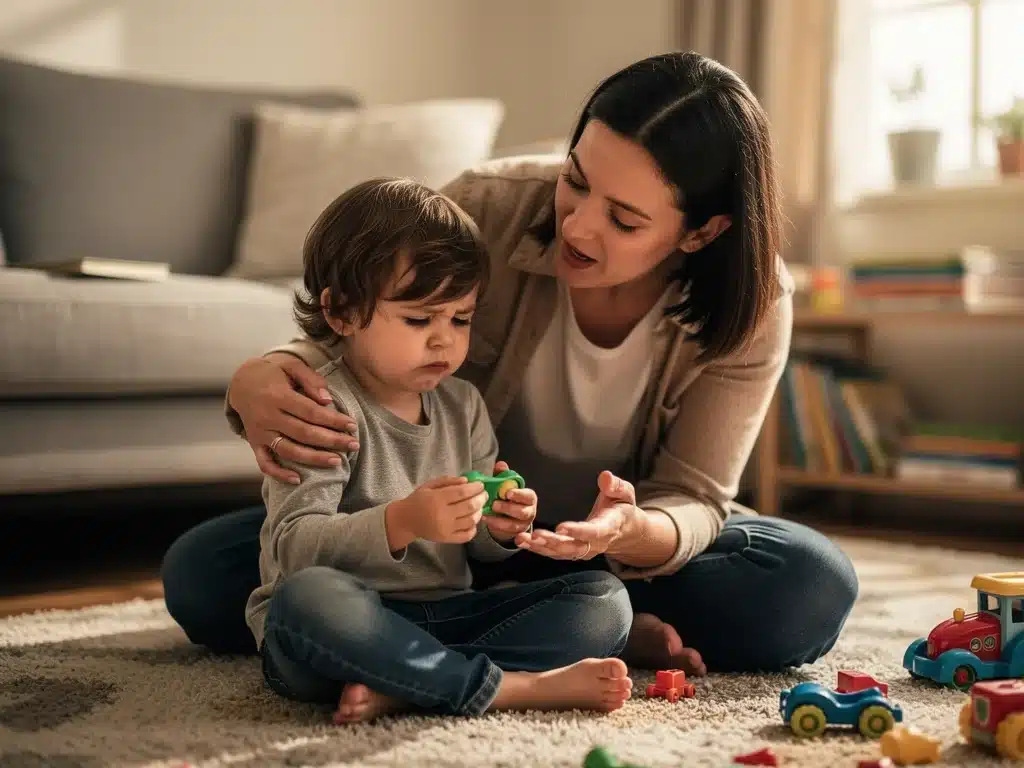
Strategies for navigating typical roadblocks
- Start small: Don’t try to implement all habits at once. Choose one, practice it for a few weeks, and then gradually add another.
- Be flexible: If a scheduled gratitude practice isn’t working, try a different time or format. Adapt to your child’s mood and energy levels.
- Seek support: Connect with other parents, read parenting books, or consult with child development experts for guidance and renewed motivation.
Children’s individual temperaments also play a role. Some children may naturally gravitate towards positive self-talk, while others might be more prone to frustration. Parents need to tailor their approach to their child’s unique personality, understanding that what works for one child might not work for another. Patience and observation are key here.
Another challenge is dealing with parental burnout or stress. When parents are overwhelmed, it’s harder to be present and model positive behaviors. Prioritizing self-care for parents is not selfish; it’s essential for maintaining the emotional capacity needed to foster resilience in their children. A rested and regulated parent is better equipped to support their child’s emotional development.
Finally, remember that progress isn’t always linear. There will be days when the habits feel natural and effective, and days when it feels like you’re starting from scratch. Embrace these fluctuations as part of the journey. The goal is not perfection, but consistent effort and a loving, supportive environment. By proactively addressing these challenges, parents can sustain their efforts and successfully implement these vital resilience-building habits.
Long-term benefits for child development
The dedication to positive psychology in parenting during the formative years, especially by age five, yields a profound array of long-term benefits for a child’s development. These early habits don’t just equip them for immediate challenges; they lay down neural pathways and emotional blueprints that will influence their well-being, relationships, and success throughout their entire lives. The investment made now pays dividends for decades to come.
Children who grow up with a strong foundation in gratitude, emotional literacy, and problem-solving are statistically more likely to exhibit higher self-esteem, better academic performance, and stronger social skills. They are also less prone to anxiety and depression, demonstrating a greater capacity for emotional stability and adaptability in the face of adversity.
Key developmental advantages
- Enhanced mental health: A proactive approach to emotional well-being significantly reduces the risk of developing mental health issues later in life.
- Stronger relationships: Emotionally literate and empathetic children form deeper, more meaningful connections with peers and family.
- Academic and career success: Resilience and a growth mindset translate into persistence, problem-solving abilities, and a willingness to learn from mistakes, all crucial for future achievements.
Beyond individual benefits, these children are more likely to become compassionate and engaged members of their communities. Their ability to understand and manage their own emotions often extends to a greater capacity for empathy and social responsibility. They are the future leaders and innovators who can approach complex societal problems with both heart and intellect.
The early establishment of these habits creates a positive feedback loop. Resilient children are more likely to seek out positive experiences, engage in healthy coping mechanisms, and build supportive networks, further strengthening their overall well-being. This compounding effect means that the initial effort in early childhood continues to yield returns as they grow into adolescence and adulthood.
In conclusion, the long-term benefits of integrating positive psychology into parenting are far-reaching and transformative. It’s not merely about raising happy children; it’s about nurturing well-adjusted, confident, and capable individuals who are prepared to navigate the complexities of life with grace and strength. This foundational work in early childhood is arguably one of the most impactful legacies a parent can bestow upon their child.
| Key Habit | Brief Description |
|---|---|
| Gratitude & Positive Self-Talk | Cultivating appreciation for positive experiences and fostering an encouraging inner dialogue to build self-worth. |
| Emotional Literacy & Regulation | Teaching children to identify, understand, and manage their feelings constructively from an early age. |
| Problem-Solving & Adaptive Thinking | Empowering children to approach challenges creatively and flexibly, fostering independence and resourcefulness. |
| Consistent Integration | Weaving these habits into daily routines and family culture for natural, sustained development. |
Frequently asked questions about positive parenting and resilience
Positive psychology in parenting focuses on cultivating strengths, virtues, and optimal functioning in children. It’s about proactively building emotional well-being and resilience, rather than solely addressing problems. This approach emphasizes gratitude, emotional intelligence, and problem-solving to foster a child’s overall thriving.
Building resilience by age 5 is crucial because these early years are foundational for brain development and emotional regulation. Resilient children are better equipped to handle stress, adapt to change, and recover from setbacks. This early foundation significantly impacts their mental health, social skills, and academic success in the long term.
Teaching gratitude involves modeling and consistent practice. Simple strategies include daily "gratitude moments" at dinner, keeping a gratitude jar, or pointing out things you’re thankful for during walks. Encourage your child to express appreciation for both big and small things, fostering a positive outlook.
Practical ways to help a child regulate emotions include teaching deep breathing exercises, creating a "calm down corner," and using feeling charts to identify emotions. Parents should co-regulate by staying calm themselves, validating the child’s feelings, and gently guiding them towards constructive expression, not suppression.
It is never too late to start cultivating positive psychology habits. While early intervention is highly beneficial, children at any age can learn and integrate these skills. The approach might need slight adjustments for older children, perhaps involving more direct conversations and complex problem-solving scenarios, but the core principles remain effective.
Conclusion
Embracing positive psychology in parenting is more than just a trend; it is a profound commitment to nurturing resilient, emotionally intelligent, and genuinely happy children. By consistently integrating the three key daily habits of gratitude and positive self-talk, emotional literacy and regulation, and problem-solving and adaptive thinking into their lives by age five, parents can lay an unshakeable foundation for their children’s future well-being. This proactive and intentional approach not only equips them to navigate life’s challenges with strength but also empowers them to thrive, building a legacy of emotional resilience that will serve them throughout their entire journey.