Children’s Data Privacy: 2026 Regulations and Parental Rights
Advertisements
The digital landscape for children is rapidly changing, making it essential for parents and guardians to understand the upcoming 2026 regulations and their fundamental rights concerning their children’s online data privacy.
As our lives become increasingly intertwined with the digital world, the need to safeguard our youngest citizens online has never been more critical. The conversation around children’s data privacy is evolving rapidly, with new regulations on the horizon for 2026 that promise to reshape how companies interact with minors’ personal information. For parents and guardians, understanding these changes isn’t just important; it’s a fundamental aspect of protecting their children’s digital futures. This article delves into the core of these upcoming regulations, clarifying your parental rights and offering actionable insights to navigate this complex landscape.
Advertisements
The Evolving Landscape of Children’s Online Privacy
The digital realm offers unprecedented opportunities for learning, connection, and entertainment for children. However, it also presents significant challenges regarding their privacy and safety. From educational apps to social media platforms and online games, children’s data is constantly being collected, analyzed, and often monetized. This collection can range from basic identifiers like names and ages to more sensitive information like location data, browsing habits, and even biometric data. The sheer volume and variety of data collected necessitate robust protective measures.
Historically, regulations like the Children’s Online Privacy Protection Act (COPPA) in the United States have provided a foundational layer of protection. COPPA primarily focuses on websites and online services directed at children under 13, requiring verifiable parental consent for data collection. While groundbreaking for its time, the rapid advancement of technology and the increasing sophistication of data collection practices have highlighted the need for more comprehensive and adaptive frameworks. The digital world of 2026 will be vastly different from the one COPPA was designed for, prompting a re-evaluation of how we shield our children.
The upcoming 2026 regulations are a direct response to these evolving challenges, aiming to address gaps in existing laws and provide more stringent protections. These new rules are expected to broaden the scope of covered entities, enhance consent requirements, and introduce more significant penalties for non-compliance. Parents need to be aware that these changes aren’t just minor adjustments; they represent a significant shift in how online platforms handle children’s data, empowering families with greater control and transparency.
Key Provisions of the 2026 Regulations: What’s New?
The anticipated 2026 regulations on children’s data privacy are poised to introduce several critical provisions designed to strengthen the protection of minors online. These changes are expected to go beyond the existing frameworks, addressing areas that have become increasingly problematic in the modern digital ecosystem. Understanding these new elements is crucial for both parents and online service providers.
Expanded Age Thresholds and “Best Interest of the Child” Principle
One of the most significant anticipated changes is an expansion of the age threshold for enhanced protections. While COPPA traditionally focused on children under 13, the new regulations may extend this to include teenagers up to 16 or even 18, acknowledging that older minors also require specific safeguards against exploitative data practices. Furthermore, a central tenet of the new regulations is expected to be the “best interest of the child” principle, mandating that online services prioritize children’s well-being over commercial interests when designing products and collecting data.
- Increased Age Coverage: Protection potentially extending to individuals up to 16 or 18 years old.
- Child-Centric Design: Requirement for services to be designed with the child’s best interests as a primary consideration.
- Data Minimization: Encouraging platforms to collect only the data strictly necessary for their services.
Enhanced Consent Mechanisms and Data Governance
The regulations are also expected to introduce more rigorous consent requirements. This could mean more explicit and verifiable parental consent for data collection from younger children, moving beyond simple click-through agreements. For older minors, there may be provisions for age-appropriate consent, ensuring they understand what they are agreeing to. Companies will likely face stricter obligations regarding data governance, including transparent reporting on data collection practices, data retention policies, and security measures.
The emphasis will be on making privacy policies understandable to a layperson, not just legal experts. This means simpler language, clear visual cues, and accessible ways for parents and children to understand how data is used. The goal is to eliminate opaque terms and conditions that often obscure the true extent of data collection.
Parental Rights Under the New Framework
The 2026 regulations are not just about what companies can and cannot do; they are fundamentally about empowering parents with greater control and understanding over their children’s digital lives. These new provisions are designed to bolster existing parental rights and introduce new ones, ensuring that guardians are key stakeholders in their children’s online data privacy.
The Right to Access, Correct, and Delete Data
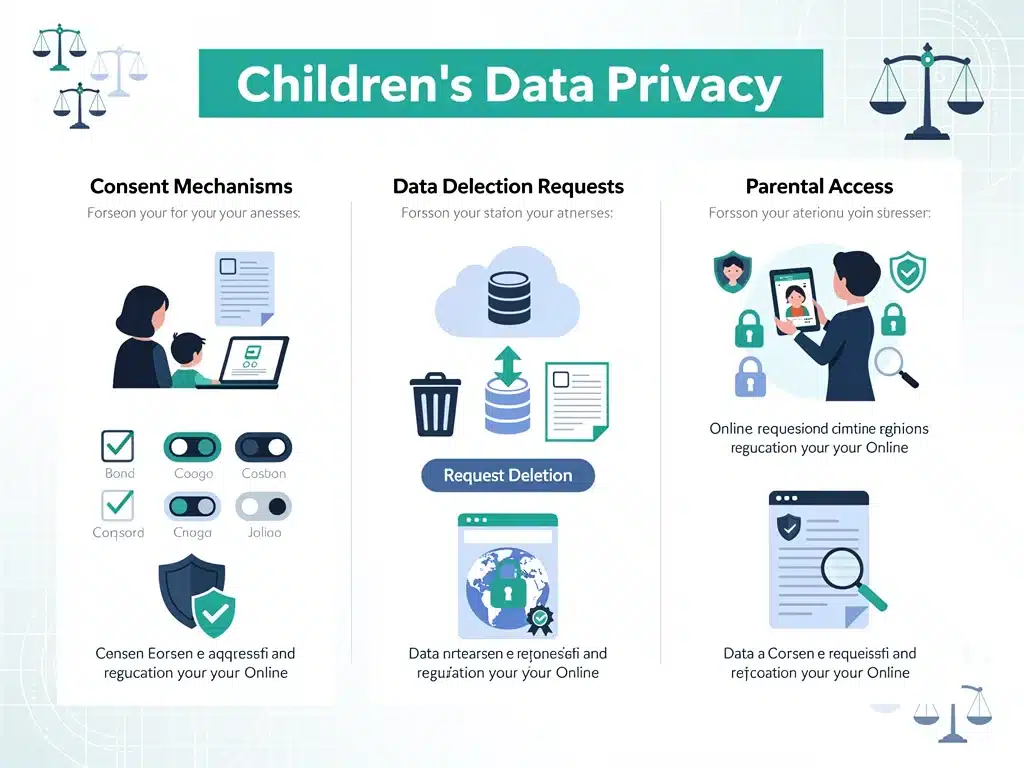
A cornerstone of these regulations will be the explicit reinforcement of parents’ rights to access any data collected from their children. This means platforms must provide mechanisms for parents to review what information has been gathered. Beyond access, parents will have the right to request corrections to inaccurate data and, crucially, to demand the deletion of their child’s data. This “right to be forgotten” for minors is a powerful tool, allowing parents to remove information that could potentially harm their child’s future or expose them to risks.
- Data Access: Parents can request and review all data collected from their child.
- Data Correction: Ability to rectify any inaccurate or incomplete information.
- Data Deletion: The right to have all collected data pertaining to their child permanently removed.
The Right to Opt-Out and Understand Data Usage
Parents will also gain clearer rights to opt-out of certain data processing activities, particularly those related to targeted advertising or profiling. This means parents can prevent companies from using their child’s online behavior to deliver personalized ads or create detailed profiles that could be sold to third parties. Furthermore, a significant emphasis will be placed on the right to understand how data is being used. Companies will be required to provide clear, concise explanations of their data practices, avoiding jargon and making it easy for parents to comprehend the implications of data sharing.

This transparency is vital for informed decision-making. Parents need to know not just what data is collected, but why, how it’s stored, and with whom it might be shared. The regulations aim to bridge the information gap between tech companies and families, fostering a more equitable digital environment for children.
Navigating Online Platforms: Practical Steps for Parents
While regulations provide a legal framework, proactive parental engagement remains the most effective defense against online privacy risks. Understanding the 2026 regulations is the first step; the next is to implement practical strategies to safeguard your child’s digital footprint. It’s about creating an ongoing dialogue and setting clear boundaries in an ever-changing online world.
Open Communication and Digital Literacy
Fostering an environment of open communication with your children about their online activities is paramount. Encourage them to share what apps they use, what websites they visit, and who they interact with. Teach them about the concept of personal information and why it’s important not to share too much online. Digital literacy isn’t just about knowing how to use technology; it’s about understanding its implications for privacy and safety.
Discuss the permanence of online information and the potential consequences of sharing personal details. Explain what data is and how it can be used, helping them develop a critical perspective on online interactions. Regular conversations can help identify potential issues early and build a foundation of trust.
Utilizing Parental Controls and Privacy Settings
Most devices, apps, and platforms offer a range of parental controls and privacy settings. Make it a habit to regularly review and adjust these settings to maximize your child’s privacy. These tools can help filter inappropriate content, manage screen time, and restrict data sharing. However, remember that parental controls are not foolproof and should be used in conjunction with open communication.
- Review App Permissions: Before downloading, check what data an app requests access to (e.g., location, microphone, camera).
- Adjust Privacy Settings: Configure social media and gaming platforms to their strictest privacy settings.
- Strong Passwords: Teach children the importance of strong, unique passwords and two-factor authentication.
Regularly updating software and operating systems also contributes to better security, as these updates often include patches for newly discovered vulnerabilities. Staying informed about the latest features and settings available on platforms your child uses can significantly enhance their protection.
The Role of Tech Companies and Educators
While parental involvement is crucial, the responsibility for children’s data privacy extends beyond the household. Tech companies and educational institutions play significant roles in creating safer digital environments, and the 2026 regulations will undoubtedly increase their accountability. Collaboration between these entities and families is essential for a holistic approach to online safety.
Accountability for Tech Companies
The new regulations are expected to place a much heavier burden on tech companies to design their products and services with children’s privacy in mind by default. This concept, often referred to as “privacy by design,” means that privacy protections are built into the core architecture of a product, rather than being an afterthought. Companies will need to demonstrate that they have conducted thorough impact assessments regarding children’s data and have implemented robust safeguards.
Furthermore, increased transparency will be a key demand. Companies will likely be required to provide clear, accessible privacy notices specifically tailored for children and parents, explaining data practices in an easy-to-understand manner. Non-compliance could lead to significant fines and reputational damage, incentivizing companies to prioritize ethical data handling.
Educators as Digital Guides
Schools and educators are increasingly on the front lines of digital literacy, playing a vital role in teaching children about responsible online behavior and data privacy. Integrating digital citizenship into the curriculum can equip children with the knowledge and skills to navigate the internet safely and understand the implications of their online actions. This includes teaching them how to identify privacy risks, understand terms of service, and make informed decisions about sharing personal information.
Educators can also serve as a bridge between technology and families, offering resources and guidance on parental controls and privacy best practices. By working together, schools, parents, and tech companies can create a more secure and empowering digital experience for the next generation.
Challenges and Future Outlook for Data Privacy
While the 2026 regulations represent a significant step forward, the landscape of children’s data privacy will continue to evolve, presenting ongoing challenges and opportunities. The rapid pace of technological innovation means that legal frameworks must be continually re-evaluated and adapted to remain effective.
Enforcement and Global Harmonization
One of the persistent challenges will be the effective enforcement of these new regulations. Strong laws are only as good as their implementation. Regulatory bodies will need sufficient resources and expertise to monitor compliance, investigate violations, and impose penalties. Furthermore, as the internet is a global phenomenon, achieving some level of global harmonization in children’s data privacy laws will be crucial to prevent companies from exploiting regulatory loopholes across different jurisdictions.
The digital economy knows no borders, and children’s data can easily traverse continents. International cooperation on privacy standards will be increasingly important to ensure consistent protection regardless of where a child accesses online services or where a company is based. This complexity requires continuous dialogue and collaboration among nations.
Emerging Technologies and AI
The rise of new technologies, such as artificial intelligence (AI), virtual reality (VR), and the metaverse, will introduce novel data privacy considerations. How will biometric data collected in VR environments be protected? What are the implications of AI systems making decisions based on children’s profiles? These questions highlight the need for regulations that are future-proof and adaptable to unforeseen technological advancements. The 2026 regulations are a foundation, but they will likely need to be supplemented and updated as technology progresses.
- AI Ethics: Ensuring AI systems are developed and used ethically, particularly concerning children’s data.
- Metaverse Privacy: Addressing privacy concerns in immersive virtual environments where personal data is highly integrated.
- Continuous Oversight: The need for ongoing legislative and regulatory review to keep pace with innovation.
Ultimately, the goal is to create a digital world where children can explore, learn, and connect safely, without their personal information being exploited. This requires a concerted effort from lawmakers, tech developers, educators, and parents alike, constantly adapting to the challenges and opportunities presented by digital innovation.
| Key Point | Brief Description |
|---|---|
| Expanded Scope | New regulations expected to cover more age groups and types of online services. |
| Stronger Parental Rights | Enhanced rights to access, correct, delete, and opt-out of children’s data processing. |
| Company Accountability | Increased obligations for tech companies regarding privacy by design and transparency. |
| Future Challenges | Ongoing need to adapt regulations to emerging technologies like AI and the metaverse. |
Frequently Asked Questions About Children’s Data Privacy
The 2026 regulations anticipate expanding age thresholds for protection, emphasizing the “best interest of the child” principle, and imposing stricter consent requirements. They aim for more transparency from tech companies regarding data collection and usage, moving beyond the scope of existing laws like COPPA to cover a broader digital landscape.
Parents will gain stronger rights to access, correct, and delete their children’s data collected online. They will also have clearer rights to opt-out of specific data processing activities, such as targeted advertising. The regulations aim to provide greater transparency, enabling parents to make more informed decisions about their children’s online interactions.
Tech companies will face increased accountability, being required to implement “privacy by design” in their products and services aimed at children. They must provide clear, child-friendly privacy notices and conduct impact assessments for data related to minors. Non-compliance could result in significant penalties, fostering better ethical data handling.
Beyond understanding regulations, proactive steps include fostering open communication with your child about online safety, teaching digital literacy, and regularly utilizing parental controls and privacy settings on devices and platforms. Review app permissions, use strong passwords, and stay informed about privacy best practices for emerging technologies.
The 2026 regulations are expected to lay a stronger foundation, but the rapid evolution of technologies like AI and the metaverse will likely introduce new, complex privacy challenges. While the regulations aim to be adaptable, continuous legislative review and updates will be necessary to effectively address future data privacy implications in these advanced digital environments.
Conclusion
The digital world offers incredible opportunities for children, but it also presents an intricate web of data privacy challenges. The upcoming 2026 regulations signify a crucial turning point, promising to strengthen protections for minors online and empower parents with greater control and transparency. By understanding these new rules, exercising their enhanced parental rights, and fostering open communication about digital literacy, families can navigate the online landscape more safely. This collective effort, involving lawmakers, tech companies, educators, and parents, is essential to create a secure and enriching digital environment where children can thrive without compromising their privacy.